
Removall & Plastic Odyssey: Partnering for a Sustainable Expedition
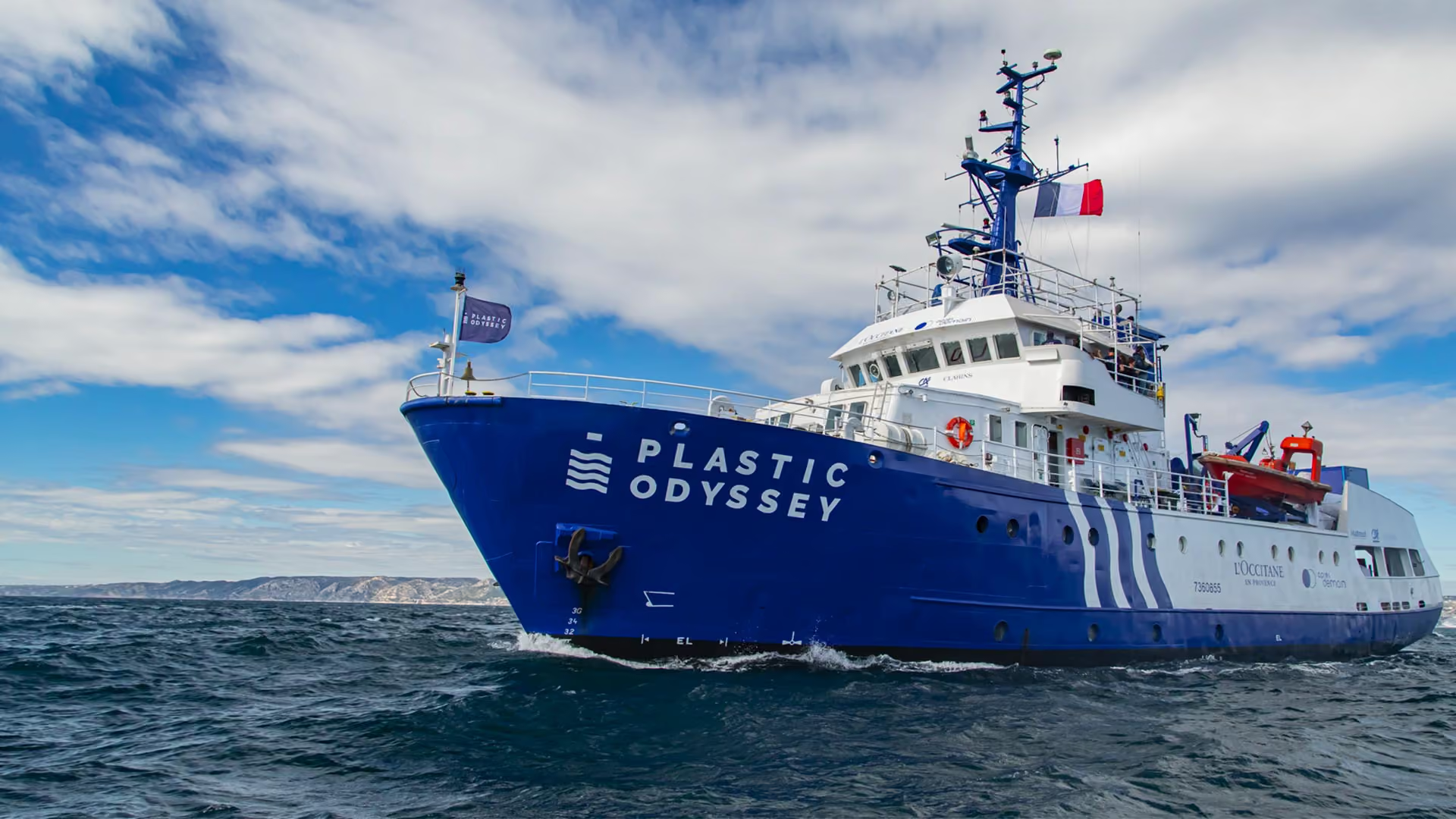
We are thrilled to announce our new partnership with Plastic Odyssey, a pioneering initiative that addresses plastic pollution worldwide. Through this collaboration, we are joining forces to reduce and offset the carbon emissions of their global expeditions.
Plastic Odyssey’s mission is to explore solutions for plastic waste management by traveling worldwide with their laboratory vessel, sharing knowledge, and building local recycling micro-factories. However, such a vast operation comes with a significant carbon footprint, primarily from laboratory vessel fuel consumption and business flight travels. Here’s where Removall steps in!
How does our partnership work?
By using international frameworks like the GHG Protocol and ADEME’s Bilan Carbone methodology, we precisely measure the emissions generated by Plastic Odyssey’s laboratory vessel and flight travels. We then offset these emissions by financing high-impact carbon offset projects, including renewable energy and Blue Carbon initiatives that restore marine ecosystems.
Additionally, we’re helping Plastic Odyssey estimate the carbon savings from their plastic recycling micro-factories, empowering them to create even more environmental impact through data-backed methodologies.
Why this partnership matters?
In today’s world, sustainability requires collective action. Plastic Odyssey and Removall share the same vision: creating a better future for our planet by fighting plastic pollution while actively reducing greenhouse gas emissions. Through this partnership, we aim to combine our strengths and create tangible, lasting impact.
Stay tuned for more updates on how we’re working together for a cleaner, greener future!
The Climate-Biodiversity Nexus
Financing Nature: Leveraging Environmental Credits to Support Climate Goals
Biodiversity credits were taking the centre stage at COP16 on biodiversity in Cali. It is likely to be the same for carbon credits in the incoming COP29 taking place in Azerbaijan. The reason for that is simple: biodiversity-enhanced nature-based solutions are highly required for a reasonable chance of holding global warming below 2°C.
Yet we are reaching an equilibrium’s breaking point where biodiversity carbon sinks capacity is altered by climate change, potentially leading to irreversible effects. We need to consider the Climate & Biodiversity nexus and reorient financial flows toward Nature by leveraging innovative mechanisms such as biodiversity-enhanced carbon credits and standalone biodiversity credits.
The carbon cycle: a sensitive equilibrium between different carbon sinks
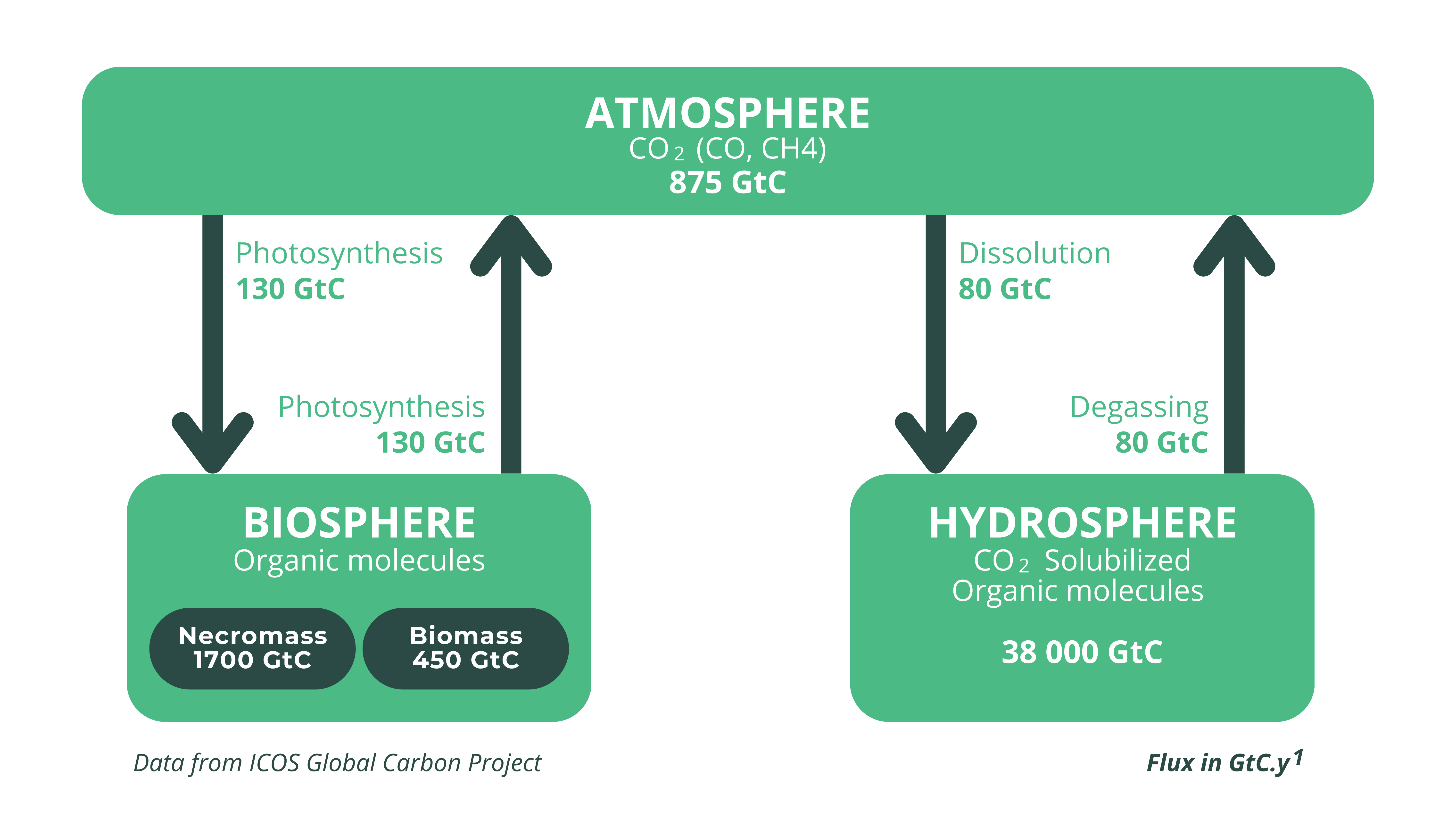
Carbon at the Earth’s surface is distributed between three main sinks: biosphere, hydrosphere and atmosphere. The flows between these reservoirs result in the carbon cycle. Altogether the planet contains more than 40,000 gigatons of carbon (GtC), with around 200 GtC absorbed from and emitted towards the atmosphere, through photosynthesis and respiration with the biosphere, and dissolution and degassing with the hydrosphere.
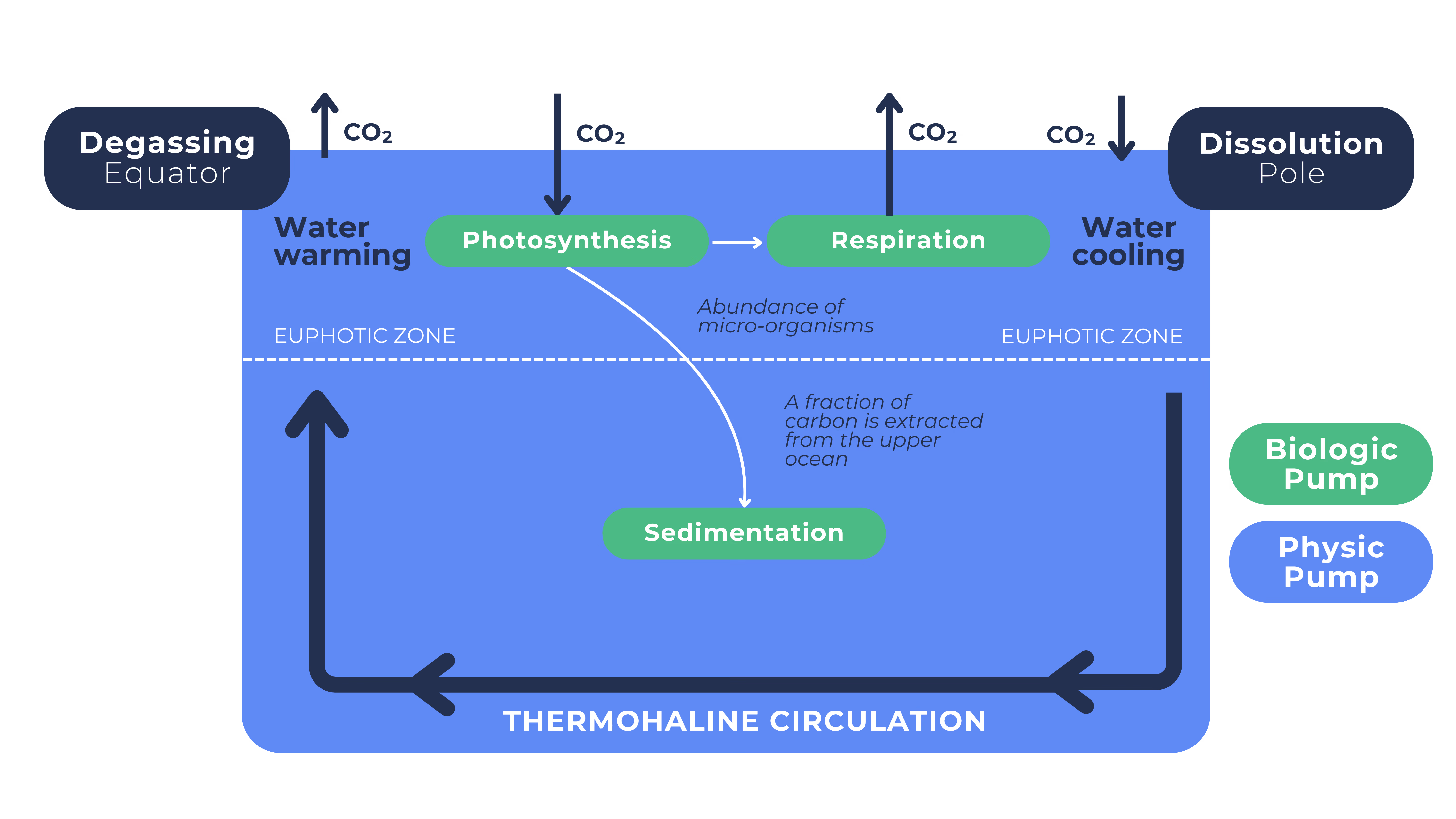
Primary carbon exchanges between the ocean and the atmosphere are abiotic and closely tied to water temperature: cold water releases CO2, while warm water absorbs it. Overall, differences in water density due to variations in salinity and temperature drive a global ocean current known as the thermohaline circulation: certain areas of the ocean absorb CO2, whereas other regions release it. Through photosynthesis, plants absorb CO2 from the atmosphere and then release it back through respiration and when they decompose.
All these relations between the different reservoirs are complex and scientifically unknown – though consequent progress has been made in the last decades. Such natural mechanism is based on a sensitive equilibrium challenged today by growing anthropic emissions.
Biodiversity absorbs part of our emissions
Anthropogenic emissions are currently emitting a new carbon influx of + 9.6 GtC per year into the atmosphere, mainly in forms of carbon dioxide, derailing the whole system with the greenhouse effect.
Lucky for us, part of it is absorbed by the biosphere and by the hydrosphere. Rising atmospheric CO2 levels naturally boosts photosynthesis, enabling plants to take up more carbon. It’s estimated that plants are now absorbing an additional 2.5 gigatons of carbon annually, which accounts for about 28% of the CO2 emissions generated by human activities. Plants play a crucial role in carbon storage by transferring carbon into the ground as their deep root systems decompose into soil necromass. They also produce carbon-rich compounds, called exudates, which are stored in the soil and contribute to long-term carbon sequestration. These natural processes have a buffering effect of biodiversity that helps slowing the rate of climate change. In total, nature-based solutions can provide 37%, or a one third of climate mitigation efforts needed through to 2030 for a reasonable chance of holding warming below 2 °C.
Marine biodiversity also plays a key role, particularly through the diversity of microorganisms, such as phytoplanktons that produce organic matter through photosynthesis, using dissolved CO2 from the water. Most marine microorganisms grow and decompose at the surface in the euphotic zone where light can pass through. A portion of the organic matter is then transported from the surface to the deeper ocean layers. This process is known as the Ocean’s Biological Pump, responsible for most of the carbon vertical gradient.
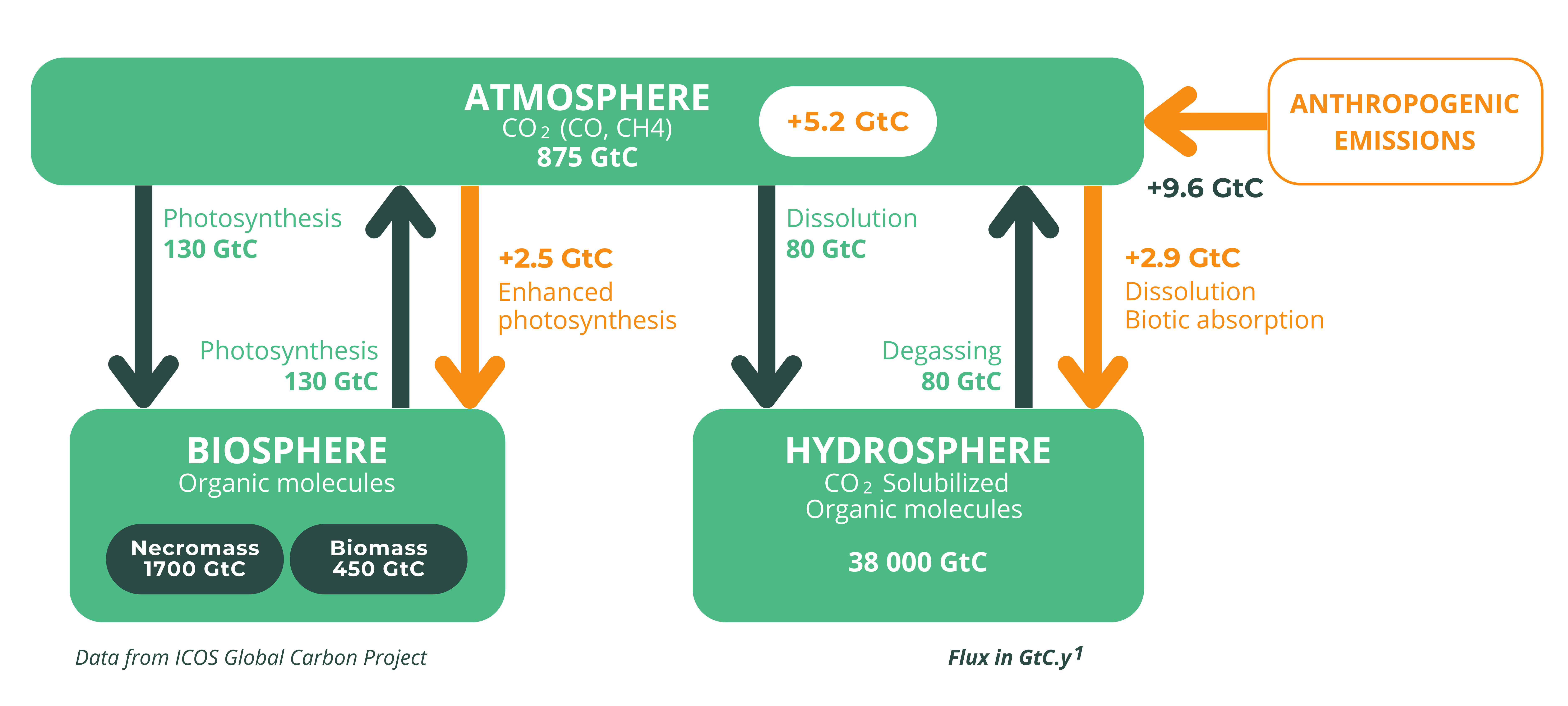
Yet biodiversity carbon sinks are not enough, as they seem to have reached their maximum capacity. Each year, around +5.2 GtC ends up into our atmosphere, mainly in forms of CO2 emissions. This directly impacts climate change, but also endangers our whole ecosystem.
We are reaching the equilibrium’s breaking point
Biodiversity has demonstrated an impressive capacity for adaptation, yet human impacts are now pushing ecosystems to their breaking points. The balance may falter, leading to challenges in ecosystem recovery and threatening essential ecological functions. Rising temperatures due to climate change are reshaping biodiversity, often resulting in declines in species abundance as organisms struggle to survive.
This can generate several vicious cycles, with the most commons being the melting of polar ice caps and the heightened frequency of wildfires. The seas’ ability to absorb atmospheric carbon is also reduced, as rising temperature alters the capacity of seawater to dissolve gases. Furthermore, soil emissions are projected to increase by as much as 40% by the end of the century if current trends persist. Climate change causes soils to dry out and accelerates the decomposition of organic matter by microbes as moisture levels in soils are evolving. Drier soils also impact the types of vegetation that thrive in these areas – and any shifts in plant communities significantly affects soil emissions.
As we depend on biodiversity to absorb part of our emissions, it is crucial to consider how we can actively preserve and protect these diverse ecosystems for the future. If biodiversity loss continues, we will face an unabatable temperature increase. The updated Living Planet Report of WWF has highlighted the urgency of biodiversity preservation, stating that “what happens in the next five years will determine the future of life on Earth.” We need to look beyond carbon and enter into the biodiversity-climate nexus.
Nature can’t wait – Environmental finance must be leveraged
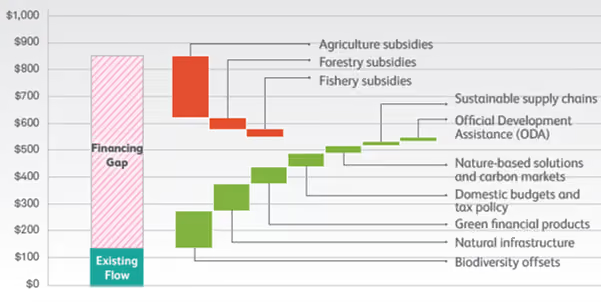
According to the Kunming-Montreal Global Biodiversity Framework, the biodiversity finance gap is estimated at $700 bn a year between now and 2030: $500 bn of harmful subsidies that must be redirected towards Nature, and $200 bn to be mobilized from private and public sources.
We cannot rely on public funding only. Developed countries have vowed to contribute $20bn a year to poorer countries by 2025. Until now, only $163m have been pledged by eight countries (including the UK, Germany, France and Norway). That is less than 1 percent. And there are only few months left. Most pledges are in forms of loans and not grants, which emphasizes the risk of a vicious circle of indebtedness. Furthermore, the Global Biodiversity Framework Fund (GBFF), in charge of allocating those funds, is deemed burdensome to access and too far away from the needs of emerging nations.
Private funding is therefore urgently required. And solutions already exist.
Biodiversity-enhanced carbon credits from high-integrity projects are already available. Biodiversity co-benefits are evaluated through additional standards in addition to the carbon methodology. The Climate, Community & Biodiversity Standards from Verra identifies specific areas under threat through six types of high-conservation values (HCV) such as species diversities or ecosystem habitats. The project is then guaranteeing protection and regular monitoring of the high-conservation values while ensuring the implication of local communities. More than 100 carbon projects have verified biodiversity benefits, spanning across 48 countries. As biodiversity becomes more and more a hot topic for companies – through CSRD, TNFD, SBT-N, NBSAPs and consumer pressure -, this type of additional certification generates a price premium that directly benefits biodiversity and local communities.
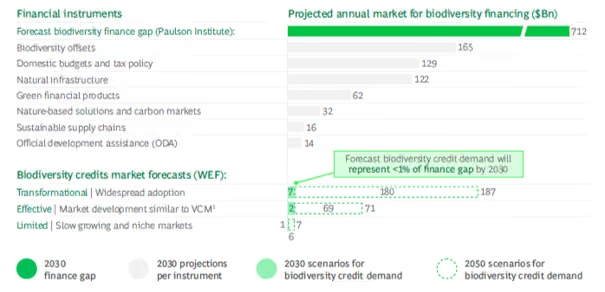
A standalone biodiversity credit market is also developing fast. With strong political support from France and the UK right after COP15, the International Advisory Panel on Biodiversity Credits (IAPB) has worked for two years to define high-integrity principles for the whole market, together with the World Economic Forum and the Biodiversity Credit Alliance. They have also launched various pilot projects with the most advanced standards such as Plan Vivo Nature or Verra Nature Framework. More than 35 biodiversity credit schemes and 140 indicators have been developed in recent years – we are now converging towards the standardization of certificate units to establish a common metric. According to estimates, the market could reach from $1bn $7bn by 2030.
At Removall, we help companies to act beyond their value chain by implementing innovative environmental contribution approaches. We propose biodiversity-enhanced carbon projects and biodiversity standalone projects for those willing to play their part. We are convinced that for too long, nature has been a peripheral part of the climate conversation.
Nature can’t wait – so let’s act together!
Sources
- La place des sols dans le cycle du carbone | Planet-Vie (ens.fr)
- Climate change and its impact on biodiversity and human welfare | Proceedings of the Indian National Science Academy (springer.com)
- (PDF) Global warming accelerates soil heterotrophic respiration (researchgate.net)
- A carbon cycle disrupted by human activities – Encyclopedia of the Environment (encyclopedie-environnement.org)
- How much carbon dioxide does the Earth naturally absorb? | MIT Climate Portal
- A carbon cycle disrupted by human activities – Encyclopedia of the Environment (encyclopedie-environnement.org)
- Soil-Based Carbon Sequestration | MIT Climate Portal
- Soil carbon sequestration by root exudates – ScienceDirect
- Natural climate solutions | PNAS
- https://www.researchgate.net/publication/364214764_Global_warming_accelerates_soil_heterotrophic_respiration
Biodiversity Finance: Protect the Planet, Strengthen Livelihoods (ifc.org)
High-integrity Plastic credits and the UN Plastics Treaty
Overview of the UN Plastics Treaty Negotiation
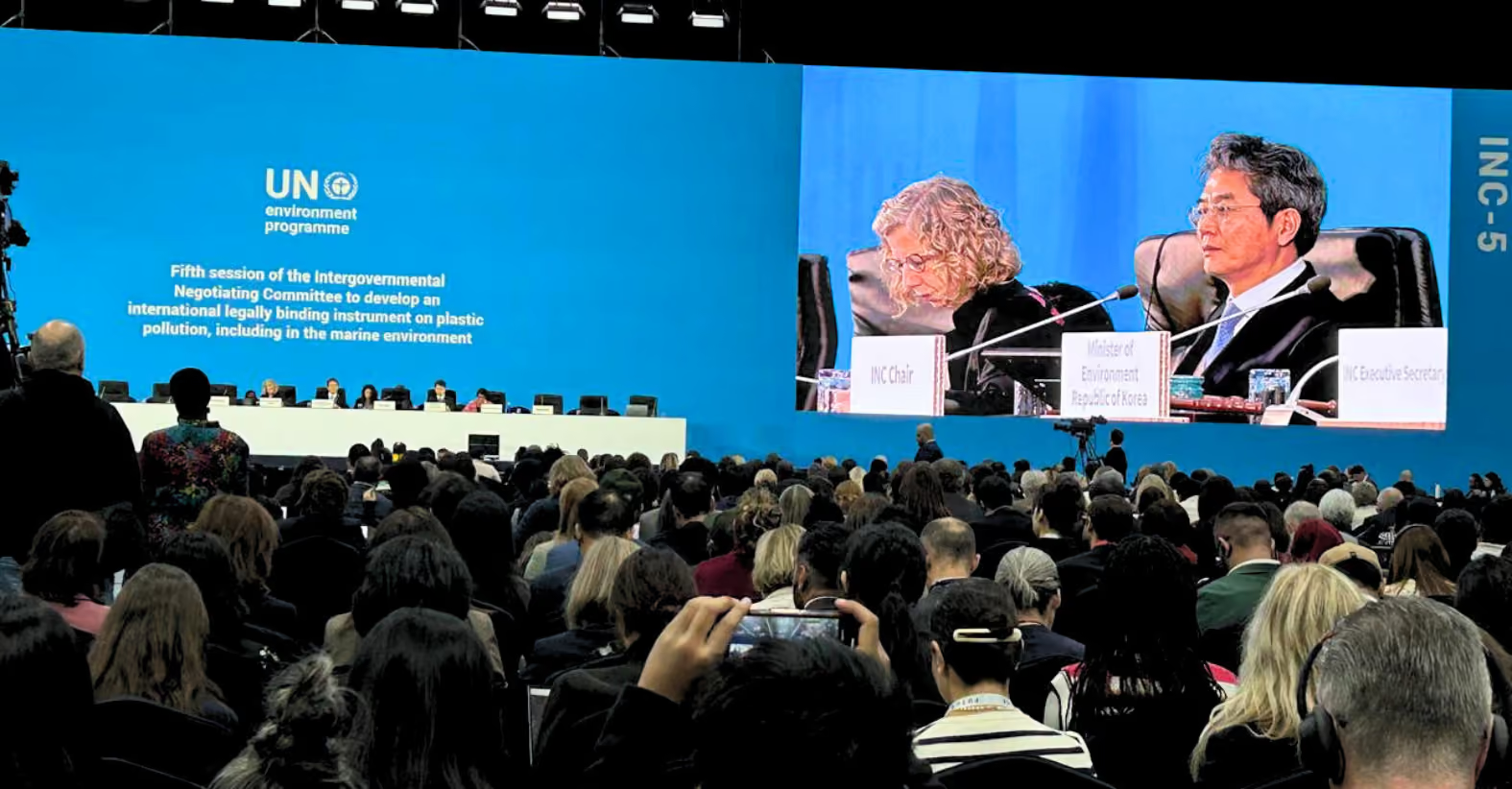
The 5th and last phase of negotiations for a UN Plastics Treaty has started this week in Busan, Korea. High-integrity plastic credits are a powerful way to fight plastic pollution worldwide. If used constructively, it could provide massive private funding to plastic waste collection and recycling projects in places where it is urgently required. This mechanism should be valued in the Treaty as a complementary approach to Extended Producer Responsibility (EPR) frameworks, enabling short-term action and initiating a “Just Transition” for the informal waste sector.
Plastic pollution: the size of the problem
Plastic production is set to triple by 2060 if no production cap is implemented in the last phase of negotiation for a UN Plastics Treaty taking place this week in Busan. Most of this production growth will occur in emerging countries that are lacking waste management infrastructures. While emerging markets are hotspots of plastic pollution, they only receive 6% of investments (US$ 11 billion out of the US$ 190 billion invested into plastics circularity since 2018). Africa received only 0.3% of total investments in 2023, despite 8% of plastic waste leaked to the ocean coming from the continent. Macroeconomic costs of stringent policy implementation are also higher in emerging countries: below 0.5% of GDP for OECD countries, and around 1.5% of GDP for Sub-Saharan African countries.
This is even more problematic because the true cost of plastics is eight times higher in emerging countries when accounting for its negative externalities. The current investment trajectory is too slow to meet targets to reduce plastic leakage into the environment by 90% by 2040. All funding sources must be mobilized to help emerging countries fighting the plastic pollution timebomb.
Plastic credits: a verifiable tool for impact investing at scale
One plastic credit is equal to one tone of plastic waste removed from the environment, or recycled. Plastic collection or recycling projects can get certified by well-known standards such as the Verra Plastic Waste Reduction Program or Ocean-Bound Plastic through an independent third-party audit. Plastic credits generated are then sold to companies willing to voluntary contribute to the fight against plastic pollution by enhancing plastic circularity. Plastic credits bring funding to impact projects, enhancing transparency and social justice from plastic waste management activities.
Not a license to pollute but an incentivization to act & contribute
If integrated into broader corporate plastic mitigation roadmaps, plastic credits could impact project finance at scale, while propelling corporate ambitious roadmaps. Under no circumstances should this prevent us from limiting production or turning a blind eye to value chain actions. This a complementary and necessary solution to anticipate the ticking plastic pollution timebomb.
Companies should adopt a contributory – but quantified and transparent – approach to engage into global plastic waste mitigation roadmaps encompassing plastic footprint measurement (Plastic Footprint Network, WBCSD), reduction targets (3R Initiative, Global Commitment), credit purchase (Verra, OBP) and reporting (Carbon Disclosure Project, CSRD).
Not all standards are equal
Various private-owned plastic credit standards have been developed in recent years. We should only support high-integrity plastic credits corresponding to “fully independent and transparent programs” identified as “Tier 1” in a recent World Bank report. Those credits follow key market principles that are essential to create an investment instrument beneficial to anyone. Here are some of the most important ones:
- Additionality: proof that without the project, the plastic waste would have been left or dumped into the environment – or that the project would not have been feasible without plastic credit finance.
- Permanence: plastic waste must be brought to a more appropriate end-of-life such as recycling or upcycling, ensuring no leakage in the future. Waste-to-energy or proper landfills must be carefully managed and – when possible – avoided.
- Third-party audited & listed on a public registry for guaranteeing verifiability and transparency.
- Independency: standard setters must be fully independent from the selling activities for avoiding any possible conflicts of interest.
The necessity of blended finance to face the chicken & egg problem
The real power of voluntary environmental markets is to enable project finance. As an example, the maturity stage of the 15+ years old carbon market now allows for early-stage project finance. Removall is a leader of that type of investment, with 7 carbon projects financed globally. In most cases, 100% of investment needs are covered by carbon finance by anticipating the carbon credit potential of the project over the long-term. Even private banks are starting to invest in such projects, with IRR above industrial levels.
As the plastic credit market is still emerging, the demand for pre-purchase of credits by private companies is still low – which means that financing projects in the ramp-up phase remains difficult. We are currently facing a chicken & egg situation in which corporates are looking for up-and-running projects, while the latter require funding to become fully operational.
That is why blended finance mechanisms are essential to propel the plastic credit market. Few months ago, the World Bank has announced a US$ 100 million Plastic Waste Reduction-linked bond, similar to the “Rhino bond” issued in South Africa in 2022. With a risk hedged by their partner Citi Group, the first phase of the bond directly finances two projects Verra-certified in Ghana and Indonesia. This allows private investors to join in early stages by lowering the project risk. Such innovative finance mechanisms must be leveraged extensively in the years to come.
Plastic credits & EPR: joining the dots in the Treaty
Extended Producer Responsibility (EPR) frameworks can be an important policy approach to addressing plastic pollution if it is well-designed and implemented in a context-appropriate manner. It is strongly advocated in the Treaty, as the mechanism has brought some great successes in developed countries. Still there is a lack of locally appropriate examples that developing countries can learn from or replicate.
EPR implementation in emerging countries faces various challenges:
- Huge infrastructure funding deficit that governments are unable to bridge
- Resource-intensive for governments on the legal, regulatory, and administrative requirements
- Informal waste sector that first needs to be progressively formalized
- Lenghty implementation process, taking 10+ years in most cases (not to mention the risk of political corruption)
This is not about plastic credits vs. EPR frameworks, but rather about how to combine the two to get the most out of them. Links between compliance and voluntary environmental markets are worth studying. This has occurred frequently in the voluntary carbon market, with Article 6 of the Paris Agreement allowing countries to trade carbon credits as part of their Nationally Determined Contributions (NDCs), or through Article 147 of the French law ‘Climat & Résilience’ which obliges airline companies to offset their carbon emissions. Similar frameworks are under development for biodiversity credits, such as the Biodiversity Net Gain in the UK or the Nature Repair Market in Australia. Recognizing plastic credits as a means of complying with regulatory obligations could propel the market, avoiding losing decades of action.
Plastic credits under the Verra Plastic Waste Reduction Program have been designed as a temporary solution for EPR framework implementation in emerging countries. The crediting period is either 10 years or 7 years renewable twice (under updated conditions), for setting up the waste management system before handling it back to the government or including it into an established EPR scheme. Verra will publish a white paper dedicated to the topic in the coming weeks.
The need for a “Just Transition”
Social impacts for the waste picker community are at the heart of high-integrity plastic credit methodologies. Under the Verra Plastic Waste Reduction Program, various social safeguards are implemented:
- Consent: obtain free, prior and informed consent prior to project implementation
- Transparency: organize a Local Stakeholder Consultation for collecting feedback and establish suitable communication channels. Local communities should have the right to influence project design.
- Safety: provide PPE equipment and enhance safety trainings
- Labor rights: prohibit child labour, provide wages above national levels and ID cards
Informal waste sector in emerging countries always implies huge social challenges. High-integrity plastic credit certification is a way to progressively start its formalization, anticipating any government-led EPR mechanism. Additional standards such as the OBP Social+ allow for the certification of social co-benefits. Other independent frameworks provide detailed guidelines, such as the Harmonized Responsible Sourcing framework by the Circulate Initiative.
What would the ideal Plastics Treaty look like?
The 5th and last phase of negotiations for a UN Plastics Treaty has started this week in Busan, Korea. Chances of success are low: ambitious options mentioned in the draft Treaty last summer have been withdrawn in the shorter version “Non-paper 3” drafted by the Chair of Committee. Some key challenges are not yet resolved, such as limiting plastic production worldwide or agreeing on rules of procedures (consensus vs. vote), which threatens even the existence of the Treaty.
Still, there is place for hope. The Paris Agreement has been signed in the last phase of negotiations at COP21, and it has now become the main reference of climate action. This is what an ambitious Plastics Treaty could look like in an ideal world:
- Plastic production cap on a global scale
- Plastic disclosure frameworks for the private sector: plastic footprint, target-setting, mitigation actions & reporting
- International plastic pollution fee, channelling funds towards emerging countries through an international organization such as the Global Environmental Facility
- High-integrity plastic credits incentivized and established regulatory links with EPR in emerging countries.
Let’s be clear: this will take time. Even if the 5th round of negotiation comes to an agreement, the Treaty will still have to be approved by a Diplomatic Conference before entering the COP process. We are running out of time: with high-integrity plastic credits, we can start to act now.
Sources
- wwf-brief-oeeg1-aug-2024—eng.pdf
- Insights into Global Plastics Circularity Investments
- WWF REPORT: Who pays for plastic pollution? | WWF
- Towards Ending Plastic Pollution
- Unlocking Financing to Combat the Plastics Crisis – Opportunities, Risks, and Recommendations for Plastic Credits
- World Bank’s New Outcome Bond Helps Communities Remove and Recycle Plastic Waste
- Verra at Fifth Session of Global Plastic Treaty Negotiations (INC-5) – Verra
- Executive Summary_Plastic Credits and Extended Producer Responsibility.indd
- giz2024-en-just-transition-report_UPDATE-3
- Harmonized Responsible Sourcing Framework for Recycled Plastics
- Systemiq-A_Living_Income_for_the_Informal_Waste_Sector_EN
Biodiversity Loss: Bridging the funding gap with biodiversity credits
Executive Summary
Biodiversity COP16 will resume in Rome in late February 2025, focusing on resourcemobilization strategies and financial mechanisms. The decisions made during these negotiations will play a crucial role in shaping global efforts to combat biodiversity loss.
As the biodiversity funding gap widens, we need to find new ways to mobilize private capital and integrate nature-positive investments into mainstream economic activities. Biodiversity credits appear to be an innovative instrument that could help finance long-term conservation and restoration efforts.
Within ternational frameworks, national policies, and pioneering organizations like Removall driving change, biodiversity credits can help converge toward a sustainable future where ecosystems thrive, businesses prosper, and communities benefit from a healthier planet.
Biodiversity Loss is Accelerating at an Alarming Rate
Biodiversity is the foundation of life on Earth, providing essential ecosystem services such as pollination, climate regulation, and water purification. However, global wildlife populations have plummeted by an average of 69% over the past 50 years. The degradation of ecosystems continues at an exponential pace, withover one million species currently at risk of extinction. The destruction of natural habitats, over exploitation of resources, pollution, and climate change are accelerating biodiversity loss at an unprecedented rate.
The consequences of this crisis extend beyond nature. Biodiversity loss threatens food security, water availability, human health, and economic stability. More than half of the world’s GDP —around $44 trillion— is moderately or highly dependent on nature. Scientists warn that without immediate action, we may reach irreversible ecological tipping points that could drastically alter the planet’s ability to sustain life.
The Biodiversity Funding Gap: A Growing Crisis
Despite the urgent need for conservation and restoration efforts, there is a massives hortfall in biodiversity funding. The current annual biodiversity financing gap is estimated to be around $700 billion. The Kunming-Montreal Global Biodiversity Framework (GBF) has set ambitious financial targets, including mobilizing at least $200 billion per year from all sources to support biodiversity conservation efforts by 2030. This also includes a commitment to redirect at least $500 billion per year away from environmentally harmful subsidies towards positive biodiversity outcomes.
While governments, philanthropies, and international organizations are contributing to biodiversity financing, these sources remain unstable and insufficient. Recent geopolitical shifts, such as the reduction of USAID biodiversity programs, further exacerbate the problem. This fragmented funding landscape makes it hard for developing countries to access funding capital, increasing transaction costs.
In the private sector, there is growing awareness of biodiversity-related risks, such as regulatory, physical, reputational and financing risks. Companies are now implementing biodiversity strategies at a corporate level, supported by the emergence of regulatory and voluntary reporting frameworks such as the Corporate Sustainability Reporting Directive (CSRD), the Taskforce for Nature-related Financial Disclosure (TNFD) or the Science-Based Targets for Nature (SBT-N). However, private sector engagement to fund nature remains insufficient. The challenge lies in creating scalable and reliable financial mechanisms that can mobilize substantial capital for biodiversity protection and restauration.
Biodiversity Credits: A Market-Based Solution to Fund Nature
Biodiversity credits have emerged as a promising mechanism to bridge the funding gap. These credits function as economic instruments that assign a quantifiable value to positive biodiversity outcomes.
According to the Biodiversity Credit Alliance, a biodiversity credit is “a certificate that represents a measured and evidence‑based unit of positive biodiversity outcome that is durable and additional to what would have otherwise occurred”. Numerous biodiversity standards have emerged in recent years, reflecting the intricate diversity of biodiversity projects design. The market is structuring with various working groups joining forces such as the Biodiversity Credit Alliance, the World Economic Forum, and the International Advisory Panel on BiodiversityCredits.
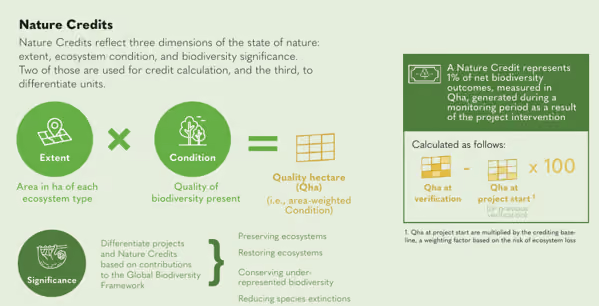
The Kunming-Montreal Global Biodiversity Framework (GBF), signed by 196 nations, has set ambitious targets to halt and reverse biodiversity loss by 2030. Biodiversity credits align with these goals by incentivizing private investment in nature-positive projects. According to market forecasts, biodiversity credits could become a multi-billion-dollar industry within the next decade. Demand-drivers are numerous: provide access to ecosystem services as an input, contribute beyond its own impacts, offer products bundled with nature recovery, or take responsibility for unmitigated biodiversity impacts. Bundling carbon credits with biodiversity credits will amplify nature-positive outcomes while accelerating the growth of the biodiversity credit market. Credit stacking—the practice of generating both carbon and biodiversity credits within the same geographical area—will unlock additional funding streams for project developers, enhancing financial viability and incentivizing more holistic ecosystem restoration efforts.
Scaling Biodiversity Credits: Global, Regional, and Local Initiatives
To maximize impact, biodiversity credit systems must operate at multiple levels—from global frameworks to national and local policies. Several international and regional initiatives are paving the way for a structured biodiversity credit market:
International Standards and Frameworks: Innovative standards such as Verra Nature Framework, Plan Vivo Nature, and Cercarbono are developing high-integrity biodiversity credit methodologies to help finance biodiversity restauration or conservation projects globally. These frameworks focus on measurement, reporting, and verification (MRV) to maintain transparency and accountability in biodiversity projects. Various pilot projects are currently ongoing the certification process. The number of international biodiversity credit issuance will grow exponentially in the coming years.
European Leadership and Policy Support: Biodiversity credits are gaining traction in Europe. European Commission President Ursula von der Leyen has expressed strong support for integrating biodiversity into financial and regulatory frameworks. European markets are exploring biodiversity credits as part of the Green Deal and the EU Taxonomy, aiming to encourage corporate investment in biodiversity.
UK and France are paving the way for local implementation: At the national level, countries like the UK and France are implementing biodiversity credit schemes. The UK’s Biodiversity Net Gain (BNG) policy mandates that all new developments must deliver at least a 10% net increase in biodiversity. France has launched the National Biodiversity Strategy (SNB) and the SNCRR (Sites Naturels de Compensation, de Restauration et de Renaturation) to integrate biodiversity credits into land-use planning and economic activities. The French scheme will include both a compliant and a voluntary scheme.
Removall: Leading the Charge in Biodiversity Credit Markets
Removall is at the forefront of the biodiversity credit revolution, pioneering projects that deliver measurable ecological benefits. By leveraging cutting-edge monitoring technologies and strong partnerships, Removall develops high-integrity biodiversity credit projects that restore degraded ecosystems and protect critical habitats.
Through its initiatives, Removall is creating tangible opportunities for businesses and investors to contribute to nature-positive outcomes. By participating in biodiversity credit markets, corporations can not only meet their sustainability commitments but also drive meaningful change in global
Interested in our biodiversity credit offering? GET IN TOUCH
Sources
- WWF (2022). Living Planet Report 2022: Building a nature-positive society.
- IPBES (2024). The nexus assessment: Assessing the interlinkages among biodiversity, water, food, and health.
- IPBES (2024). Transformative change: Policy options for biodiversity and sustainability.
- World Economic Forum (2023). Nature finance and biodiversity credits: A private sector roadmap to finance and act on nature.
- World Economic Forum (2023). Biodiversity credits: Demand analysis and market outlook.
- IAPB (2024). Framework for high-integrity biodiversity credits.
- Boston Consulting Group (BCG). (2024). Corporate commitment meets nature: The reality of biodiversity credits.