home
resources
resources
Blog

OUR ARTICLES

Explore articles written by the Removall team. Drawing on our experience developing, financing and bringing certified projects to market, we share our analysis of carbon market trends, regulation and project integrity, along with stories from the field on the impact our projects deliver for climate, communities and ecosystems.

most popular articles

SBTi Corporate Net-Zero Standard Version 2.0
Regulation & Standards
Carbon Market Insights

SBTi Corporate Net-Zero Standard Version 2.0

What really changes for corporate carbon strategies

00
min

The Science Based Targets initiative has released its Corporate Net-Zero Standard Version 2.0, marking a clear evolution in how corporate climate action is structured and assessed.

While the foundation remains unchanged, deep emissions reductions across Scopes 1, 2 and 3 remain the priority, the new standard introduces important refinements in how companies are expected to implement, report and take responsibility for their emissions.

More importantly, it provides a clearer signal on the future role of carbon credits and removals in corporate net-zero strategies.

A shift from ambition-setting to implementation accountability

One of the most significant changes is the increased focus on implementation.

Companies are now expected to explicitly connect their science-based targets to real operational decisions, including transition planning, procurement strategies and investment cycles.

The standard introduces a “best-efforts” principle, requiring companies to use all reasonable levers within their control, disclose constraints and dependencies, and explain how barriers are being addressed.

Clearer structure across Scopes 1, 2 and 3

The updated framework requires a more structured approach:

  • Scope 1 and Scope 2 must now be addressed separately, with full coverage required
  • Scope 1 reductions may follow multiple pathways (absolute, intensity-based or transition-based)
  • Scope 2 requirements are strengthened, particularly around low-carbon electricity sourcing

Scope 3 is maintained as the most flexible but critical component, with companies required to prioritise material emissions sources and integrate them into targets or transition plans.

Carbon credits remain excluded from target achievement

Carbon credits cannot be used to:

  • reduce reported emissions
  • demonstrate progress toward targets
  • substitute operational decarbonisation

Even where companies miss targets, SBTi only recommends voluntary purchase of removals as an additional action, without allowing them to count toward target achievement.

Ongoing Emissions Responsibility (OER)

The new OER framework introduces voluntary recognition for companies contributing to climate action beyond their own value chain emissions.

Three levels exist:

  • Engaged (≥1%)
  • Advanced (≥10% incl. Scope 1 & 2)
  • Leadership (full Scope 1–3 coverage with financial contribution requirement)

Companies may use either verified mitigation outcomes or a financial contribution mechanism.

Post-2035 removal trajectory

From 2035 onwards, companies are expected to support removals equal to:

  • at least 1% of ongoing emissions
  • increasing linearly to 100% by net zero (2050 latest)

A key distinction is introduced:

  • long-lived greenhouse gases → long-lived removals
  • other emissions → short- or long-lived removals

This creates a structural shift toward durability-based carbon accounting

10% long-lived removals requirement

From 2035, at least 10% of covered emissions linked to long-lived greenhouse gases must be addressed with long-lived removals.

This share increases progressively to 100% by the net-zero year.

This reinforces a clear market signal toward durable carbon storage solutions.

No reliance on a single credit quality standard

The framework does not anchor eligibility to specific labels such as CCP.

Instead, it relies on principle-based integrity criteria:
additionality, permanence, leakage control, MRV robustness, and safeguards.

Corresponding adjustments and Article 6

SBTi recommends that companies prioritise credits not simultaneously claimed under national NDCs.

Where possible, companies are encouraged to use credits backed by corresponding adjustments under Article 6, improving the integrity of net-zero claims and reducing double counting risk.

What this means for corporate carbon strategies

Three structural shifts stand out:

  • From target-setting to implementation accountability
  • From offsetting logic to strict separation of roles
  • From generic credits to durability-based carbon removal strategies

Conclusion

SBTi V2.0 does not fundamentally change the direction of corporate climate ambition. It clarifies how it must be implemented.

Net zero is no longer only a target framework. It is becoming an operational responsibility framework, combining emissions reduction with structured climate contribution.

Sources

  • Science Based Targets initiative (2026), Corporate Net-Zero Standard Version 2.0
  • Science Based Targets initiative (2026), Introducing the SBTi Corporate Net-Zero Standard Version 2.0
  • Science Based Targets initiative (2026), SBTi Corporate Net-Zero Standard V2.0 – Guidance and supporting documents
  • Science Based Targets initiative (2026), Net-Zero Standard implementation materials and FAQs
  • United Nations Framework Convention on Climate Change (UNFCCC), Article 6 of the Paris Agreement – Corresponding Adjustments Guidance
Integrating High-Quality Carbon Projects into CSR Strategies
Corporate Climate Action
Carbon Market Insights

Integrating High-Quality Carbon Projects into CSR Strategies

In today’s evolving business landscape, sustainability is not just an option but a fundamental aspect of corporate strategy. For sustainability professionals, integrating high-quality carbon projects into Corporate Social Responsibility (CSR) strategies is crucial for aligning environmental goals with business objectives. This guide explores the significance of these projects, how they enhance overall corporate strategies, and the critical role of CSR in creating synergy across Environmental, Social, and Governance (ESG) pillars.

Linking SBTi Updates with CSR, ESG, and Net Zero

The Science Based Targets initiative (SBTi) provides a framework for companies to set science-based targets aimed at reducing greenhouse gas emissions and limiting global warming to well below 2°C. In July 2024, the SBTi updated its guidelines to reflect the growing role of carbon credits in corporate climate strategies. While direct emission reductions remain the primary focus, the updated guidelines emphasize the strategic use of carbon credits to address residual emissions. While we are waiting for the SBTi confirmation that carbon credits could be used to reach part of companies’ scope 3 emission reduction objectives, this approach acknowledges that achieving Net Zero often requires additional measures, such as investing in high-quality carbon projects to offset emissions that are challenging to eliminate entirely (Science Based Targets initiative [SBTi], 2024a).

Beyond compliance with SBTi and Net Zero objectives, carbon credits offer significant strategic value. They not only enable companies to meet their climate commitments but also provide a mechanism to enhance corporate reputation, drive innovation in sustainability practices, and foster stronger relationships with stakeholders. The strategic integration of carbon credits into a company’s sustainability framework can differentiate the organization in the market, positioning it as a leader in environmental stewardship (World Economic Forum, 2021).

Understanding CSR, ESG, and Net Zero Interconnections

To fully realize the strategic value of carbon credits, it’s essential to understand the interconnections between Corporate Social Responsibility (CSR), Environmental, Social and Governance Reporting (ESG), and Net Zero objectives:

CSR reflects a company’s broader commitment to societal and environmental impact beyond financial metrics, encompassing activities such as philanthropy, community engagement, and ethical business practices (Brundtland Commission, 1987). However, CSR also acts as an entry point to create a synergy between the different ESG pillars of the company—Environmental, Social, and Governance.

Environmental: Focuses on an organization’s environmental impact and risk management practices, including direct and indirect greenhouse gas emissions, stewardship over natural resources, and resilience to physical climate risks such as climate change, flooding, and fires (International Emissions Trading Association [IETA], 2023).

Social: Involves the organization’s relationships with stakeholders, encompassing human capital management (e.g., fair wages, employee engagement) and the impact on communities. Social responsibility extends to supply chain partners, particularly in developing economies, where environmental and labour standards may be less robust (Net Positive, 2023).

Governance: Refers to how the organization is led and managed, including leadership’s alignment with stakeholder expectations, shareholder rights, and internal controls that promote transparency and accountability (McKinsey & Nielsen IQ, 2023).

Achieving Net Zero involves reaching a balance between the greenhouse gases emitted and those removed from the atmosphere. To achieve this, companies must accurately measure their greenhouse gas (GHG) emissions, significantly reduce them, and offset any remaining emissions through certified carbon projects (World Economic Forum, 2021). The interconnections between CSR, ESG, and Net Zero are crucial because CSR serves as the operational framework that integrates the environmental, social, and governance dimensions of a company’s sustainability strategy. Together, these elements create a comprehensive approach to sustainability that supports achieving Net Zero goals by aligning corporate actions with broader environmental and social objectives.

The Strategic Value of High-Quality Carbon Projects

Incorporating high-quality carbon projects into CSR strategies offers significant strategic benefits that go beyond compliance with SBTi or Net Zero targets. These projects can serve as powerful tools for enhancing corporate purpose, driving employee and financial engagement, delivering tangible community impacts, and strengthening stakeholder relationships.

Strengthening Corporate Purpose: Aligning carbon projects with corporate goals deepens the company’s mission and values, fostering a stronger sense of purpose among employees. According to Deloitte’s 2023 report, 97% of executives anticipate significant climate impacts on their strategies, underscoring the importance of integrating sustainability into core business objectives (Deloitte, 2023). This alignment not only enhances corporate identity but also motivates employees to actively contribute to the company’s sustainability goals.

Enhancing Employee and Financial Engagement: High-quality carbon projects can improve job satisfaction, retention, and talent attraction by demonstrating the company’s commitment to sustainability. Reports indicate that a significant number of employees, sometimes called ‘climate quitters,’ are leaving roles that lack strong environmental policies or do not align with their personal values on climate action (Net Positive, 2023; BBC, 2023). This trend underscores the importance of integrating sustainability into corporate values to attract and retain talent.

Delivering Tangible Community Impact: Projects such as reforestation offer more than just environmental benefits; they also create jobs, restore ecosystems, and build community resilience. These initiatives align with ESG criteria by providing measurable local impacts that support broader sustainability goals, thereby enhancing the company’s reputation and social license to operate (MIT News).

Strengthening Stakeholder Relationships: Carbon credits can significantly enhance relationships with suppliers and clients by showcasing the company’s commitment to reducing environmental impact. This approach not only helps clients manage their Scope 3 emissions but also positions the company as a leader in sustainability, fostering long-term partnerships and collaborative opportunities throughout the value chain (International Emissions Trading Association [IETA], 2023).

Operationalizing Corporate Purpose through CSR

To fully realize the strategic value of high-quality carbon projects, sustainability professionals can operationalize their corporate purpose through CSR. CSR serves as the foundation that integrates the environmental, social, and governance pillars of a company’s operations, creating a synergy that drives comprehensive and impactful sustainability efforts.

Embedding Purpose into Daily Actions: For a corporate purpose to be truly effective, it must be woven into the fabric of daily operations. Successful CSR strategies create environments where employees can engage in purpose-driven projects, making sustainability an integral part of the company’s culture and daily decision-making processes.

Fostering Employee Engagement: Empowering employees to take ownership of CSR initiatives fosters a culture of meaningful change. This empowerment leads to higher engagement, skill development, and a stronger sense of pride in the organization, embedding sustainability deeply into the organizational culture (Net Positive, 2023).

Building Purpose-Driven Communities: Encouraging employees to participate in and co-create projects aligned with sustainability goals helps build purpose-driven communities within the organization. These communities not only drive the achievement of broader ESG objectives but also strengthen the overall corporate purpose by ensuring that sustainability efforts resonate throughout the company.

Ensuring Integrity and Trust in Carbon Projects

The foundation for achieving the strategic value of carbon credits lies in ensuring the integrity and trustworthiness of these projects. High-quality carbon projects are essential for delivering the environmental and social benefits that underpin a company’s sustainability strategy.

Selecting Reliable Partners: Collaborate with reputable organizations that provide transparency and proof of project efficacy. The quality of carbon offset partners is crucial in ensuring that projects deliver on their promises and contribute meaningfully to a company’s Net Zero and CSR goals (Cloverly, 2023).

Preventing Greenwashing: Companies must ensure that their carbon projects deliver genuine impact and avoid overstating their benefits. Transparency in reporting and accountability in project execution are key to maintaining credibility and stakeholder trust.

Mitigating Risks: Regularly reviewing project performance and addressing potential risks is essential for ensuring that carbon projects meet expectations. This diligence ensures that the investments made into carbon credits are not only compliant but also effective in achieving broader sustainability goals (Science Based Targets initiative [SBTi], 2023).

The Pivotal Role of Sustainability Leaders

Sustainability leaders are pivotal in unifying the goals of CSR, ESG, and Net Zero, driving the strategic integration of high-quality carbon projects into corporate strategies. They are responsible for ensuring that sustainability practices are embedded across the organization, aligning environmental initiatives with social and governance objectives.

Balancing Objectives: Sustainability leaders must balance immediate impacts with long-term goals, ensuring that carbon projects are integrated into the broader corporate strategy. This involves making strategic decisions that align with the company’s sustainability vision while maintaining operational effectiveness (McKinsey & Nielsen IQ, 2023).

Accurate Reporting and Transparency: Transparent reporting on carbon projects is essential for demonstrating their effectiveness and aligning with stakeholder expectations. Sustainability leaders must ensure that all sustainability initiatives, including carbon projects, are reported accurately and comprehensively, reinforcing the company’s commitment to transparency and accountability (Science Based Targets initiative [SBTi], 2024a).

Building Trustworthy Partnerships: Forming partnerships with credible organizations is crucial for maintaining the integrity of CSR initiatives. Sustainability leaders must identify and collaborate with partners that share the company’s commitment to high standards of environmental and social responsibility, ensuring that all projects deliver genuine impact (Cloverly, 2023).

Conclusion

Integrating high-quality carbon projects into CSR strategies is essential for companies aiming to address environmental challenges while achieving business success. These projects contribute not only to reducing greenhouse gas emissions but also to aligning with broader corporate goals. By combining direct emissions reductions with strategic investments in carbon credits, companies can make a significant environmental impact and build a foundation for long-term sustainability. The integrity of these projects, guided by trusted partnerships and transparent reporting, is key to maintaining stakeholder confidence. Ultimately, sustainability leaders play a crucial role in driving these efforts, ensuring that the company’s sustainability goals are met with purpose, effectiveness, and integrity.

‍

00
min

latest articles

To all the sustainability leaders in logistics
Carbon Market Insights
Corporate Climate Action

To all the sustainability leaders in logistics

Take a minute to embrace a carbon contribution strategy!

00
min

As a key player in the logistics sector, your company is undoubtedly aware of the growing emphasis on sustainability and the critical role that carbon offsetting plays in meeting environmental targets. Carbon offsetting is particularly important for companies within the logistics industry. Let’s go deep into some fundamental insights:

Addressing High Carbon Footprints in a Carbon-Intensive Sector

The logistics sector, encompassing road, maritime, and air transport, is a significant contributor to global greenhouse gas (GHG) emissions, accounting for approximately 23% of global CO₂ emissions from energy use. With increasing demand for freight and passenger transport, the sector faces mounting pressure to reduce its carbon footprint. While the priority in a robust climate strategy is always the reductions of your own GHG emissions, carbon offsetting provides an additional practical approach for mitigating the impact of your unavoidable emissions, by supporting or investing in projects that either remove carbon from the atmosphere or prevent equivalent emissions elsewhere. This includes reforestation, renewable energy projects, and other initiatives that align with the goals of reducing net emissions.

Aligning with Regulatory Requirements and Sustainability Goals

As regulatory frameworks around carbon emissions tighten globally, particularly in regions like the EU with its Emissions Trading System (ETS), logistics companies must adopt robust strategies to manage their emissions. In addition to ambitious emissions reduction action plans, carbon offsetting offers a flexible and cost-effective way to meet compliance requirements and support broader sustainability goals, such as those outlined in the UN Sustainable Development Goals (SDGs). Offsetting complements other decarbonization efforts, such as enhancing operational efficiency and transitioning to low-emission technologies.

Meeting Stakeholders’ Expectations and Enhancing Corporate Reputation

With rising expectations from consumers and investors, companies are under pressure to show tangible environmental commitments. For logistics companies, often seen as major emitters, carbon offsetting demonstrates accountability and helps foster trust. Beyond compliance, it allows companies to show leadership by aligning with sustainable business practices that resonate with customers and stakeholders.

Mitigating Risks and Preparing for a Low-Carbon Future

Offsetting emissions helps logistics companies navigate the evolving regulatory landscape and avoid potential financial penalties associated with carbon pricing mechanisms. It also allows businesses to take proactive steps toward future compliance with stricter regulations, positioning them as leaders in sustainability within their industry. This forward-thinking approach helps companies not only manage current risks but also capitalize on emerging opportunities in a low-carbon economy.

Why is Removall the right partner for you?

Removall stands out as a comprehensive solution provider in the carbon offsetting space, specifically tailored to meet the unique needs of logistics companies. As a project developer with hands-on experience, we bring deep, on-the-ground knowledge to every project, ensuring that our verified offset offerings—ranging from nature-based solutions to advanced carbon capture technologies—not only compensate emissions but also contribute to broader environmental and social goals.

Our rigorous project selection is supported by market-leading due diligence processes, guaranteeing high standards and long-term impact. As a mission-driven company, we view carbon offsetting as a tool for impact investing. Beyond carbon reduction, our projects provide tangible social and environmental co-benefits, measured and monitored over time. These outcomes are documented in our impact report, reflecting our commitment to transparent, lasting contributions aligned with the SDGs.

Partnering with Removall means integrating offsetting seamlessly into broader sustainability strategies, aligning with regulatory requirements and positioning for future carbon regulations. With strong sectoral expertise, particularly in transport and logistics, we support our clients with both short-term contracts and long-term partnerships, securing high-quality project supply and price stability. Together, we go beyond meeting current obligations, empowering companies to lead in sustainability, enhance their reputation, and achieve a competitive edge in a rapidly evolving market. We are eager to explore how our tailored solutions can help your company not only offset its emissions but also contribute positively to communities and the environment, paving the way for a sustainable future.

Removall's CSR approach
Corporate Climate Action
Project Insights & Impact

Removall's CSR approach

In France today, less than 50% of SMEs are committed to a CSR approach, and almost 40% are unfamiliar with the concept. Yet it is key to achieving sustainable development objectives that private players commit to improving their impact.

At Removall, we have around 25 employees and have put in place a simple CSR approach that we would like to share, to demonstrate that it is possible to have a positive impact even on a small scale.

As a company committed to the environment and a company with a mission, we were keen to develop a rigorous internal CSR policy in line with the values we uphold in our business.

Here are the key stages:

Structuring our approach

  • We began by setting up our CSR Committee in October 2022, made up of volunteer members from each of Removall’s teams. The committee holds monthly progress reviews and quarterly meetings with management.
  • Since 2023, we have been using the framework suggested by Ecovadis to better structure our approach around the Environment, Ethics, Social and Governance pillars. It is thanks to the feedback from this assessment that we have been able to progressively improve our approach. Today, we are proud to be among the top 6% of companies with the most serious CSR approach.

Involving employees in the process

  • It’s important to raise awareness of our CSR approach within the company, and to involve as many volunteers as possible. Every newcomer to Removall receives a guide to best practices for reducing his or her daily impact at work, and is trained in the workings and actions of the CSR committee. We ensure that all CSR resources are always accessible to employees (charters, policies, reports, etc.).
  • We also organize awareness-raising campaigns (themed displays and training courses) and solidarity actions (clothing drives, solidarity team-buildings in aid of associations) to get employees as involved as possible and share useful knowledge.

Tracking our actions

We attach great importance to measuring not only our impact, but also our progress. That’s why, by collecting data throughout the year, we measure our carbon footprint and waste emissions. These data are then aggregated in our sustainable development report and our Carbon Footprint, which is carried out each year in accordance with the ADEME method. We compare our results with those of the previous year, and define our work objectives for the coming year.

Offsetting our carbon emissions

To perfect our approach, we offset our residual emissions using our expertise in carbon projects to select quality initiatives to support, which we submit to an internal vote to offset our emissions. In this way, we take care to promote projects that have both a strong environmental impact and significant social benefits.

00
min
Removall & Plastic Odyssey: Partnering for a Sustainable Expedition
Beyond Carbon

Removall & Plastic Odyssey: Partnering for a Sustainable Expedition

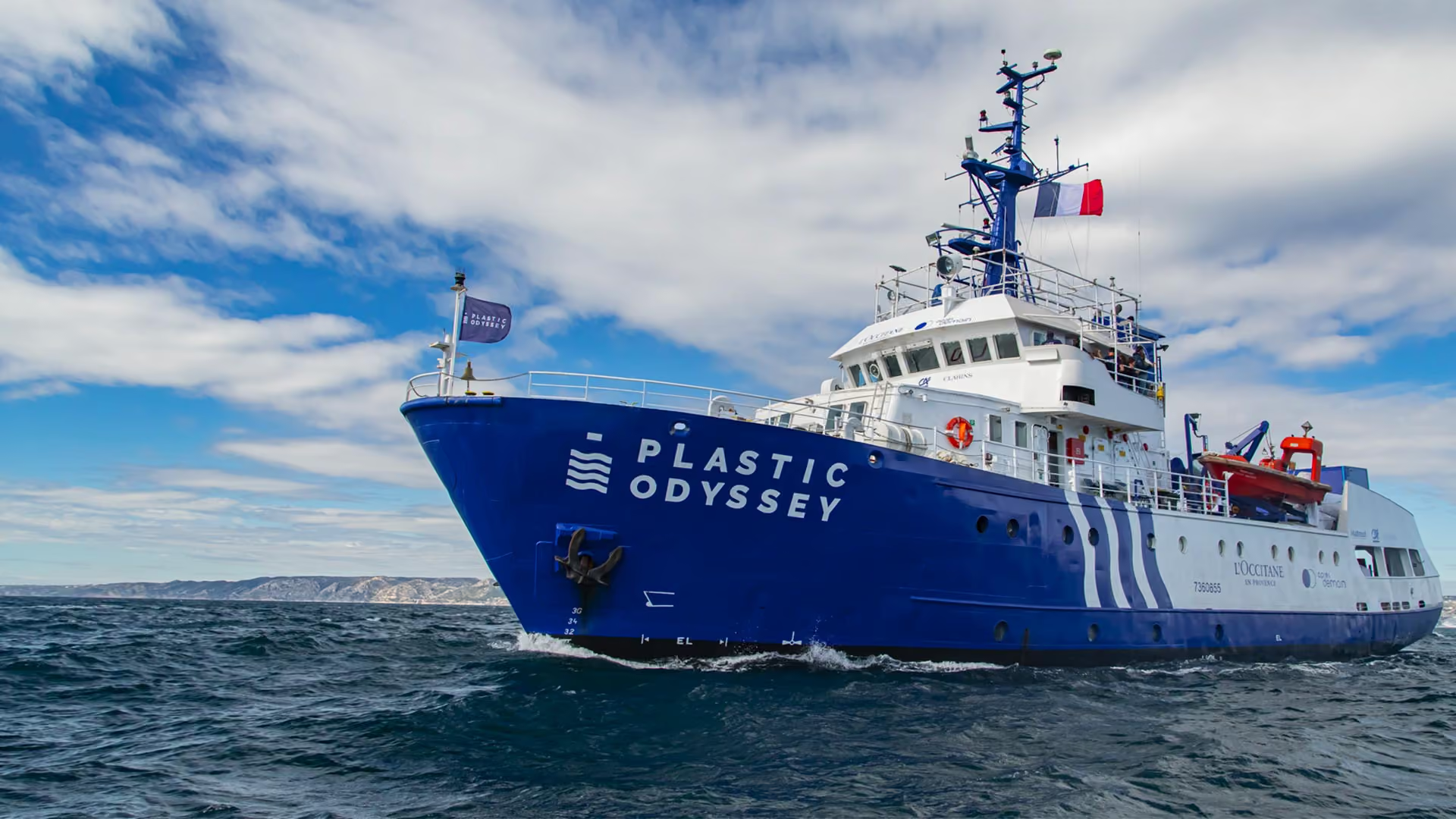
We are thrilled to announce our new partnership with Plastic Odyssey, a pioneering initiative that addresses plastic pollution worldwide. Through this collaboration, we are joining forces to reduce and offset the carbon emissions of their global expeditions.

Plastic Odyssey’s mission is to explore solutions for plastic waste management by traveling worldwide with their laboratory vessel, sharing knowledge, and building local recycling micro-factories. However, such a vast operation comes with a significant carbon footprint, primarily from laboratory vessel fuel consumption and business flight travels. Here’s where Removall steps in!

How does our partnership work?

By using international frameworks like the GHG Protocol and ADEME’s Bilan Carbone methodology, we precisely measure the emissions generated by Plastic Odyssey’s laboratory vessel and flight travels. We then offset these emissions by financing high-impact carbon offset projects, including renewable energy and Blue Carbon initiatives that restore marine ecosystems.

Additionally, we’re helping Plastic Odyssey estimate the carbon savings from their plastic recycling micro-factories, empowering them to create even more environmental impact through data-backed methodologies.

Why this partnership matters?

In today’s world, sustainability requires collective action. Plastic Odyssey and Removall share the same vision: creating a better future for our planet by fighting plastic pollution while actively reducing greenhouse gas emissions. Through this partnership, we aim to combine our strengths and create tangible, lasting impact.

Stay tuned for more updates on how we’re working together for a cleaner, greener future!

00
min
CORSIA: Navigating the Future of Aviation Emissions
Regulation & Standards
Carbon Market Insights

CORSIA: Navigating the Future of Aviation Emissions

CORSIA, the Carbon Offsetting and Reduction Scheme for International Aviation, is an ambitious market-based initiative spearheaded by the International Civil Aviation Organization (ICAO) to address the environmental impact of aviation.

Established in 2016, CORSIA aims for carbon-neutral growth in international aviation from 2020 onward by driving airlines emissions reduction through operational efficiencies and adoption sustainable aviation fuels (SAF). Carbon offsetting will play a crucial role as airlines residual emissions above the baseline will need to be addressed through the purchase of eligible carbon credits.

Phases of Implementation

CORSIA is being implemented in three phases:

Pilot Phase (2021-2023)

  • Participation is voluntary.
  • Airlines report emissions but are not required to offset them during this period.
  • Carbon standards like GS, VCS, and ACR are conditionally approved, but actual usage depends on compliance with specific criteria.

First Phase (2024-2026)

  • Also voluntary, but airlines operating flights between ICAO Participating States must offset emissions that exceed 85% of their 2019 levels by purchasing carbon credits.
  • Approved standards include ART and ACR, while others like GS and VCS are conditionally approved pending further adjustments.
  • Airlines must source credits with « Corresponding Adjustments » (CA) ensuring that the emissions reductions are not double-counted by the host country of the offset project and the purchasing airline.

Second Phase (2027-2035)

  • Participation becomes mandatory for most ICAO member states.
  • The requirements for emission offsets are expected to be more stringent, reflecting the global push towards more aggressive climate action.

Compliance and Reporting

Airlines are required to monitor, report, and verify (MRV) their emissions annually. However, airlines have until January 0228 to purchase the necessary carbon credits to meet their requirements. This delay allows airlines to accumulate the necessary offsets without immediate financial pressure. The final deadline for offsetting 2024-2026 emissions is January 2028.

Market Dynamics and Challenges

The market for CORSIA-eligible offsets is still developing. Currently, only a limited number of projects, like the one managed by the government of Guyana under the ART Trees standard, are issuing eligible credits for Phase 1 (7.1MtCO2e, but not solely intended to be used under CORSIA). This has led to uncertainty regarding the true market value of these offsets due to the limited supply. By 2025, other standards like GS and VCS are expected to be fully compliant and approved, potentially increasing the available supply of offsets significantly.

Future Projections

The demand for carbon credits is projected to increase substantially during the mandatory phase from 2027 to 2035. Estimates from AlliedOffsets and IETA report, suggest that the demand could range between 50 to 230 million credits for 2024-2026 Phase 1, with an expected undersupply of 34 million credits. This undersupply is contingent on the fact that there are no changes in ICAO approvals and new Letter of Approvals given by countries allowing credits to be Correspondingly Adjusted.

Conclusion

CORSIA is expected to drive a significant increase in demand for carbon credits, providing a robust incentive for further development and verification of high-quality carbon offset projects. This program represents a critical step towards achieving a more sustainable aviation industry. While the initial phases allow for a gradual build-up of compliance mechanisms and market responses, the mandatory phase from 2027 will mark a significant shift towards rigorous climate action in aviation. The successful implementation of CORSIA will depend on the continued collaboration between airlines, carbon standards, and national governments to ensure the integrity and transparency of carbon offsets.

00
min
CORSIA: Navigating the Future of Aviation Emissions
Regulation & Standards
Carbon Market Insights

CORSIA: Navigating the Future of Aviation Emissions

CORSIA, the Carbon Offsetting and Reduction Scheme for International Aviation, is an ambitious market-based initiative spearheaded by the International Civil Aviation Organization (ICAO) to address the environmental impact of aviation.

Established in 2016, CORSIA aims for carbon-neutral growth in international aviation from 2020 onward by driving airlines emissions reduction through operational efficiencies and adoption sustainable aviation fuels (SAF). Carbon offsetting will play a crucial role as airlines residual emissions above the baseline will need to be addressed through the purchase of eligible carbon credits.

Phases of Implementation

CORSIA is being implemented in three phases:

Pilot Phase (2021-2023)

  • Participation is voluntary.
  • Airlines report emissions but are not required to offset them during this period.
  • Carbon standards like GS, VCS, and ACR are conditionally approved, but actual usage depends on compliance with specific criteria.

First Phase (2024-2026)

  • Also voluntary, but airlines operating flights between ICAO Participating States must offset emissions that exceed 85% of their 2019 levels by purchasing carbon credits.
  • Approved standards include ART and ACR, while others like GS and VCS are conditionally approved pending further adjustments.
  • Airlines must source credits with « Corresponding Adjustments » (CA) ensuring that the emissions reductions are not double-counted by the host country of the offset project and the purchasing airline.

Second Phase (2027-2035)

  • Participation becomes mandatory for most ICAO member states.
  • The requirements for emission offsets are expected to be more stringent, reflecting the global push towards more aggressive climate action.

Compliance and Reporting

Airlines are required to monitor, report, and verify (MRV) their emissions annually. However, airlines have until January 0228 to purchase the necessary carbon credits to meet their requirements. This delay allows airlines to accumulate the necessary offsets without immediate financial pressure. The final deadline for offsetting 2024-2026 emissions is January 2028.

Market Dynamics and Challenges

The market for CORSIA-eligible offsets is still developing. Currently, only a limited number of projects, like the one managed by the government of Guyana under the ART Trees standard, are issuing eligible credits for Phase 1 (7.1MtCO2e, but not solely intended to be used under CORSIA). This has led to uncertainty regarding the true market value of these offsets due to the limited supply. By 2025, other standards like GS and VCS are expected to be fully compliant and approved, potentially increasing the available supply of offsets significantly.

Future Projections

The demand for carbon credits is projected to increase substantially during the mandatory phase from 2027 to 2035. Estimates from AlliedOffsets and IETA report, suggest that the demand could range between 50 to 230 million credits for 2024-2026 Phase 1, with an expected undersupply of 34 million credits. This undersupply is contingent on the fact that there are no changes in ICAO approvals and new Letter of Approvals given by countries allowing credits to be Correspondingly Adjusted.

Conclusion

CORSIA is expected to drive a significant increase in demand for carbon credits, providing a robust incentive for further development and verification of high-quality carbon offset projects. This program represents a critical step towards achieving a more sustainable aviation industry. While the initial phases allow for a gradual build-up of compliance mechanisms and market responses, the mandatory phase from 2027 will mark a significant shift towards rigorous climate action in aviation. The successful implementation of CORSIA will depend on the continued collaboration between airlines, carbon standards, and national governments to ensure the integrity and transparency of carbon offsets.

00
min
Integrating High-Quality Carbon Projects into CSR Strategies
Corporate Climate Action
Carbon Market Insights

Integrating High-Quality Carbon Projects into CSR Strategies

In today’s evolving business landscape, sustainability is not just an option but a fundamental aspect of corporate strategy. For sustainability professionals, integrating high-quality carbon projects into Corporate Social Responsibility (CSR) strategies is crucial for aligning environmental goals with business objectives. This guide explores the significance of these projects, how they enhance overall corporate strategies, and the critical role of CSR in creating synergy across Environmental, Social, and Governance (ESG) pillars.

Linking SBTi Updates with CSR, ESG, and Net Zero

The Science Based Targets initiative (SBTi) provides a framework for companies to set science-based targets aimed at reducing greenhouse gas emissions and limiting global warming to well below 2°C. In July 2024, the SBTi updated its guidelines to reflect the growing role of carbon credits in corporate climate strategies. While direct emission reductions remain the primary focus, the updated guidelines emphasize the strategic use of carbon credits to address residual emissions. While we are waiting for the SBTi confirmation that carbon credits could be used to reach part of companies’ scope 3 emission reduction objectives, this approach acknowledges that achieving Net Zero often requires additional measures, such as investing in high-quality carbon projects to offset emissions that are challenging to eliminate entirely (Science Based Targets initiative [SBTi], 2024a).

Beyond compliance with SBTi and Net Zero objectives, carbon credits offer significant strategic value. They not only enable companies to meet their climate commitments but also provide a mechanism to enhance corporate reputation, drive innovation in sustainability practices, and foster stronger relationships with stakeholders. The strategic integration of carbon credits into a company’s sustainability framework can differentiate the organization in the market, positioning it as a leader in environmental stewardship (World Economic Forum, 2021).

Understanding CSR, ESG, and Net Zero Interconnections

To fully realize the strategic value of carbon credits, it’s essential to understand the interconnections between Corporate Social Responsibility (CSR), Environmental, Social and Governance Reporting (ESG), and Net Zero objectives:

CSR reflects a company’s broader commitment to societal and environmental impact beyond financial metrics, encompassing activities such as philanthropy, community engagement, and ethical business practices (Brundtland Commission, 1987). However, CSR also acts as an entry point to create a synergy between the different ESG pillars of the company—Environmental, Social, and Governance.

Environmental: Focuses on an organization’s environmental impact and risk management practices, including direct and indirect greenhouse gas emissions, stewardship over natural resources, and resilience to physical climate risks such as climate change, flooding, and fires (International Emissions Trading Association [IETA], 2023).

Social: Involves the organization’s relationships with stakeholders, encompassing human capital management (e.g., fair wages, employee engagement) and the impact on communities. Social responsibility extends to supply chain partners, particularly in developing economies, where environmental and labour standards may be less robust (Net Positive, 2023).

Governance: Refers to how the organization is led and managed, including leadership’s alignment with stakeholder expectations, shareholder rights, and internal controls that promote transparency and accountability (McKinsey & Nielsen IQ, 2023).

Achieving Net Zero involves reaching a balance between the greenhouse gases emitted and those removed from the atmosphere. To achieve this, companies must accurately measure their greenhouse gas (GHG) emissions, significantly reduce them, and offset any remaining emissions through certified carbon projects (World Economic Forum, 2021). The interconnections between CSR, ESG, and Net Zero are crucial because CSR serves as the operational framework that integrates the environmental, social, and governance dimensions of a company’s sustainability strategy. Together, these elements create a comprehensive approach to sustainability that supports achieving Net Zero goals by aligning corporate actions with broader environmental and social objectives.

The Strategic Value of High-Quality Carbon Projects

Incorporating high-quality carbon projects into CSR strategies offers significant strategic benefits that go beyond compliance with SBTi or Net Zero targets. These projects can serve as powerful tools for enhancing corporate purpose, driving employee and financial engagement, delivering tangible community impacts, and strengthening stakeholder relationships.

Strengthening Corporate Purpose: Aligning carbon projects with corporate goals deepens the company’s mission and values, fostering a stronger sense of purpose among employees. According to Deloitte’s 2023 report, 97% of executives anticipate significant climate impacts on their strategies, underscoring the importance of integrating sustainability into core business objectives (Deloitte, 2023). This alignment not only enhances corporate identity but also motivates employees to actively contribute to the company’s sustainability goals.

Enhancing Employee and Financial Engagement: High-quality carbon projects can improve job satisfaction, retention, and talent attraction by demonstrating the company’s commitment to sustainability. Reports indicate that a significant number of employees, sometimes called ‘climate quitters,’ are leaving roles that lack strong environmental policies or do not align with their personal values on climate action (Net Positive, 2023; BBC, 2023). This trend underscores the importance of integrating sustainability into corporate values to attract and retain talent.

Delivering Tangible Community Impact: Projects such as reforestation offer more than just environmental benefits; they also create jobs, restore ecosystems, and build community resilience. These initiatives align with ESG criteria by providing measurable local impacts that support broader sustainability goals, thereby enhancing the company’s reputation and social license to operate (MIT News).

Strengthening Stakeholder Relationships: Carbon credits can significantly enhance relationships with suppliers and clients by showcasing the company’s commitment to reducing environmental impact. This approach not only helps clients manage their Scope 3 emissions but also positions the company as a leader in sustainability, fostering long-term partnerships and collaborative opportunities throughout the value chain (International Emissions Trading Association [IETA], 2023).

Operationalizing Corporate Purpose through CSR

To fully realize the strategic value of high-quality carbon projects, sustainability professionals can operationalize their corporate purpose through CSR. CSR serves as the foundation that integrates the environmental, social, and governance pillars of a company’s operations, creating a synergy that drives comprehensive and impactful sustainability efforts.

Embedding Purpose into Daily Actions: For a corporate purpose to be truly effective, it must be woven into the fabric of daily operations. Successful CSR strategies create environments where employees can engage in purpose-driven projects, making sustainability an integral part of the company’s culture and daily decision-making processes.

Fostering Employee Engagement: Empowering employees to take ownership of CSR initiatives fosters a culture of meaningful change. This empowerment leads to higher engagement, skill development, and a stronger sense of pride in the organization, embedding sustainability deeply into the organizational culture (Net Positive, 2023).

Building Purpose-Driven Communities: Encouraging employees to participate in and co-create projects aligned with sustainability goals helps build purpose-driven communities within the organization. These communities not only drive the achievement of broader ESG objectives but also strengthen the overall corporate purpose by ensuring that sustainability efforts resonate throughout the company.

Ensuring Integrity and Trust in Carbon Projects

The foundation for achieving the strategic value of carbon credits lies in ensuring the integrity and trustworthiness of these projects. High-quality carbon projects are essential for delivering the environmental and social benefits that underpin a company’s sustainability strategy.

Selecting Reliable Partners: Collaborate with reputable organizations that provide transparency and proof of project efficacy. The quality of carbon offset partners is crucial in ensuring that projects deliver on their promises and contribute meaningfully to a company’s Net Zero and CSR goals (Cloverly, 2023).

Preventing Greenwashing: Companies must ensure that their carbon projects deliver genuine impact and avoid overstating their benefits. Transparency in reporting and accountability in project execution are key to maintaining credibility and stakeholder trust.

Mitigating Risks: Regularly reviewing project performance and addressing potential risks is essential for ensuring that carbon projects meet expectations. This diligence ensures that the investments made into carbon credits are not only compliant but also effective in achieving broader sustainability goals (Science Based Targets initiative [SBTi], 2023).

The Pivotal Role of Sustainability Leaders

Sustainability leaders are pivotal in unifying the goals of CSR, ESG, and Net Zero, driving the strategic integration of high-quality carbon projects into corporate strategies. They are responsible for ensuring that sustainability practices are embedded across the organization, aligning environmental initiatives with social and governance objectives.

Balancing Objectives: Sustainability leaders must balance immediate impacts with long-term goals, ensuring that carbon projects are integrated into the broader corporate strategy. This involves making strategic decisions that align with the company’s sustainability vision while maintaining operational effectiveness (McKinsey & Nielsen IQ, 2023).

Accurate Reporting and Transparency: Transparent reporting on carbon projects is essential for demonstrating their effectiveness and aligning with stakeholder expectations. Sustainability leaders must ensure that all sustainability initiatives, including carbon projects, are reported accurately and comprehensively, reinforcing the company’s commitment to transparency and accountability (Science Based Targets initiative [SBTi], 2024a).

Building Trustworthy Partnerships: Forming partnerships with credible organizations is crucial for maintaining the integrity of CSR initiatives. Sustainability leaders must identify and collaborate with partners that share the company’s commitment to high standards of environmental and social responsibility, ensuring that all projects deliver genuine impact (Cloverly, 2023).

Conclusion

Integrating high-quality carbon projects into CSR strategies is essential for companies aiming to address environmental challenges while achieving business success. These projects contribute not only to reducing greenhouse gas emissions but also to aligning with broader corporate goals. By combining direct emissions reductions with strategic investments in carbon credits, companies can make a significant environmental impact and build a foundation for long-term sustainability. The integrity of these projects, guided by trusted partnerships and transparent reporting, is key to maintaining stakeholder confidence. Ultimately, sustainability leaders play a crucial role in driving these efforts, ensuring that the company’s sustainability goals are met with purpose, effectiveness, and integrity.

‍

00
min
The Climate-Biodiversity Nexus
Beyond Carbon

The Climate-Biodiversity Nexus

Financing Nature: Leveraging Environmental Credits to Support Climate Goals

Biodiversity credits were taking the centre stage at COP16 on biodiversity in Cali. It is likely to be the same for carbon credits in the incoming COP29 taking place in Azerbaijan. The reason for that is simple: biodiversity-enhanced nature-based solutions are highly required for a reasonable chance of holding global warming below 2°C.  

Yet we are reaching an equilibrium’s breaking point where biodiversity carbon sinks capacity is altered by climate change, potentially leading to irreversible effects. We need to consider the Climate & Biodiversity nexus and reorient financial flows toward Nature by leveraging innovative mechanisms such as biodiversity-enhanced carbon credits and standalone biodiversity credits.

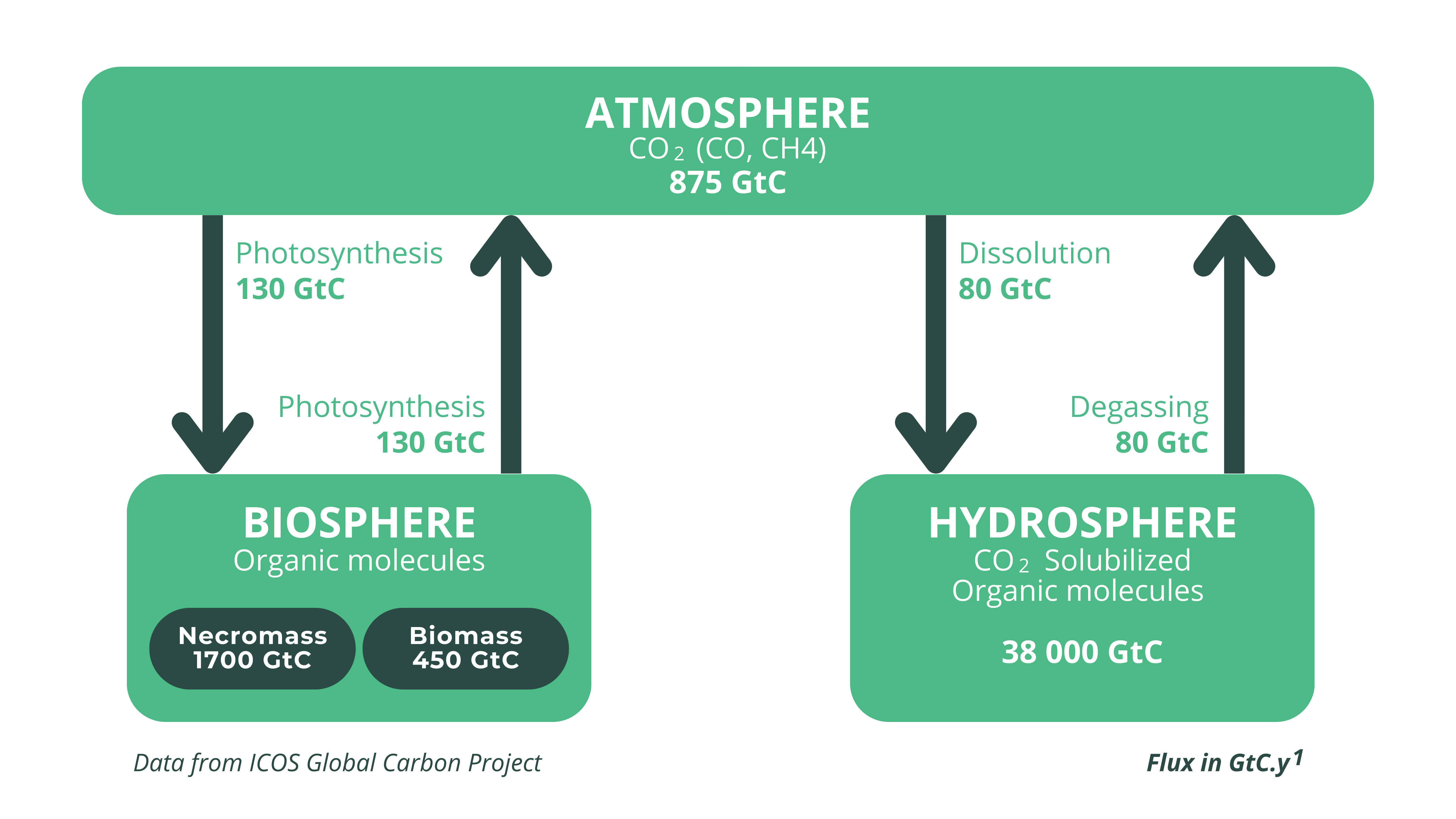
The carbon cycle: a sensitive equilibrium between different carbon sinks

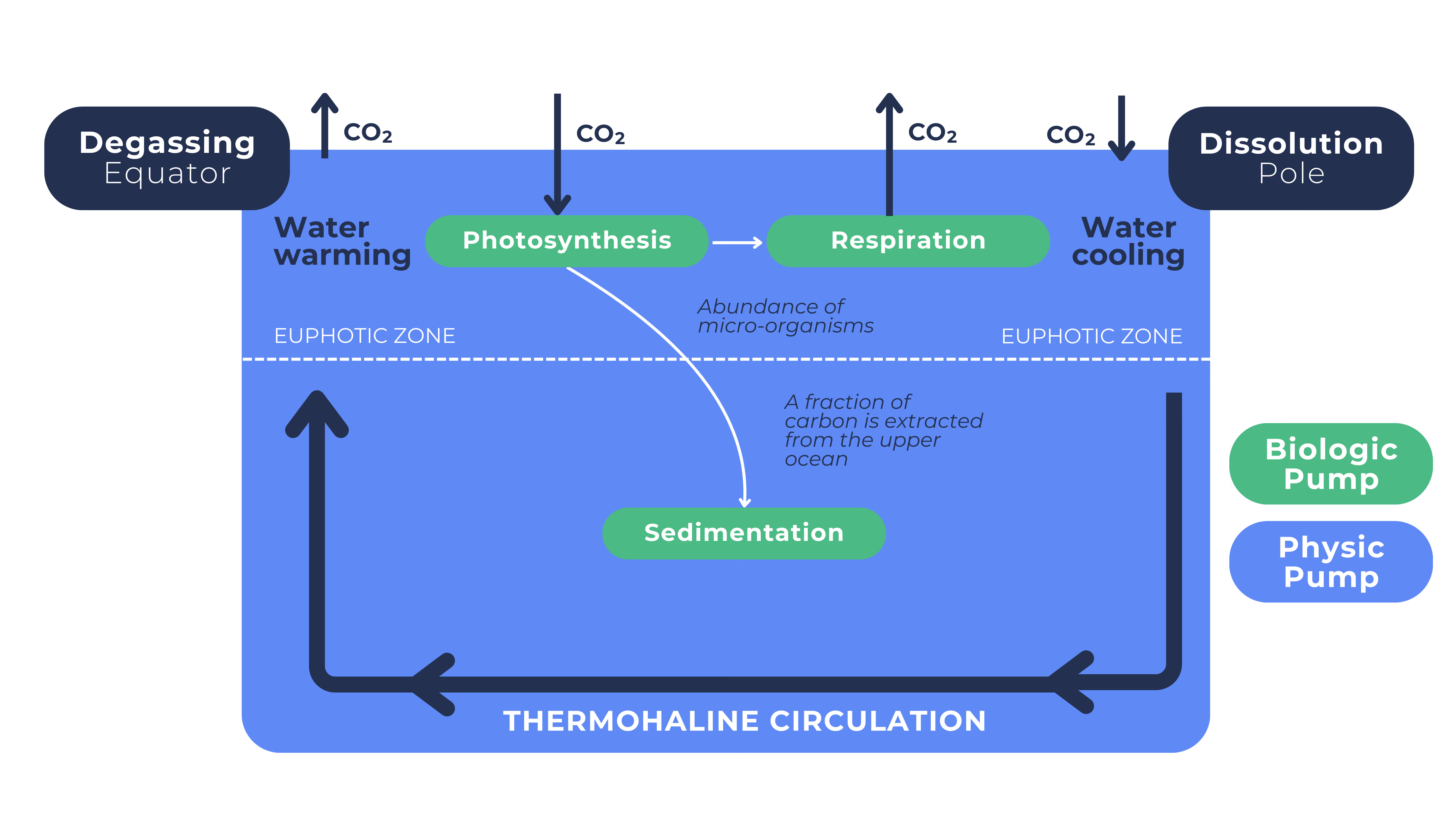
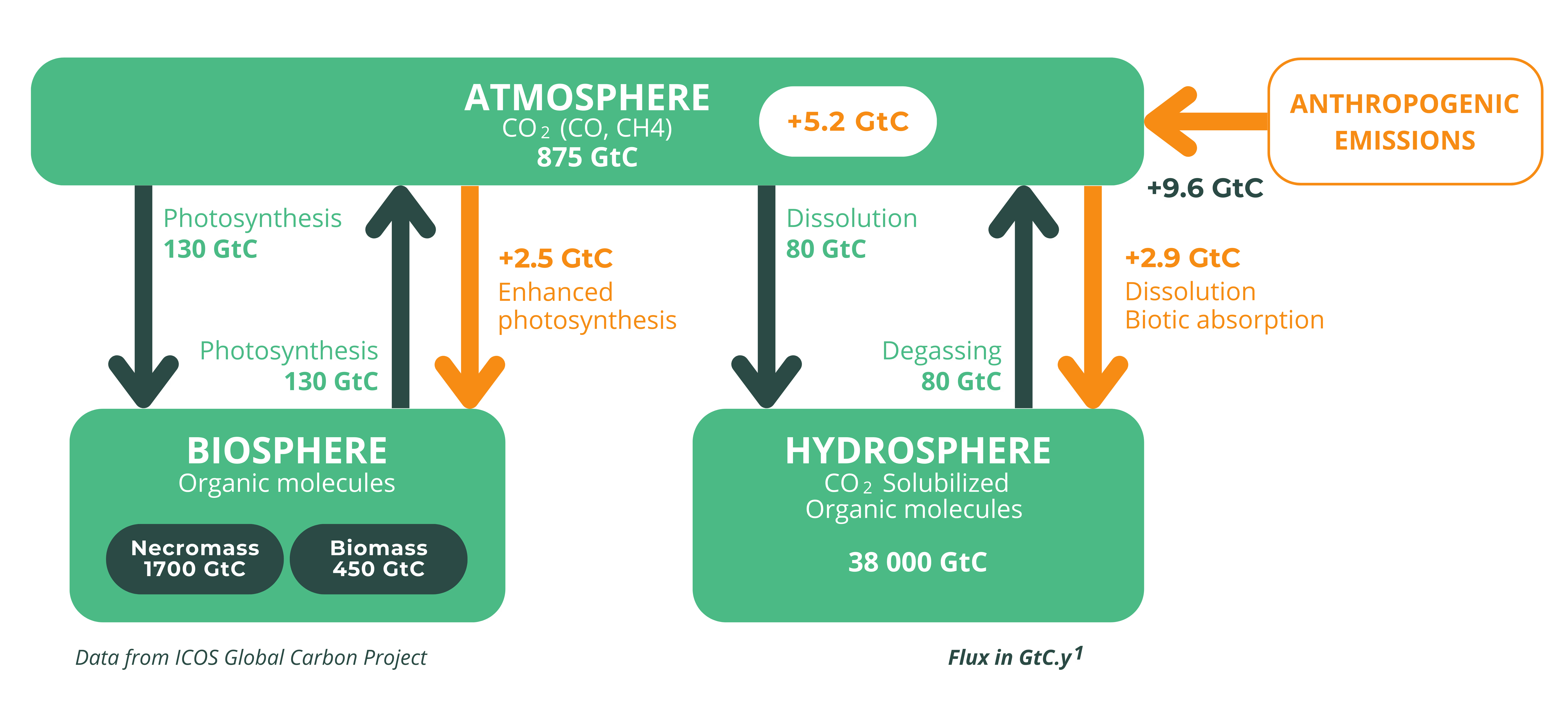
Carbon at the Earth’s surface is distributed between three main sinks: biosphere, hydrosphere and atmosphere. The flows between these reservoirs result in the carbon cycle. Altogether the planet contains more than 40,000 gigatons of carbon (GtC), with around 200 GtC absorbed from and emitted towards the atmosphere, through photosynthesis and respiration with the biosphere, and dissolution and degassing with the hydrosphere.  

Primary carbon exchanges between the ocean and the atmosphere are abiotic and closely tied to water temperature: cold water releases CO2, while warm water absorbs it. Overall, differences in water density due to variations in salinity and temperature drive a global ocean current known as the thermohaline circulation: certain areas of the ocean absorb CO2, whereas other regions release it. Through photosynthesis, plants absorb CO2 from the atmosphere and then release it back through respiration and when they decompose.

All these relations between the different reservoirs are complex and scientifically unknown – though consequent progress has been made in the last decades. Such natural mechanism is based on a sensitive equilibrium challenged today by growing anthropic emissions.

Biodiversity absorbs part of our emissions

Anthropogenic emissions are currently emitting a new carbon influx of + 9.6 GtC per year into the atmosphere, mainly in forms of carbon dioxide, derailing the whole system with the greenhouse effect.

Lucky for us, part of it is absorbed by the biosphere and by the hydrosphere. Rising atmospheric CO2 levels naturally boosts photosynthesis, enabling plants to take up more carbon. It’s estimated that plants are now absorbing an additional 2.5 gigatons of carbon annually, which accounts for about 28% of the CO2 emissions generated by human activities. Plants play a crucial role in carbon storage by transferring carbon into the ground as their deep root systems decompose into soil necromass. They also produce carbon-rich compounds, called exudates, which are stored in the soil and contribute to long-term carbon sequestration. These natural processes have a buffering effect of biodiversity that helps slowing the rate of climate change. In total, nature-based solutions can provide 37%, or a one third of climate mitigation efforts needed through to 2030 for a reasonable chance of holding warming below 2 °C.  

Marine biodiversity also plays a key role, particularly through the diversity of microorganisms, such as phytoplanktons that produce organic matter through photosynthesis, using dissolved CO2 from the water. Most marine microorganisms grow and decompose at the surface in the euphotic zone where light can pass through. A portion of the organic matter is then transported from the surface to the deeper ocean layers. This process is known as the Ocean’s Biological Pump, responsible for most of the carbon vertical gradient.

Yet biodiversity carbon sinks are not enough, as they seem to have reached their maximum capacity. Each year, around +5.2 GtC ends up into our atmosphere, mainly in forms of CO2 emissions. This directly impacts climate change, but also endangers our whole ecosystem.

We are reaching the equilibrium’s breaking point

Biodiversity has demonstrated an impressive capacity for adaptation, yet human impacts are now pushing ecosystems to their breaking points. The balance may falter, leading to challenges in ecosystem recovery and threatening essential ecological functions. Rising temperatures due to climate change are reshaping biodiversity, often resulting in declines in species abundance as organisms struggle to survive.

This can generate several vicious cycles, with the most commons being the melting of polar ice caps and the heightened frequency of wildfires. The seas’ ability to absorb atmospheric carbon is also reduced, as rising temperature alters the capacity of seawater to dissolve gases. Furthermore, soil emissions are projected to increase by as much as 40% by the end of the century if current trends persist. Climate change causes soils to dry out and accelerates the decomposition of organic matter by microbes as moisture levels in soils are evolving. Drier soils also impact the types of vegetation that thrive in these areas – and any shifts in plant communities significantly affects soil emissions.

As we depend on biodiversity to absorb part of our emissions, it is crucial to consider how we can actively preserve and protect these diverse ecosystems for the future. If biodiversity loss continues, we will face an unabatable temperature increase. The updated Living Planet Report of WWF has highlighted the urgency of biodiversity preservation, stating that “what happens in the next five years will determine the future of life on Earth.” We need to look beyond carbon and enter into the biodiversity-climate nexus.

Nature can’t wait – Environmental finance must be leveraged

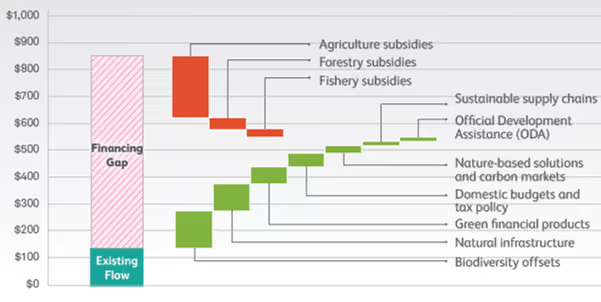
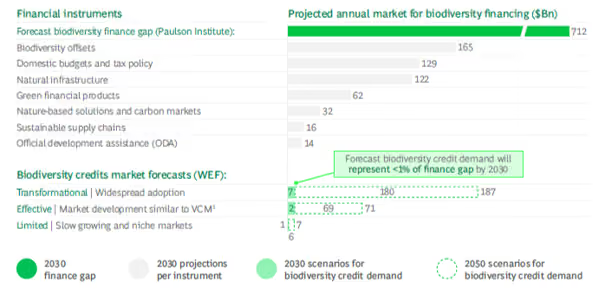
According to the Kunming-Montreal Global Biodiversity Framework, the biodiversity finance gap is estimated at $700 bn a year between now and 2030: $500 bn of harmful subsidies that must be redirected towards Nature, and $200 bn to be mobilized from private and public sources.  

We cannot rely on public funding only. Developed countries have vowed to contribute $20bn a year to poorer countries by 2025. Until now, only $163m have been pledged by eight countries (including the UK, Germany, France and Norway). That is less than 1 percent. And there are only few months left. Most pledges are in forms of loans and not grants, which emphasizes the risk of a vicious circle of indebtedness. Furthermore, the Global Biodiversity Framework Fund (GBFF), in charge of allocating those funds, is deemed burdensome to access and too far away from the needs of emerging nations.  

Private funding is therefore urgently required. And solutions already exist.

Biodiversity-enhanced carbon credits from high-integrity projects are already available. Biodiversity co-benefits are evaluated through additional standards in addition to the carbon methodology. The Climate, Community & Biodiversity Standards from Verra identifies specific areas under threat through six types of high-conservation values (HCV) such as species diversities or ecosystem habitats. The project is then guaranteeing protection and regular monitoring of the high-conservation values while ensuring the implication of local communities. More than 100 carbon projects have verified biodiversity benefits, spanning across 48 countries. As biodiversity becomes more and more a hot topic for companies – through CSRD, TNFD, SBT-N, NBSAPs and consumer pressure -, this type of additional certification generates a price premium that directly benefits biodiversity and local communities.

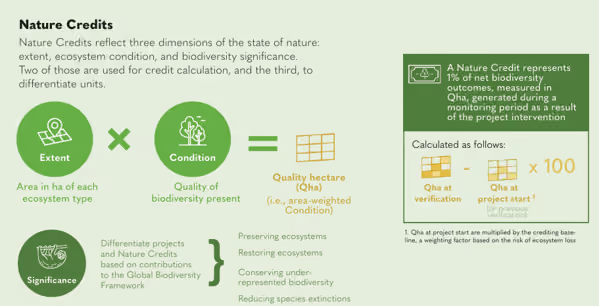
A standalone biodiversity credit market is also developing fast. With strong political support from France and the UK right after COP15, the International Advisory Panel on Biodiversity Credits (IAPB) has worked for two years to define high-integrity principles for the whole market, together with the World Economic Forum and the Biodiversity Credit Alliance. They have also launched various pilot projects with the most advanced standards such as Plan Vivo Nature or Verra Nature Framework. More than 35 biodiversity credit schemes and 140 indicators have been developed in recent years – we are now converging towards the standardization of certificate units to establish a common metric. According to estimates, the market could reach from $1bn $7bn by 2030.

At Removall, we help companies to act beyond their value chain by implementing innovative environmental contribution approaches. We propose biodiversity-enhanced carbon projects and biodiversity standalone projects for those willing to play their part. We are convinced that for too long, nature has been a peripheral part of the climate conversation.  

Nature can’t wait – so let’s act together!

Sources

‍

00
min
High-integrity Plastic credits and the UN Plastics Treaty
Beyond Carbon
Regulation & Standards

High-integrity Plastic credits and the UN Plastics Treaty

Overview of the UN Plastics Treaty Negotiation

The 5th and last phase of negotiations for a UN Plastics Treaty has started this week in Busan, Korea. High-integrity plastic credits are a powerful way to fight plastic pollution worldwide. If used constructively, it could provide massive private funding to plastic waste collection and recycling projects in places where it is urgently required. This mechanism should be valued in the Treaty as a complementary approach to Extended Producer Responsibility (EPR) frameworks, enabling short-term action and initiating a “Just Transition” for the informal waste sector.

Plastic pollution: the size of the problem

Plastic production is set to triple by 2060 if no production cap is implemented in the last phase of negotiation for a UN Plastics Treaty taking place this week in Busan. Most of this production growth will occur in emerging countries that are lacking waste management infrastructures. While emerging markets are hotspots of plastic pollution, they only receive 6% of investments (US$ 11 billion out of the US$ 190 billion invested into plastics circularity since 2018). Africa received only 0.3% of total investments in 2023, despite 8% of plastic waste leaked to the ocean coming from the continent. Macroeconomic costs of stringent policy implementation are also higher in emerging countries: below 0.5% of GDP for OECD countries, and around 1.5% of GDP for Sub-Saharan African countries.

This is even more problematic because the true cost of plastics is eight times higher in emerging countries when accounting for its negative externalities. The current investment trajectory is too slow to meet targets to reduce plastic leakage into the environment by 90% by 2040. All funding sources must be mobilized to help emerging countries fighting the plastic pollution timebomb.

Plastic credits: a verifiable tool for impact investing at scale

One plastic credit is equal to one tone of plastic waste removed from the environment, or recycled. Plastic collection or recycling projects can get certified by well-known standards such as the Verra Plastic Waste Reduction Program or Ocean-Bound Plastic through an independent third-party audit. Plastic credits generated are then sold to companies willing to voluntary contribute to the fight against plastic pollution by enhancing plastic circularity. Plastic credits bring funding to impact projects, enhancing transparency and social justice from plastic waste management activities.

Not a license to pollute but an incentivization to act & contribute

If integrated into broader corporate plastic mitigation roadmaps, plastic credits could impact project finance at scale, while propelling corporate ambitious roadmaps. Under no circumstances should this prevent us from limiting production or turning a blind eye to value chain actions. This a complementary and necessary solution to anticipate the ticking plastic pollution timebomb.

Companies should adopt a contributory – but quantified and transparent – approach to engage into global plastic waste mitigation roadmaps encompassing plastic footprint measurement (Plastic Footprint Network, WBCSD), reduction targets (3R Initiative, Global Commitment), credit purchase (Verra, OBP) and reporting (Carbon Disclosure Project, CSRD).

Not all standards are equal

Various private-owned plastic credit standards have been developed in recent years. We should only support high-integrity plastic credits corresponding to “fully independent and transparent programs” identified as “Tier 1” in a recent World Bank report. Those credits follow key market principles that are essential to create an investment instrument beneficial to anyone. Here are some of the most important ones:

- Additionality: proof that without the project, the plastic waste would have been left or dumped into the environment – or that the project would not have been feasible without plastic credit finance.

- Permanence: plastic waste must be brought to a more appropriate end-of-life such as recycling or upcycling, ensuring no leakage in the future. Waste-to-energy or proper landfills must be carefully managed and – when possible – avoided.

- Third-party audited & listed on a public registry for guaranteeing verifiability and transparency.

- Independency: standard setters must be fully independent from the selling activities for avoiding any possible conflicts of interest.

The necessity of blended finance to face the chicken & egg problem

The real power of voluntary environmental markets is to enable project finance. As an example, the maturity stage of the 15+ years old carbon market now allows for early-stage project finance. Removall is a leader of that type of investment, with 7 carbon projects financed globally. In most cases, 100% of investment needs are covered by carbon finance by anticipating the carbon credit potential of the project over the long-term. Even private banks are starting to invest in such projects, with IRR above industrial levels.

As the plastic credit market is still emerging, the demand for pre-purchase of credits by private companies is still low – which means that financing projects in the ramp-up phase remains difficult. We are currently facing a chicken & egg situation in which corporates are looking for up-and-running projects, while the latter require funding to become fully operational.

That is why blended finance mechanisms are essential to propel the plastic credit market. Few months ago, the World Bank has announced a US$ 100 million Plastic Waste Reduction-linked bond, similar to the “Rhino bond” issued in South Africa in 2022. With a risk hedged by their partner Citi Group, the first phase of the bond directly finances two projects Verra-certified in Ghana and Indonesia. This allows private investors to join in early stages by lowering the project risk. Such innovative finance mechanisms must be leveraged extensively in the years to come.

Plastic credits & EPR: joining the dots in the Treaty

Extended Producer Responsibility (EPR) frameworks can be an important policy approach to addressing plastic pollution if it is well-designed and implemented in a context-appropriate manner. It is strongly advocated in the Treaty, as the mechanism has brought some great successes in developed countries. Still there is a lack of locally appropriate examples that developing countries can learn from or replicate.

EPR implementation in emerging countries faces various challenges:  

  • Huge infrastructure funding deficit that governments are unable to bridge
  • Resource-intensive for governments on the legal, regulatory, and administrative requirements
  • Informal waste sector that first needs to be progressively formalized
  • Lenghty implementation process, taking 10+ years in most cases (not to mention the risk of political corruption)

This is not about plastic credits vs. EPR frameworks, but rather about how to combine the two to get the most out of them. Links between compliance and voluntary environmental markets are worth studying. This has occurred frequently in the voluntary carbon market, with Article 6 of the Paris Agreement allowing countries to trade carbon credits as part of their Nationally Determined Contributions (NDCs), or through Article 147 of the French law ‘Climat & Résilience’ which obliges airline companies to offset their carbon emissions. Similar frameworks are under development for biodiversity credits, such as the Biodiversity Net Gain in the UK or the Nature Repair Market in Australia. Recognizing plastic credits as a means of complying with regulatory obligations could propel the market, avoiding losing decades of action.

Plastic credits under the Verra Plastic Waste Reduction Program have been designed as a temporary solution for EPR framework implementation in emerging countries. The crediting period is either 10 years or 7 years renewable twice (under updated conditions), for setting up the waste management system before handling it back to the government or including it into an established EPR scheme. Verra will publish a white paper dedicated to the topic in the coming weeks.

The need for a “Just Transition”

Social impacts for the waste picker community are at the heart of high-integrity plastic credit methodologies. Under the Verra Plastic Waste Reduction Program, various social safeguards are implemented:

  • Consent: obtain free, prior and informed consent prior to project implementation
  • Transparency: organize a Local Stakeholder Consultation for collecting feedback and establish suitable communication channels. Local communities should have the right to influence project design.
  • Safety: provide PPE equipment and enhance safety trainings
  • Labor rights: prohibit child labour, provide wages above national levels and ID cards

Informal waste sector in emerging countries always implies huge social challenges. High-integrity plastic credit certification is a way to progressively start its formalization, anticipating any government-led EPR mechanism. Additional standards such as the OBP Social+ allow for the certification of social co-benefits. Other independent frameworks provide detailed guidelines, such as the Harmonized Responsible Sourcing framework by the Circulate Initiative.

What would the ideal Plastics Treaty look like?

The 5th and last phase of negotiations for a UN Plastics Treaty has started this week in Busan, Korea. Chances of success are low: ambitious options mentioned in the draft Treaty last summer have been withdrawn in the shorter version “Non-paper 3” drafted by the Chair of Committee. Some key challenges are not yet resolved, such as limiting plastic production worldwide or agreeing on rules of procedures (consensus vs. vote), which threatens even the existence of the Treaty.

Still, there is place for hope. The Paris Agreement has been signed in the last phase of negotiations at COP21, and it has now become the main reference of climate action. This is what an ambitious Plastics Treaty could look like in an ideal world:  

  • Plastic production cap on a global scale
  • Plastic disclosure frameworks for the private sector: plastic footprint, target-setting, mitigation actions & reporting  
  • International plastic pollution fee, channelling funds towards emerging countries through an international organization such as the Global Environmental Facility
  • High-integrity plastic credits incentivized and established regulatory links with EPR in emerging countries.

Let’s be clear: this will take time. Even if the 5th round of negotiation comes to an agreement, the Treaty will still have to be approved by a Diplomatic Conference before entering the COP process. We are running out of time: with high-integrity plastic credits, we can start to act now.

Sources

00
min
Introduction to the Voluntary Carbon Market in Africa
Carbon Market Insights
Project Insights & Impact

Introduction to the Voluntary Carbon Market in Africa

As global awareness of climate change intensifies, the Voluntary Carbon Market has emerged as a vital tool for countries to mitigate greenhouse gas emissions. In Africa, where the effects of climate change are increasingly apparent, the VCM presents an opportunity to invest in projects that sequester carbon, enhance livelihoods, protect biodiversity, and foster resilience.

The Rising Influence of Africa in the Global Voluntary Carbon Market

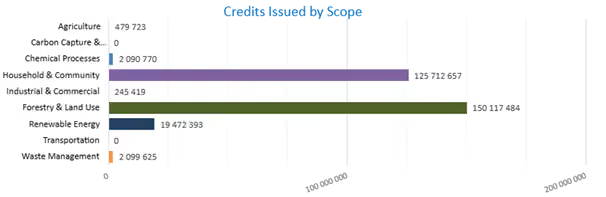
While the VCM in Africa started relatively slowly — with the first credits issued on the continent dating back to 2003, compared to 1996 globally — Africa’s influence in the global carbon market has been steadily increasing. According to the Berkeley Carbon Trading Project’s Voluntary Registry Offsets Database (2024)*, the number of credits issued and retired in Africa has grown significantly between 2018 and 2024, respectively multiplying by 3 and 4 (graph below).

As a result, the share of African projects in the annual global credits issued has risen from 13.5% in 2018 to 25% in 2023. This represents a remarkable growth trajectory, as the continent increasingly attracts investment and interest from international companies seeking to offset their emissions.

* The database tracks carbon offset projects, credit issuances, and retirements across four major registries: American Carbon Registry (ACR), Climate Action Reserve (CAR), Gold Standard, and Verra (VCS).

Overview of the Voluntary Carbon Market in Africa

Today, the voluntary carbon market in Africa is thriving, with projects spanning across renewable energies (wind, solar, geothermal), energy efficiency, reforestation, sustainable agriculture and community-based projects (cookstoves, clean water). The 2024 Berkeley Database suggests that more than 2,000 African projects have issued credits since the market’s inception. These projects have collectively issued 300 million carbon credits (equivalent to around $2.2 Bn**), with 151 million retired to offset emissions ($1.2 Bn). The majority of these credits have been registered under two main standards: the Verified Carbon Standard (VCS) – 66.5%, and Gold Standard – 33.5%.

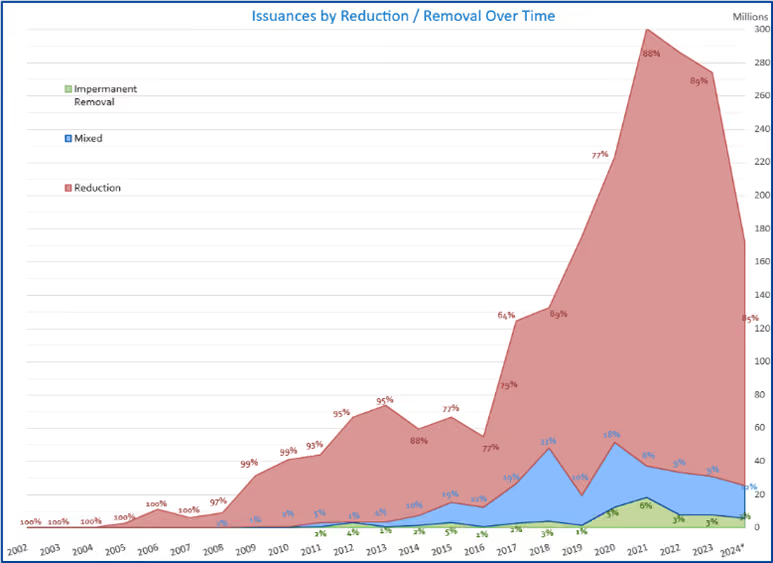
Similarly to the rest of the world, the bulk of carbon credits in Africa are derived from emission reductions or avoidance (85%), with only a small proportion of credits linked to mixed credits (12%) and even fewer to pure removals (3%). This makes removal projects and Nature-Based Solutions particularly rare and attractive to investors on the continent.

Sectoral breakdown: a predomiance of large conservation forestry projects and community initiatives

In terms of project typology, the forestry and land-use sector remains dominant in Africa, accounting for 50% of the credits issued. This is primarily driven by  forest conservation projects (88%), with a lesser proportion attributed to reforestation or sustainable grassland management.

The second key sector in Africa is household and community-based projects, which represent 42% of total credits issued. These are mostly driven by clean cookstoves (78%), with other notable contributions from clean water initiatives (10%), energy efficiency programs (5.8%), and community boreholes (5.6%).

Renewable energy projects, though still limited, account for 6.5% of credits issued.

Regional breakdown: East Africa Takes the Lead

In terms of regions, East Africa leads the market, accounting for 44% of Africa’s projects, with Kenya alone representing 50% of that total. Southern Africa follows with 29%, Central Africa makes up 14%, and West Africa 12%, while North Africa contributes just 1%. Key countries with the highest number of carbon offset projects include Kenya (296 projects), Uganda (250), Rwanda (204), Malawi (131), and Madagascar (119).

**Pricing reference MSCI

Recent Regulatory Developments

The Africa Carbon Market Initiative (ACMI) is a pioneering initiative aimed at accelerating the development of carbon markets across Africa. Launched in 2023, it is part of the broader effort to support the continent’s contribution to global climate action. The primary goal of the ACMI is to create a robust and transparent carbon market infrastructure to enable African countries to tap into the growing global demand for carbon credits.

In line with this initiative, several African countries have made significant strides in establishing and refining their carbon regulatory frameworks in the past few years.

In East Africa, Kenya has introduced the Climate Change Act (2016) and completed it with the newly released Climate Change (Carbon Markets) Regulations (2024). Both documents create a legal framework for carbon trading and outlines procedures for the development of carbon offset projects. Rwanda also appears as a country favourable to carbon investors, with one of the first Corresponding Adjustments approval released globally on a carbon project.

In Southern Africa, South Africa has made notable progress with its carbon tax policy, which includes provisions for companies to offset a portion of their tax liabilities through investments in certified carbon projects (Department of Environmental Affairs, South Africa, 2019). Mozambique has also established a clear and favourable legal framework to implement carbon projects with the Decree No. 23/2018.

In West Africa, Ghana has implemented the Ghana Forest Investment Programme (GFIP), which focuses on enhancing forest management and conservation (Ghana Forestry Commission, 2019). This program supports the development of carbon credits from reforestation and afforestation projects.

The evolution of these carbon regulations is significantly impacting the landscape for carbon offset projects in Africa, encouraging other countries to also work a clearer legal frameworks and supportive policies.

Challenges and Opportunities

Despite the positive developments, several challenges persist in the regulatory landscape. Unclear or complex regulatory requirements or heavy compliance costs are prohibitive for both project developers and investors. Small and local entities lack the expertise needed to navigate complex regulatory requirements (Huang et al., 2020).

However, these challenges also present opportunities for growth. Looking ahead, the future of the voluntary carbon market in Africa appears promising. As regulatory frameworks continue to evolve, they will likely encourage increased investment in carbon projects, enhance project credibility, and align national efforts with global climate goals.

Current Status of African Carbon Projects and Future Prospects

Despite their importance and potential, there are still relatively few removal carbon projects in Africa that generate carbon credits.

Removall, committed to advancing the African carbon initiative, has been developing and investing in African carbon projects for over three years. Nearly 40% of the projects in the portfolio are based in Africa. Some of these projects have already been certified and generated their first carbon credits in 2024, including credits with corresponding adjustments. Significant investments have been made in projects in Mozambique and Rwanda, while additional opportunities are currently being developed in Tanzania, Uganda, Rwanda, Kenya, Ghana, Madagascar, and other countries.

In line with our commitment to the continent, Removall recently opened an office in Nairobi to strengthen operations, better identify new project opportunities, and improve the management of investments in the region. This strategic move will help scale up the impact and continue driving sustainable development across Africa.

Conclusion

It is crucial to remember that carbon offset projects in Africa are not just about environmental outcomes; they are deeply tied to development, the livelihoods of local communities and biodiversity. These projects often support the preservation of ecosystems, enhance agricultural productivity, provide clean energy, and improve health outcomes—directly impacting the lives of millions of people.

Unfortunately, at times, the ongoing debates and criticisms around carbon market integrity, and the complexities of environmental standards in developed countries can overshadow the urgent need for greater investment in Africa’s carbon projects. While these debates are important, they must not detract from the immediate need to channel more financing into projects that can deliver both environmental and social benefits. The reality on the ground is that for many African countries, the voluntary carbon market offers a rare opportunity to address both climate change and development challenges in tandem.

References

  • Berkeley University, Voluntary Registry Offsets Database v2024-08-31. The database, developed by the Berkeley Carbon Trading Project, contains all carbon offset projects, credit issuances, and credit retirements listed globally by four major voluntary offset project registries—American Carbon Registry (ACR), Climate Action Reserve (CAR), Gold Standard, and Verra (VCS).
  • Department of Environmental Affairs, South Africa. (2019). Carbon Tax Act.
  • Ghana Forestry Commission. (2019). Ghana Forest Investment Programme (GFIP).
  • Government of Kenya. (2016). Climate Change Act.
  • Huang, J., et al. (2020). « Challenges in Carbon Market Development in Africa. » Environmental Science & Policy, 107, 89-95.
  • MSCI pricing database.

‍

00
min
Projects Co-Benefits: Generating positive socio-environmental impacts
Project Insights & Impact
Integrity & Quality

Projects Co-Benefits: Generating positive socio-environmental impacts

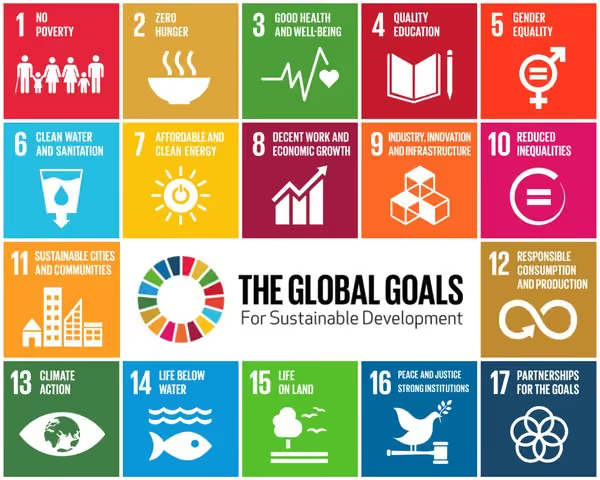
Carbon projects play a crucial role in the global fight against climate change, either by reducing or avoiding greenhouse gas (GHG) emissions, or by capturing carbon from the atmosphere. However, their impact goes far beyond climate change. By generating additional positive socio-environmental impacts, known as co-benefits, these projects make a significant contribution to achieving the Sustainable Development Goals (SDGs). These additional impacts, since they come on top of GHG reduction or sequestration, include positive impacts on the environment, local communities and local economic development.

Carbon projects certified by international standards, the most robust of which are recognized under the ICROA (International Carbon Reduction and Offset Alliance) Code of Good Practice, must meet several quality criteria:

  • Additionality
  • Measurability
  • Sustainability
  • Verifiability (audit by independent third parties),
  • Uniqueness
  • Generation of co-benefits.

Co-benefits can take many forms, from job creation and biodiversity protection to improved health and education infrastructures, and are closely linked to the SDGs.

What are SDGs?

The SDGs, defined and adopted by the United Nations in 2015, constitute a universal roadmap for promoting balanced, equitable and sustainable development on a global scale. Comprising 17 interconnected goals, the SDGs cover major issues such as reducing inequalities, combating climate change and ensuring access to essential resources. They set specific targets to be achieved by 2030, and provide a framework for coordinating the efforts of governments, businesses, NGOs and citizens. Their global and inclusive nature makes it possible to respond to complex and interdependent challenges, while proposing concrete, integrated solutions to carbon projects.

‍

In this context, the SDGs offer a relevant framework for maximizing positive impacts beyond the reduction and/or avoidance of carbon emissions. Each co-benefit targeted by a carbon project, whether in terms of improving living conditions, public health or preserving ecosystems, can contribute to achieving one or more of the SDGs. This contribution must be supported by tangible, measurable evidence, such as impact indicators or validated scientific studies.

Case study: Mangroves project in Pakistan

The Sindh project is an initiative focusing on the restoration and conservation of mangroves in the Indus delta region of Sindh, Pakistan. Deforestation in the Indus delta has led to a significant reduction in mangrove cover, from 600,000 hectares in the 1980s to around 263,000 hectares in 1990. This deforestation is mainly due to the intensive exploitation of mangroves for firewood, fodder and grazing by local communities and their livestock. This phenomenon is exacerbated by the reduction in freshwater and sediment inputs caused by the construction of upstream dams and irrigation projects. This combination of human activity and dwindling natural resources has led to significant degradation of the mangrove ecosystem.

This region is essential for climate change adaptation thanks to its unique arid-climate mangroves, which act as natural barriers against coastal erosion, storms and sea-level rise. In addition, these ecosystems support local biodiversity and provide vital livelihoods for communities, making their restoration crucial to environmental and social resilience. This project covers 350,000 hectares and focuses on the restoration and protection of mangroves, which are essential for preserving biodiversity and protecting coasts from storms.

‍

Project highlights and environmental co-benefits

In addition to carbon sequestration, restored mangrove forests play a vital role in preserving and restoring habitats for many rare and endangered species. These include the Indian pangolin, the Indus river dolphin, and the fishing cat, as well as several species of seabirds and amphibians.

Mangroves also host a rich and diverse ecosystem that supports the reproduction and development of numerous species of fish, crustaceans, and mollusks. These areas serve as natural nurseries for key species such as shrimp, crabs, and tropical fish, thereby strengthening marine food chains and contributing to the food security of local communities.

The project emphasizes the planting of various native mangrove species, including Avicennia marina, Rhizophora mucronata, and Ceriops tagal, which are well-adapted to the region’s arid and saline conditions. These species were selected for their ability to stabilize soils, reduce coastal erosion, and provide critical habitats for marine and terrestrial species. The complex root systems of these trees not only protect coasts from erosion and storms but also enhance soil fertility by promoting sedimentation and improving surrounding water quality.

Furthermore, mangrove restoration helps boost local agricultural productivity by mitigating saltwater intrusion, enabling the cultivation of food crops and maintaining grazing lands for livestock. These efforts directly contribute to the climate and economic resilience of communities that rely on these natural resources for their livelihoods.

More specifically, this project addresses the following SDGs:

GHG emission reductions of 3,497,159 tCO2e during the monitoring period.

Restored mangroves over more than 73,125 hectares significantly increase the number of spawning sites for fish, shrimp, and other marine species. Species such as the Indian pangolin and the freshwater dolphin are preserved.

Soil fertility is maintained, and land degradation is managed by controlling saltwater intrusion through processes within thriving mangrove forests. The ecosystem also contributes to crop pollination and biological control of insects, pests, and diseases.

Social co-benefits

On a social level, the project has generated significant co-benefits for local communities. It has created over 10,000 jobs in various sectors such as mangrove planting and maintenance, natural resource management, community infrastructure construction, and raising awareness among local populations. Among these, 1,030 jobs were specifically allocated to women, promoting their economic independence and participation in sustainable development initiatives.

In addition, more than 15,000 people have benefited from improved access to healthcare services through public health awareness campaigns, mobile clinics providing basic medical consultations, and vaccination programs for children. Over 400 people now have access to clean drinking water thanks to the installation of wells and adapted filtration systems. Community latrines have been built to improve sanitary conditions and reduce the risk of diseases.

The project has strengthened the education of 386 individuals, including 161 girls, through various initiatives. It has enabled the construction of classrooms and the organization of training sessions on natural resource management, including mangrove conservation and sustainable agricultural practices. Workshops were also conducted to develop women’s leadership and entrepreneurial skills.

This project specifically addresses the following SDGs (consider including SDG logos):

  • No Poverty (SDG 1):
    Support for fishing communities has promoted sustainable practices, reaching 8,949 individuals. At the same time, the development of community business projects and access to microfinance have strengthened local economic capacities.
  • Zero Hunger (SDG 2):
    Increased agricultural and livestock productivity through enhanced coastal protection resulting from mangrove restoration.
  • Good Health and Well-being (SDG 3):
    Access to improved healthcare facilities, benefiting 15,124 people, including 7,662 women.
  • Quality Education (SDG 4):
    The project aims to provide access to education for 386 individuals, including 161 girls, in the region. It also includes training personnel from the Sindh Forestry and Wildlife Department to enhance local capacities in conservation and natural resource management.
  • Gender Equality (SDG 5):
    The project promotes gender equality by offering income-generating activities specifically designed for women, benefiting 1,030 women.
  • Clean Water and Sanitation (SDG 6):
    Access to clean water and sanitation facilities benefits 400 people, including 150 women.
  • Decent Work and Economic Growth (SDG 8):
    Mangrove restoration activities have created direct employment for 10,410 individuals, including 1,030 women.
  • Sustainable Cities and Communities (SDG 11):
    Improved protection against storm surges and other hazards for 21,344 people.

Measurement and Evaluation of Co-Benefits

Measuring and evaluating co-benefits are essential to ensuring the overall impact of carbon projects. For this project, the CCB (Climate, Community, and Biodiversity Standards) certification, at the Gold level, ensures rigorous monitoring and international recognition of co-benefits. This standard, managed by Verra, establishes strict criteria to assess the project’s impact on climate, local communities, and biodiversity.

The CCB certification is based on a rigorous process that includes:

  • Project Design: Project developers must demonstrate how their project contributes to carbon sequestration while generating tangible benefits for communities and ecosystems.
  • Initial Validation: An independent third-party auditor reviews the project documentation to verify its compliance with the standard’s criteria.
  • Periodic Verification: Regular audits, including field visits, ensure that the reported outcomes are achieved and that the commitments made as part of the project are upheld.
  • Transparent Reporting: Developers must submit detailed progress reports, including environmental data (such as habitat restoration and carbon sequestration) and social data (such as benefits to local communities). These reports are publicly accessible through online registries, ensuring complete transparency.

For this project, evaluations include:

  • Environmental monitoring using advanced technologies such as satellites and drones.
  • Community surveys to assess social benefits.
  • Tracking specific indicators, such as the number of protected species and the area of restored habitats.

Towards Multi-Impact Carbon Projects for a Sustainable Future

The co-benefits of carbon projects are a crucial aspect of maximizing their positive impacts beyond merely addressing climate change, by integrating social, economic, and environmental advantages.

Beyond reducing GHG emissions, these projects generate tangible positive impacts for local communities, biodiversity, and the economy. The example of the mangrove restoration project in Sindh, Pakistan, demonstrates how carbon projects can tackle environmental challenges while providing solutions to social and economic issues.

By implementing rigorous monitoring and verification measures, these projects ensure a significant contribution to the Sustainable Development Goals, paving the way for a more sustainable and resilient future for all.

‍

00
min
Soil Organic Carbon, IALM practices and the Carbon Market
Carbon Market Insights

Soil Organic Carbon, IALM practices and the Carbon Market

Soil in the Carbon Cycle

Soils play a critical role in the global carbon cycle, acting as the largest natural active carbon sink on continental surfaces [1], storing approximately 2,500 Gt of carbon. In comparison, the atmosphere holds about 760 Gt, while terrestrial vegetation (biotic carbon) stores around 560 Gt [2]. According to the Food and Agriculture Organization (FAO), soil is a « complex matrix of interacting components: mineral particles, air, water, organic matter, and living organisms. » Among these, Soil Organic Carbon (SOC) is a key component, referring only to the carbon component of organic compounds, which influences soil fertility and its ability to store carbon.

Agricultural lands, which cover 37% of the world’s land surface [3], have significant potential for carbon sequestration—estimated at 2 to 5 gigatons of CO2 per year [4]. However, soil degradation is a growing concern, with 20% to 40% of land globally considered degraded as of 2022 [5]. This degradation undermines the land’s capacity to sustain life, crops, and ecosystems, largely due to intensive agricultural practices that have depleted organic matter over the past 50 years.

The good news is that soil degradation is reversible. Through improved land management, we can restore soil health, increase SOC levels, and transform agriculture into a powerful tool for combating climate change.

IALM Practices: A Nature-Based Solution

Integrated Agricultural and Land Management (IALM) practices are a cornerstone of sustainable agriculture. These practices aim to optimize yields while preserving biodiversity and increasing carbon sequestration in soils.

Key IALM practices include:

  • Reduced Tillage: Minimizing soil disturbance to maintain its structure and protect carbon stored in deeper layers.
  • Crop Rotation: Alternating crops to prevent nutrient depletion and control pests.
  • Cover Cropping: Growing temporary crops to reduce erosion, improve soil structure, and add organic matter.
  • Composting and Organic Additions: Enriching soils with organic material to enhance fertility and moisture retention.
  • Grazing Management: Regulating grazing intensity to promote soil regeneration and prevent overgrazing.

These practices not only enhance yield productivity, permanency and soil resilience against climate change but also reduce greenhouse gas emissions, contributing significantly to climate mitigation efforts.

Soil organic carbon (SOC) sequestration. Source: FAO

‍

The role of carbon finance

To unlock the full potential of SOC and IALM practices, carbon finance must play a central role. By assigning monetary value to carbon sequestration, carbon markets incentivize sustainable soil management and improve livelihoods of the farmers in all countries. McKinsey’s studies emphasize that adopting regenerative agriculture practices on U.S. corn and soy farms—some of the largest crops in the country—could not only reduce the environmental impact of the industry but also offer promising financial returns for most farmers nationwide, generating an average of $20 to $60 per acre annually over the first ten years. [6]

Several established standards, such as VCS and Gold Standard, offer methodologies tailored to soil carbon projects. These frameworks enable landowners and farmers to quantify and monetize their efforts in restoring degraded lands, creating tradable carbon credits. However, challenges remain, including the need for robust remote monitoring systems, the high cost of soil analysis at date, and ensuring equitable access for small-scale farmers.

Source from Berkeley Voluntary Registry Offsets Database - v2024-08-31 (adjusted with updated from the author)

Compared to other Nature-Based Solutions methodologies, such as Afforestation, Reforestation, and Revegetation (ARR), IALM methodologies still have a relatively recent track record. In fact, the VCS – the leading standard for AFOLU projects – currently lists only two regenerative agriculture projects with emitted carbon credits. However, the first verification of VM0042 for the Involtor project in Romania serves as a significant indicator that a new trend is emerging.

‍

To conclude

Soil restoration is an environmental imperative, which must be supported by carbon finance. Healthy soils foster sustainable livelihoods by improving food and water security, increasing incomes, and building resilience to climate change.

Sources

[1] Dignac, M.-F., Derrien, D., Barré, P., Barot, S., Cécillon, L., Chenu, C., Chevallier, T., Freschet, G., Garnier, P., Guenet, B., Hedde, M., Klumpp, K., Lashermes, G., Maron, P.-A., Nunan, N., Roumet, C., & Basile-Doelsch, I. « Increasing Soil Carbon Storage: Mechanisms, Effects of Agricultural Practices, and Proxies. A Review. » Agronomy for Sustainable Development, vol. 37, 2017. DOI : 10.1007/s13593-017-0421-2.

[2] Ciro Gardi, Stefano Brenna, Silvia Solaro,  Mauro Piazzi, Fabio Petrella, “The Carbon Sequestration Potential of Soils: Some Data from Northern Italian Regions”, Italian Journal of Agronomy, 2006. https://doi.org/10.4081/ija.2007.135

[3] FAOSTAT. Analytical Brief 71: Land Statistics and Indicators 2000–2021. 2023. Disponible sur : https://openknowledge.fao.org/server/api/core/bitstreams/5c8b2707-1bcf-4c29-90e2-3487e583f71e/content#:~:text=Within%20agricultural%20land%2C%20cropland%20occupied,area)%20(Figure%201)%20(Figure%201)).

[4] Paustian, K., Larson, E., Kent, J., Marx, E., & Swan, A. « Soil C Sequestration as a Biological Negative Emission Strategy. » Frontiers in Climate. Vol. 1, Article 8, 2019. DOI : 10.3389/fclim.2019.00008.

[5] UNCCD. Global Land Outlook: Second Edition, Summary for Decision Makers. 2022, p. 6.

[6] Owen Stockdale, Pradeep Prabhala, Tom Brennan, Rui Chen, “Revitalizing fields and balance sheets through regenerative farming”, McKinsey & Company, 2024. https://www.mckinsey.com.br/industries/agriculture/our-insights/revitalizing-fields-and-balance-sheets-through-regenerative-farming.

00
min
Removall joins ICROA Governance Committee
Company News

Removall joins ICROA Governance Committee

A key role in shaping the future of carbon markets

ICROA (International Carbon Reduction & Offset Alliance) is a leading organization that sets best practices for VCM service providers, ensuring high standards in the use of carbon credits. The ICROA Governance Committee plays a crucial role in guiding the organization’s strategy and representing ICROA-approved member companies.

By joining this committee, Removall will actively contribute to discussions on the evolution of carbon markets and help shape key recommendations to strengthen their integrity.

At a time where voluntary carbon markets are evolving rapidly, this role will allow Removall to contribute to shaping best practices and ensuring that carbon credits deliver real, measurable impact in the fight against climate change.

We look forward to supporting ICROA’s mission and working alongside industry leaders to drive transparency, accountability, and effectiveness in the carbon market.

00
min
Understanding Suppressed Demand in Safe Water Supply Carbon Projects
Project Insights & Impact

Understanding Suppressed Demand in Safe Water Supply Carbon Projects

In the realm of carbon markets, safe water supply projects offer a unique opportunity to generate carbon credits while delivering life-changing benefits to communities. One key concept that enhances the viability of these projects is suppressed demand — a mechanism that acknowledges the latent, unmet need for cleaner, more sustainable water access in underserved populations. Understanding how suppressed demand works is essential to appreciating the full impact of these projects on both carbon emissions and human well-being.

What is Suppressed Demand?

Suppressed demand refers to a situation where people do not currently consume a service or product considered as basic Human need, typically due to financial, infrastructural, or technological limitations (poverty context). In the context of water supply, many communities rely on unsafe water sources, which often necessitate energy-intensive water boiling for purification — a practice limited by access to fuel and resources.

The carbon market recognizes suppressed demand by allowing projects to account for potential emissions reductions that would occur if communities had access to clean water without the need for boiling. This means that even if communities are not boiling all their water due to lack of fuel (meaning they are consuming unsafe or contaminated water), a project can still claim carbon credits based on the assumption that, in a more equitable scenario, people would purify their water to meet basic health standards.

How Suppressed Demand Applies to Safe Water Supply Projects

Safe water projects, such as the installation of water filtration systems or boreholes, prevent the need for burning biomass to sterilize water. In regions where wood or charcoal is the primary fuel, boiling water contributes significantly to deforestation and greenhouse gas emissions. By installing sustainable water sources, these projects effectively avoid emissions that would otherwise occur, even if communities had not been boiling all their water previously.

For example, under a suppressed demand approach, carbon credits can be issued based on the assumption that every litre of safe water provided displaces emissions from boiling, even if historically only a portion of households boiled their water. This approach acknowledges the right to safe drinking water and aligns carbon accounting with the principle of climate justice, recognizing that lack of resources should not penalize communities in terms of carbon credit generation.

Debates around Suppressed Demand

Despite its advantages, the concept of suppressed demand has sparked debates within the carbon market. Critics argue that it involves hypothetical baselines that can lead to over-crediting, as emissions reductions are based on assumed, rather than actual, avoided emissions. Some also express concerns about the verification of these projects, questioning whether they genuinely lead to additional and measurable climate benefits.

To address these concerns, major carbon standards such as the Gold Standard have established rigorous methodologies for suppressed demand projects and updated them to guarantee conservativeness and high integrity. These standards require strong baseline assessments, conservative crediting approaches, and robust monitoring to ensure that projects deliver real and verifiable benefits. Transparency and community engagement are also emphasized to align climate finance with local development needs.

Implications for Carbon Project Developers

Incorporating suppressed demand in project methodologies broadens the potential for safe water initiatives to attract carbon finance. It makes projects more financially sustainable, enabling the scaling of infrastructure and long-term maintenance. For project developers, understanding and correctly applying suppressed demand calculations ensures accurate credit issuance while demonstrating the full environmental and social benefits of the intervention.

Furthermore, this approach encourages a holistic view of impact: beyond emission reductions, safe water access improves public health, reduces time spent collecting and boiling water, and alleviates pressure on local ecosystems.

Conclusion

The concept of suppressed demand is a powerful tool in safe water supply carbon projects, bridging the gap between current limitations and a future of universal access to clean water. It allows carbon finance to flow to communities most in need, amplifying climate action’s reach and reinforcing the link between environmental sustainability and human development. As the carbon market evolves, embracing mechanisms like suppressed demand will be essential to designing projects that deliver lasting, equitable impact for people and the plan.

00
min
French Charter for Paris-aligned and High Integrity Use of Carbon Credits
Company News

French Charter for Paris-aligned and High Integrity Use of Carbon Credits

Removall is proud to be a signatory of the Charter for Paris-aligned and High Integrity Use of Carbon Credits, launched on April 23rd by the French Government.

This initiative marks a key milestone: France is officially supporting the development of a high-integrity voluntary carbon market, aligned with its national climate strategy. It offers companies a clear and credible framework to strengthen their climate positioning through the responsible use of high-quality carbon credits.

At Removall, we are convinced that high-quality carbon projects are essential to achieving global net zero.

This sends a strong signal: France is ready to make carbon markets a strategic lever for the ecological transition.

00
min
Developing High-Integrity Reforestation Carbon Projects
Project Insights & Impact

Developing High-Integrity Reforestation Carbon Projects

As the climate crisis intensifies, reforestation projects are once again at the forefront of climate mitigation strategies, especially within the voluntary carbon market (VCM). By restoring tree cover in ecologically degraded areas, reforestation projects can generate measurable carbon removals while also addressing local environmental challenges such as soil erosion, water scarcity, and biodiversity loss (Wang et al., 2025)[1].

However, the credibility of reforestation as a climate solution depends on the integrity of the projects. Recent years have seen the emergence of rigorous methodologies and standards, advanced monitoring technologies, and new governance frameworks to ensure that reforestation carbon credits deliver real, additional, and lasting climate benefits.

The Principles of Integrity: Core Criteria for High-Quality Projects

  • Additionality: Ensuring Real Climate Impact

Additionality means that the carbon removals or reductions from a project would not have happened without the support of carbon finance. In other words, the project must go beyond what would occur under normal circumstances (« business as usual »). The project must provide evidence, such as financial analysis or legal documents, to show that carbon funding is necessary for the project to take place.

  • Dynamic Baselines: Improving Accuracy and Credibility

A baseline is an estimate of what would happen to carbon stocks in the project area if the project did not occur. Traditional baselines were often fixed and sometimes unrealistic. Thus, dynamic baselines are a major improvement. How it works:

  • Dynamic baselines are established and updated using a combination of satellite imagery, geospatial analysis, and control plots, which are areas outside the project boundary with similar biophysical and socioeconomic characteristics. These control plots serve as a reference for what would likely happen in the absence of the project.
  • For instance, if control plots show that nearby forests are recovering naturally over time, the baseline will also reflect this improvement. As a result, the project can only claim credits for carbon sequestration that exceed this dynamic, evolving benchmark.
  • The VM0047 methodology from the VCS is the first methodology in the voluntary carbon market that allows for the use of dynamic performance benchmarks and relies on remote sensing data to establish a project’s baselines and test its additionality[2]. This approach strengthens additionality, reduces the risk of over-crediting, and ensures that climate benefits are conservative and robust.
  • Permanence: Securing Long-Term Carbon Storage

Permanence refers to the durability of carbon stored in forests. Risks such as wildfires, pests, and illegal logging can reverse carbon gains. To reduce such risks, high-quality Nature-Based Solutions (NBS) projects implement safeguards including buffer credit reserves, long-term agreements with landholders, and ongoing monitoring and risk assessment. In the context of carbon markets, permanence is typically interpreted as the ability to maintain emission reductions or removals for at least 100 years.

  • Robust Monitoring, Reporting, and Verification (MRV)

Accurate and transparent MRV is essential for credible carbon credits. Modern projects use remote sensing (satellite imagery, drones, LiDAR), digital data platforms, and hybrid approaches that combine field measurements with technology. For example, the new Gold Standard’s mangrove restoration methodology[3] includes a remote sensing approach that allows the use of regression analysis between on-site biomass measurements and remote sensing biomass measurements.

  • Avoiding Double Counting

Double counting occurs when the same carbon removal is claimed by more than one party. High-integrity projects use transparent tracking and public registries to ensure that each credit is only counted once. Article 6 of the Paris Agreement[4] introduces « corresponding adjustments » to prevent double counting in international markets.

  • Social and Environmental Co-Benefits

High-quality reforestation projects deliver benefits beyond carbon, such as community development, biodiversity protection, and ecosystem restoration. Projects must respect the rights and knowledge of local communities, ensure fair benefit sharing, and restore native species. Certifications like the Climate, Community & Biodiversity (CCB)[5] Standards and the W+ Standard[6] help verify these co-benefits.

  • Transparency and Independent Verification

Third-party verification is essential. Projects that lack transparent, independently audited MRV are now usually rated lower by agencies such as Sylvera, Calyx, and BeZero, which scrutinize data quality, methodological rigor and offer buyers information about the quality of carbon credits.

Challenges Facing Reforestation Carbon Projects

Despite progress, reforestation projects face several challenges that must be addressed to ensure their long-term impact and credibility:

  • Environmental and technical complexities:

Forests are dynamic systems influenced by climate, soil, species selection, and human management. Predicting how much carbon will be stored over decades is difficult, especially as climate change increases risks from drought, pests, and fire. Biomass browth curves are very difficult to forecast as biomass growth depends on a lot of parameters: soil characteristics, water, climatic conditions, species, genetic of seeds, pests and fires.

  • Ensuring permanence and managing risks:

Permanence remains a core challenge, especially for projects in low-income regions. Maintaining stored carbon over decades is a major challenge. Events like wildfires or illegal logging can reverse gains quickly, despite tools like buffer pools. Long-term success depends on adaptive management, sustained funding, and local engagement (Cook-Patton et al., 2021[7]).

  • Community engagement and social equity:

For reforestation to succeed, local communities must be meaningfully involved. However, explaining carbon markets and ensuring benefit-sharing requires time, trust, and culturally appropriate communication. Projects must ensure transparent benefit-sharing and respect for community rights, including Free, Prior, and Informed Consent (FPIC).

  • Market and policy uncertainty:

The voluntary carbon market is evolving rapidly, with new standards, methodologies, and regulations emerging. Uncertainty about future carbon prices, policy changes, and buyer preferences can make it hard for project developers to plan long-term investments.

The Path Forward

To address these challenges and scale up high-integrity reforestation, several steps are essential:

  • Adopt advanced methodologies: Use updated standards like VM0047, which require dynamic baselines and robust additionality tests, to improve accuracy and transparency.
  • Invest in technology: Leverage digital MRV, remote sensing, and data platforms to reduce costs and improve monitoring.
  • Strengthen community partnerships: Involve local communities in project design and monitoring, ensure fair benefit-sharing, and build capacity for long-term management.
  • Enhance Risk Management: Expand buffer pools, develop adaptive management plans, and secure long-term funding for monitoring and maintenance.
  • Promote policy alignment and market transparency: Support clear rules for credit accounting, avoid double-counting, and encourage the use of public registries and third-party ratings.

These steps are increasingly necessary not only to ensure the environmental integrity of reforestation projects but also to meet evolving market expectations. Buyers are now looking beyond basic carbon removal, placing greater value on transparency, strong monitoring systems, and community engagement. According to Forest Trends (2024)[8], there is a growing demand for high-integrity credits that deliver both climate and social outcomes. Projects that align with these expectations will be better positioned to secure long-term support while contributing meaningfully to ecosystem restoration and sustainable development.

‍

References

[1] https://www.cell.com/one-earth/fulltext/S2590-3322(25)00021-1

[2] https://verra.org/verra-announces-innovative-high-integrity-afforestation-reforestation-and-revegetation-methodology/

[3] https://www.goldstandard.org/news/new-mangrove-methodology-featuring-remote-sensing-expands-nature-based-solutions-from-gold-standard

[4] https://unfccc.int/process-and-meetings/the-paris-agreement

[5] https://www.climate-standards.org/ccb-standards/

[6] https://verra.org/updated-guidance-for-w-standard-labels-for-vcus/

[7] https://www.nature.com/articles/s41558-021-01198-0

[8] https://3298623.fs1.hubspotusercontent-na1.net/hubfs/3298623/SOVCM%202024/State_of_the_Voluntary_Carbon_Markets_20240529%201.pdf

00
min
Removall has secured corporate debt financing from four leading French banks to accelerate its growth.
Company News

Removall has secured corporate debt financing from four leading French banks to accelerate its growth.

To date, Removall has invested in or supported more than 150 projects focused on reforestation, mangrove restoration, agroforestry, the distribution of improved cookstoves, and access to clean water. For the projects directly developed and financed by REMOVALL Carbon, over 12 million tonnes of CO₂ will be sequestered over their lifetime, and 100 million trees will be planted.

Following the creation in April 2025 of a joint investment platform with Sumitomo Corporation to co-finance its projects, Removall is now establishing a financing club with four French banks to strengthen its long-term funding capacity at the corporate level.

Société Générale, Caisse d’Épargne Normandie (BPCE Group), LCL, and Crédit Agricole Alpes Provence (Crédit Agricole Group) are now supporting Removall through this corporate financing facility.

00
min
Removall appoints Jochen Gassner as Deputy CEO to drive global growth
Company News

Removall appoints Jochen Gassner as Deputy CEO to drive global growth

Removall, a leading carbon removal and climate finance company, is proud to welcome Jochen Gassner as its new Deputy CEO, in charge of Sales and International Development. Starting July 7, 2025, Jochen joins the leadership team to help accelerate Removall’s global expansion at a pivotal time in the fight against climate change.

A well-known figure in carbon markets, Jochen brings nearly two decades of international experience, having held key executive roles at First Climate and South Pole. Throughout his career, he has led global commercial teams, advised Fortune 500 companies on their climate strategies, and developed a deep understanding of both voluntary and compliance carbon markets.

His arrival marks a major milestone in Removall’s roadmap to scale its impact worldwide. With offices already established in Paris, Rio, and Nairobi — and upcoming expansions planned in Asia — Removall is rapidly positioning itself as a global leader in high-quality, community- and nature-based carbon projects.

Backed by a strong growth trajectory, including a recent financing round with four major French banks and a strategic joint venture with Sumitomo Corporation in Asia-Pacific, Removall continues to build momentum. Jochen’s leadership will be instrumental in strengthening commercial operations and forging new strategic partnerships to bring premium carbon removal solutions to more organizations across the globe.

“Jochen’s experience and vision are a perfect match for the next phase of Removall’s journey,” said Jérôme Beilin, Co-founder and CEO. “Together, we’re aiming to make carbon finance a powerful lever for both climate action and social impact.”

With Jochen on board, Removall is doubling down on its mission: delivering measurable climate and social outcomes through high-integrity carbon projects across the Global South.

‍

00
min
Navigating the New Normal: Demystifying the Latest SBTi Updates for Businesses
Regulation & Standards

Navigating the New Normal: Demystifying the Latest SBTi Updates for Businesses

Introduction

The Science- Based Targets initiative (SBTi), established in 2015, provides a framework for businesses willing to align greenhouse gas (GHG) reduction goals with scientifically validated pathways to limit global warming. Almost 11 000 businesses have confirmed SBTi targets or commitments today. Initially, SBTi guidelines aligned broadly with the Paris Agreement’s 2°C limit. However, as evolving scientific evidence emphasized the critical need for more ambitious climate action, subsequent updates steered targets closer to the more ambitious 1.5°C threshold.

The SBTi is currently revising its framework, with significant proposed updates to its Corporate Net-Zero Standard and associated guidance. These forthcoming changes aim at codifying a clearer, more robust framework for climate-aligned corporate action, requiring near, and long-term targets in line with the 1.5°C scenario. For businesses serious about achieving net-zero and meeting rising stakeholder expectations, understanding these latest developments and their implications is critical.

Why SBTi Updates Were Needed

SBTi 1.0 played a pioneering role, offering businesses a way to legitimize their climate ambition. Yet, it fell short in two areas: detailed oversight of Scope 3 emissions (which make up the bulk of many companies’ footprints), and clarity around the appropriate role of carbon offsets and removals. As scrutiny over corporate greenwashing intensified and climate impacts accelerated, a more granular and enforceable framework was required.

SBTi’s new proposed framework includes stricter target-setting rules, public accountability mechanisms, and, for the first time-specific guidance on how companies should integrate high-integrity carbon removals, including durability thresholds and separate claims frameworks.

What’s Actually New in the Latest SBTi Guidance?

The latest SBTi updates significantly raise expectations:

1 - Adressing Scope 1 Residual Emissions : 2 options are included in this draft, including:

– A requirement for companies to set removal targets, including interim milestones, to address the impact of residual emissions; Optional recognition for companies that set removal targets, including interim milestones, to address the impact of residual emissions; or

– Flexibility to address expected residual emissions either entirely through emissions reductions, entirely through removals or through a combination of both.

2 - Adressing Scope 2 Emissions:

Requirement to set both a location-based target, and either a market-based or zero-carbon electricity target vs Requirement for location- or market-based targets, with the option of renewable electricity targets before

3 - Beyond Value Chain Mitigation:

Previous versions of this standard recommended that companies take responsibility for their ongoing emissions by mitigating emissions beyond their value chain. However, these efforts were not formally recognized. In this standard, optional recognition of companies that mitigate the impact of ongoing emissions and related reporting requirements are proposed. This change aims to provide a stronger incentive for companies to take responsibility for ongoing emissions, recognizing the urgent need to accelerate climate action and scale up corporate climate finance.

4 - Mandatory, Detailed Scope 3 Requirements:

The first key difference is that the draft standard requires all Category A companies (i.e., large and medium-sized companies in higher-income countries; see ‘company categorization’ in the draft standard for more information) to set targets against scope 3 targets, regardless of their share of a company’s total emissions. Setting scope 3 targets is an option for Category B companies (small companies and medium-sized companies in lower-income countries).

Supplier engagement is now a baseline expectation, emphasizing the importance of value chain decarbonization.

Role of Carbon Removals and Offsets: From Ambiguity to Strategy

The latest SBTi guidance brings clarity to the often, misunderstood role of carbon removals. Emissions avoidance and reductions remain the priority (typically requiring 90-95% abatement), but high-integrity removals now play a more precise role for residual emissions at the long-term net-zero target:

Within the Value Chain: Permanent carbon removals can be used for the residual emissions that cannot be fully abated to achieve net-zero by the long-term target year.

Beyond the Value Chain: While not counted toward target achievement, projects beyond a company’s operations (e.g., blue carbon or reforestation) are encouraged as voluntary contributions to global climate action and can deliver societal and environmental co-benefits.

Not all removals are considered equal. The SBTi sets a strong quality bar: projects must be additional, durable, measurable, and verifiable. This shift addresses long-standing criticisms of legacy offsetting strategies that failed to guarantee permanence or environmental integrity.

Sectors Facing the Biggest Implications

The SBTi’s sector-specific guidelines zero in on industries with the most complex and impactful emissions:

• Aviation: High fossil dependency means limited decarbonization options. SBTi calls for rapid shifts to sustainable aviation fuels, optimized flight operations, and credible removal investments.

• Construction: Embodied carbon from steel, cement, and building materials is now under the spotlight. Companies must pivot procurement strategies toward lower emission alternatives.

• Agriculture and Land Use: One of the most complex sectors, it faces new pressures to monitor land use change, fertilizer application, and livestock emissions, often through indirect control mechanisms.

• Cross-Sectoral Scope 3 Engagement: Across all industries, robust supplier engagement and data collection for Scope 3 emissions are now paramount, requiring companies to influence and support decarbonization efforts throughout their value chains.

For carbon project developers, this means rising demand for removal methodologies tied to these sectors, like agroforestry, soil carbon, or mineralization, especially the tech-based solutions capable of delivering Scope 3-aligned solutions to corporate clients.

Strategic Insights: SBTi as the Pillar of Net-Zero Integrity

Adopting the latest SBTi guidance offers companies more than just a badge, it’s a roadmap to resilient, future, proof operations. With over 4,200 companies (covering nearly 40% of global market capitalization) now participating in the SBTi, the framework has evolved into the de facto global standard for climate credibility. As the SBTi itself states, « Businesses report that adopting a science-based target: Boosts profitability, Improves investor confidence, Drives innovation, Reduces regulatory uncertainty, Strengthens brand reputation. »

Other frameworks like the ISO 14060-1 norm exist, ensuring that global guidelines are constantly challenged and updated to integrate the latest conception of best practices. Companies can choose the framework that will be most adapted to their ESG ambitions.

For latecomers, the risk isn’t just reputational, it’s regulatory. SBTi’s integration with initiatives like CDP, the ISSB, and the EU’s CSRD makes alignment a likely prerequisite for reporting and compliance.

Practical Recommendations for Businesses

• Gap Assessment: Review gaps between your current strategy and the latest SBTi expectations, particularly on Scope 3 coverage and removal timelines.

• Early Engagement of Suppliers: Develop procurement criteria and incentive programs that reward suppliers for decarbonization, fostering a collaborative approach to value chain emissions.

• Investment in Quality Removals: Avoid legacy offsets. Source high, quality carbon removals or build a pathway to ramp up durability for residual emissions.

• MRV Tools Integration: Ensure your reporting systems meet SBTi’s new standards for transparency and verification, enabling robust data collection and reliable claims.

How Removall Supports Your Transition

Removall helps companies navigate and implement the latest SBTi guidance with strategic depth:

• High-Integrity Carbon Removals: Our pipeline of projects includes nature-based and tech-based CDR projects aligned with SBTi permanence requirements, including biochar, agroforestry, and blue carbon solutions.

• Beyond Value Chain Contributions: We support companies in delivering biodiversity, water, and community co-benefits while enhancing brand and investor narratives.

• Reporting and communication: We support our clients with their reporting exercises to ensure transparency and help adopt best practice communication strategies to avoid mis claims and public exposure.

Conclusion: From Pledges to Proof

The latest SBTi updates represent a structural shift in how corporate climate leadership is measured. They empower serious businesses to move beyond symbolic pledges toward scientifically grounded, verifiable impact.

The next frontier lies in the execution: decarbonizing operations, transforming supply chains, and financing high-quality carbon removals. As pressure mounts, from regulators, stakeholders, and investors, companies that act now will be best placed to lead in the net-zero economy.

For carbon project developers, it opens the door to new demand, but only if integrity is embedded from day one.

The latest SBTi guidance is not the ceiling. It’s the new floor.

References

Ceezer. (n.d.). SBTi’s major shift opens door to carbon removal credits in corporate climate targets.

Climeworks. (n.d.). 5 things to know about the SBTi’s new carbon removal guideline.

Position Green. (2025, May 5). Aligning carbon accounting to SBTi: A practical guide for building credible net,zero pathways.

Pulsora. (2025, June 3). CDP guidance for companies reporting in 2025.

Science Based Targets initiative. (n.d.). Ambitious corporate climate action.

Science Based Targets initiative. (n.d.). Standards and guidance.

Science Based Targets initiative. (2021). The Net,Zero Standard.

Science Based Targets initiative. (2025, March). SBTi Corporate Net,Zero Standard Version 2.0: Initial Consultation Draft with Narrative.

Science Based Targets initiative. (2025, March). Draft Corporate Net,Zero Standard V2 Explained: Scopes 1, 2 and 3.


00
min
Transforming Communities One Drop at a Time
Project Insights & Impact

Transforming Communities One Drop at a Time

The Global Clean Water Crisis

Access to clean drinking water remains a fundamental challenge worldwide. According to the State of Drinking Water Report (UNICEF, 2020), 74% of the global population had access to safely managed drinking water, but this figure drops significantly in rural and under developed regions revealing stark inequalities. For instance, 96% of the population in Europe and North America enjoys access to safely managed drinking water, compared to just 30% in Sub-Saharan Africa. Among African countries, coverage estimates ranged from 75% in Morocco to just 6% in Chad. These regional disparities highlight the urgent need for targeted interventions in areas with the lowest access rates.

Health and Economic Impacts of Unsafe Water

Lack of access to clean water leads to devastating health outcomes, particularly among vulnerable populations. Waterborne diseases, such as cholera and dysentery, disproportionately affect low-income communities, where unsafe drinking water is often the norm. Studies have also linked lack of clean water to infant malnutrition, as contaminated water can lead to diarrhea and substantial weightloss. Access to safe water sources, such as piped water, tube wells, and handpumps, is directly correlated with improved weight-for-height Z-scores (WHZ), a key indicator of infant health tracked under the Sustainable Development Goals. Furthermore, the burden of water collection— especially in rural areas —falls largely on women and children, with women in some communities spending up to 7 hours daily fetching water.

The Carbon Credit Mechanism in Water Projects

An innovative approach now links clean water access with climate action: carbon credits for clean water projects. As an impact company, Removall Carbon develops and invests in projects that provide safe water while reducing emissions, using carbon financing to fund sustainable solutions. Our processs tarts with a baseline assessment to quantify emissions from traditional water treatment, such as boiling with firewood. We then implement clean water solutions such as boreholes, community level filtration centres, or infrastructure rehabilitation, eliminating the need for boiling and reducing emissions. Verified reductions generate carbon credits, each representing one tonne of CO₂avoided, which are sold to offset carbon footprints. The revenue from those credit sales then funds project operations, maintenance, and expansion. Since 2004,460 clean water projects in voluntary carbon markets have generated nearly 20million credits (Berkeley Carbon Trading Project), creating a sustainable cycle of clean water access and emission reductions.

Technology Behind Carbon-Financed Water Projects

Carbon-financed clean water projects focus on improving water access and treatment at both community and household levels. For water treatment, community centres may use filtration or chemical disinfection, while household solutions include ceramic filters, solar disinfection, or chlorination. For improving access, borehole systems, which tap into underground aquifers, provide naturally filtered water, reducing the need for treatment and eliminating firewood boiling, saving up to 1.75tonnes of CO₂ per household annually. Rehabilitating existing hand pumps is also crucial in reducing environmental impact and creating cost-effective community-level solutions in rural settings.

Project Pungue - Mozambique

This is the case of our project in Mozambique. By repairing over 1,000 non-functional handpumps, restoring access to naturally safe groundwater for communities across 8 districts in Sofala Province, the Pungue Project reduces the incidence of waterborne diseases but also lowers carbon emissions by eliminating the need for firewood or charcoal to boil water. This approach is estimated to avoid 1.3million tonnes of CO2 equivalent over the project's lifetime, serving approximately 312 000 households' beneficiaries.

Project Saaf Paani Clean Water – India

Project SaafPaani Clean Water, in India, operates community water filtration centres across five states—Andhra Pradesh, Telangana, Karnataka, Haryana, and Rajasthan—to provide safe drinking water to under served communities. The project targets regions facing critical water-related challenges, including contamination. This project has the potential to generate over 127 thousand tonnes of CO2 equivalent during the 10 years of operations, directly serving approximately 30 000 beneficiaries. In addition to providing free of charge safe drinking water toall kids in public schools that exist in the same communities where the centres are installed.

Broader Social and Environmental Impacts

Beyond direct health benefits, clean water projects catalyze social and environmental improvements. By alleviating the burden of water collection, these projects free up women's time for income-generating activities, thereby enhancing their financial position and decision-making power within households. This shift can also enable men to participate more in domestic tasks, promoting genderequality. Furthermore, children freed from the task of fetching water candedicate more time to their education, leading to increased literacy rates and enhanced future employment prospects. Our projects also involve training and employment opportunities, fostering sustainable livelihoods and strengthening local economies. Furthermore, implementing clean water solutions enhances food safetyand shelf life by reducing contamination during washing and cooking, minimizing spoilage and waste. As agriculture accounts for approximately 70% of global freshwater, reducing food waste directly conserves water and lessens the environmental burden of food production. These projects also reduce firewooddependence support forest conservation, curbing soil erosion, preserving watercycles, and enhancing drought resilience.

Achieving universal access to clean water by 2030 is a key Sustainable Development Goal(SDG), yet reaching this target requires a fourfold increase in water infrastructure investments (UNICEF, 2020). While water projects may not currently be among the highest-demand carbon project types, they deliver immediate and profound social and environmental benefits at the community level. Expanding such initiatives can help ensure clean drinking water for millions while simultaneously reducing carbon footprints and fostering economic growth in underserved communities.

References

- https://mwawater.org/learning-paper-carbon-credits-for-water-sanitation-and-hygiene-wash-interventions/

- https://www.unicef.org/media/129381/file/State%20of%20drinking%20water%20report.pdf

- https://view.officeapps.live.com/op/view.aspx?src=https%3A%2F%2Fgspp.berkeley.edu%2Fassets%2Fuploads%2Fpage%2FVoluntary-Registry-Offsets-Database--v2024-12-year-end.xlsx&wdOrigin=BROWSELINK

- https://www.developmentaid.org/news-stream/post/188625/access-to-clean-water

- https://www.proquest.com/docview/366613492?accountid=13739&parentSessionId=XqwfzqAh2tagGsGO3FJemsu5BiYB0u8Dgx8RfNrVvo4%3D&pq-origsite=primo&sourcetype=Scholarly%20Journals

- Dweepobotee Brahma & Debasri Mukherjee (2021) Infant malnutrition, clean-water access and government interventions in India: a machine learning approach towards causal inference, Applied Economics Letters, 28:16, 1426-1431, DOI:10.1080/13504851.2020.1822507

- https://www.sciencedirect.com/science/article/pii/S0305750X21001479?via%3Dihub

- Access to basic drinking water services, safe waterstorage, and household water treatment practice in rural communities ofnorthwest Ethiopia | Scientific Reports

- Voluntary-Registry-Offsets-Database--v2024-12-year-end.xlsx

‍

00
min
Biodiversity Loss: Bridging the funding gap with biodiversity credits
Beyond Carbon

Biodiversity Loss: Bridging the funding gap with biodiversity credits

Executive Summary

Biodiversity COP16 will resume in Rome in late February 2025, focusing on resourcemobilization strategies and financial mechanisms. The decisions made during these negotiations will play a crucial role in shaping global efforts to combat biodiversity loss.

As the biodiversity funding gap widens, we need to find new ways to mobilize private capital and integrate nature-positive investments into mainstream economic activities. Biodiversity credits appear to be an innovative instrument that could help finance long-term conservation and restoration efforts.

Within ternational frameworks, national policies, and pioneering organizations like Removall driving change, biodiversity credits can help converge toward a sustainable future where ecosystems thrive, businesses prosper, and communities benefit from a healthier planet.

Biodiversity Loss is Accelerating at an Alarming Rate

Biodiversity is the foundation of life on Earth, providing essential ecosystem services such as pollination, climate regulation, and water purification. However, global wildlife populations have plummeted by an average of 69% over the past 50 years. The degradation of ecosystems continues at an exponential pace, withover one million species currently at risk of extinction. The destruction of natural habitats, over exploitation of resources, pollution, and climate change are accelerating biodiversity loss at an unprecedented rate.

The consequences of this crisis extend beyond nature. Biodiversity loss threatens food security, water availability, human health, and economic stability. More than half of the world’s GDP —around $44 trillion— is moderately or highly dependent on nature. Scientists warn that without immediate action, we may reach irreversible ecological tipping points that could drastically alter the planet’s ability to sustain life.

The Biodiversity Funding Gap: A Growing Crisis

Despite the urgent need for conservation and restoration efforts, there is a massives hortfall in biodiversity funding. The current annual biodiversity financing gap is estimated to be around $700 billion. The Kunming-Montreal Global Biodiversity Framework (GBF) has set ambitious financial targets, including mobilizing at least $200 billion per year from all sources to support biodiversity conservation efforts by 2030. This also includes a commitment to redirect at least $500 billion per year away from environmentally harmful subsidies towards positive biodiversity outcomes.

While governments, philanthropies, and international organizations are contributing to biodiversity financing, these sources remain unstable and insufficient. Recent geopolitical shifts, such as the reduction of USAID biodiversity programs, further exacerbate the problem. This fragmented funding landscape makes it hard for developing countries to access funding capital, increasing transaction costs.

‍

Estimateof growth in biodiversity financing resulting from scaling up proposedmechanisms by 2030 (in 2019 US$ billion per year) – Source: Paulson Institute

‍

In the private sector, there is growing awareness of biodiversity-related risks, such as regulatory, physical, reputational and financing risks. Companies are now implementing biodiversity strategies at a corporate level, supported by the emergence of regulatory and voluntary reporting frameworks such as the Corporate Sustainability Reporting Directive (CSRD), the Taskforce for Nature-related Financial Disclosure (TNFD) or the Science-Based Targets for Nature (SBT-N). However, private sector engagement to fund nature remains insufficient. The challenge lies in creating scalable and reliable financial mechanisms that can mobilize substantial capital for biodiversity protection and restauration.

Biodiversity Credits: A Market-Based Solution to Fund Nature

Biodiversity credits have emerged as a promising mechanism to bridge the funding gap. These credits function as economic instruments that assign a quantifiable value to positive biodiversity outcomes.

According to the Biodiversity Credit Alliance, a biodiversity credit is “a certificate that represents a measured and evidence‑based unit of positive biodiversity outcome that is durable and additional to what would have otherwise occurred”. Numerous biodiversity standards have emerged in recent years, reflecting the intricate diversity of biodiversity projects design. The market is structuring with various working groups joining forces such as the Biodiversity Credit Alliance, the World Economic Forum, and the International Advisory Panel on BiodiversityCredits.

‍

Definition of a Nature Credits according to the Verra Nature Framework

‍

The Kunming-Montreal Global Biodiversity Framework (GBF), signed by 196 nations, has set ambitious targets to halt and reverse biodiversity loss by 2030. Biodiversity credits align with these goals by incentivizing private investment in nature-positive projects. According to market forecasts, biodiversity credits could become a multi-billion-dollar industry within the next decade. Demand-drivers are numerous: provide access to ecosystem services as an input, contribute beyond its own impacts, offer products bundled with nature recovery, or take responsibility for unmitigated biodiversity impacts. Bundling carbon credits with biodiversity credits will amplify nature-positive outcomes while accelerating the growth of the biodiversity credit market. Credit stacking—the practice of generating both carbon and biodiversity credits within the same geographical area—will unlock additional funding streams for project developers, enhancing financial viability and incentivizing more holistic ecosystem restoration efforts.

‍

Forecastsize of 2030 biodiversity credits market - Sources: WEF, BCG

‍

Scaling Biodiversity Credits: Global, Regional, and Local Initiatives

To maximize impact, biodiversity credit systems must operate at multiple levels—from global frameworks to national and local policies. Several international and regional initiatives are paving the way for a structured biodiversity credit market:

International Standards and Frameworks: Innovative standards such as Verra Nature Framework, Plan Vivo Nature, and Cercarbono are developing high-integrity biodiversity credit methodologies to help finance biodiversity restauration or conservation projects globally. These frameworks focus on measurement, reporting, and verification (MRV) to maintain transparency and accountability in biodiversity projects. Various pilot projects are currently ongoing the certification process. The number of international biodiversity credit issuance will grow exponentially in the coming years.

European Leadership and Policy Support: Biodiversity credits are gaining traction in Europe. European Commission President Ursula von der Leyen has expressed strong support for integrating biodiversity into financial and regulatory frameworks. European markets are exploring biodiversity credits as part of the Green Deal and the EU Taxonomy, aiming to encourage corporate investment in biodiversity.

UK and France are paving the way for local implementation: At the national level, countries like the UK and France are implementing biodiversity credit schemes. The UK’s Biodiversity Net Gain (BNG) policy mandates that all new developments must deliver at least a 10% net increase in biodiversity. France has launched the National Biodiversity Strategy (SNB) and the SNCRR (Sites Naturels de Compensation, de Restauration et de Renaturation) to integrate biodiversity credits into land-use planning and economic activities. The French scheme will include both a compliant and a voluntary scheme.

Removall: Leading the Charge in Biodiversity Credit Markets

Removall is at the forefront of the biodiversity credit revolution, pioneering projects that deliver measurable ecological benefits. By leveraging cutting-edge monitoring technologies and strong partnerships, Removall develops high-integrity biodiversity credit projects that restore degraded ecosystems and protect critical habitats.

Through its initiatives, Removall is creating tangible opportunities for businesses and investors to contribute to nature-positive outcomes. By participating in biodiversity credit markets, corporations can not only meet their sustainability commitments but also drive meaningful change in global

Interested in our biodiversity credit offering? GET IN TOUCH

Sources

- WWF (2022). Living Planet Report 2022: Building a nature-positive society.

- IPBES (2024). The nexus assessment: Assessing the interlinkages among biodiversity, water, food, and health.

- IPBES (2024). Transformative change: Policy options for biodiversity and sustainability.

- World Economic Forum (2023). Nature finance and biodiversity credits: A private sector roadmap to finance and act on nature.

- World Economic Forum (2023). Biodiversity credits: Demand analysis and market outlook.

- IAPB (2024). Framework for high-integrity biodiversity credits.

- Boston Consulting Group (BCG). (2024). Corporate commitment meets nature: The reality of biodiversity credits.

00
min
The State of the World’s Mangroves in 2024
Regulation & Standards

The State of the World’s Mangroves in 2024

Introduction

This article provides a detailed review of the report The State of the World’s Mangroves 2024, published by the Global Mangrove Alliance (GMA). Mangroves, ecosystems bridging land and sea, are vital for biodiversity, climate resilience, and human livelihoods. Despite their importance, they face mounting threats from climate change and human activities. The GMA report highlights key advances in mapping and protecting mangroves while addressing ongoing challenges and outlining future strategies.

Updated Overview of Mangroves Worldwide

Improved mapping techniques in 2024 have provided a more precise assessment of the extent and distribution of mangroves globally. While the first global maps of mangrove forests were generated in 1997, the fourth iteration of the Global Mangrove Watch (GMW v4.0), released in 2024, employs 10-meter resolution mapping, a sixfold improvement over previous versions, with an accuracy rate of 95.3%. This dataset maps 14 million hectares (147,256 km²) of mangroves worldwide, spanning 128 countries.

Key regional insights:

• Southeast Asia leads with 33.6% of the global mangrove area, with Indonesia alone hosting 21%.

• The Americas account for 27.8%, Africa 20.8%, and Oceania 10.9%.

The international NGO International Union for Conservation of Nature (IUCN) has established a Global Red List of Mangrove Ecosystems, which identifies mangrove ecosystems at risk globally, and is depicted on the map below:

‍

Key Drivers of Mangrove Loss

‍

Human Activities (43% of global loss): Over the last twenty years, activities like aquaculture (26.7%), rice cultivation (8.4%) and oil palm plantations (8.2%) were major contributors to global mangrove losses.

Natural Retraction (26% of global loss): The term “natural retraction” is used to cover changes or losses of mangroves that are driven by movements in riverbeds, sediment inputs, or sea levels. Oceania experienced the most extensive natural retraction, accounting for 90% of its mangrove decline.

Trends Over Time:

Comparing the two periods 2000-2010 and 2010-2020:

• Aquaculture remains a key driver, but its significance diminished, causing about 31% of loss in 2000–2010, compared to 21% in 2010–2020.

• The significance of rice cultivation and direct settlement (conversion to buildings and infrastructure) as drivers of mangrove loss also declined markedly (from 24% to 5%).

• On the other hand, conversion to oil palm plantations became a substantially bigger driver (causing about 4% loss in 2000–2010, but 14% in 2010–2020).

• Natural retraction’s contribution rose from 24% to 29%, partly due to intensified climate change impacts.

‍

Regional Variations:

• Human-induced activities dominate in Asia (aquaculture, rice, oil palm) and Africa (direct settlements, agricultural activities, aquaculture), highlighting local socio-economic pressures.

• Natural threats are prevalent in South America and Oceania.

Composition of drivers of mangroveloss by region, 2000-2020 (Source: FAO, 2023)

Expansion of Mangroves

Despite losses, more than half of the total mangrove decline (6,769 km²) between 2000 and 2020 was offset by mangrove expansion, resulting in a net decline of “only” 2,839 km².

• Natural expansion accounted for 82% of global gains, showcasing mangroves’ natural resilience to environmental changes. Given the increasing impacts of climate change, it might be expected that natural retraction would outpace natural expansion. It is actually the opposite, and natural expansion greatly exceeded mangrove loss due to natural retraction. It illustrates the difficulty of predicting the effects of climate change on mangrove communities given the complex interplay between local biophysical conditions and the consequences of global warming.

• Restoration efforts contributed 18% of the gains, with significant success in Southeast Asia (25%) and Africa (33%).

Utility of Mangroves

Carbon Storage:

• Mangroves store an average of 394 tonnes of carbon per hectare, with 78% in soil, 15% in aboveground biomass, and 7% in belowground biomass.

• There is considerable variation across regions: Southeast Asia, particularly the Philippines, has the highest carbon densities (above 650 tonnes/ha), while the Middle East has the lowest (below 100 tonnes/ha). The differences are illustrated in the map below:

Coastal Protection:

• Mangroves reduce flood depth by 15-20%. Their dense root systems dissipate wave energy, safeguarding coastal communities from flooding and erosion.

Biodiversity:

• Mangroves are home to 70 species of mangrove trees, among which the most well-known are Avicennia, Bruguiera, Ceriops, Rhizophora and Sonneratia, with 16% under elevated threat of extinction.

• Worldwide, a significant number of species are endemic to mangroves, including 48 birds, 14 reptiles, one amphibian, and six mammals. 40% of these are threatened with extinction.

• Indian mangroves in the Sundurbans have the highest record of biodiversity, supporting over 5,700 plant and animal species.

Food Security:

• Mangroves support nearly 800 billion young fish, prawns, and crabs annually. Across the world, millions of people rely on the protein and micronutrients provided by mangrove coastal fisheries.

• Beyond fisheries, mangroves offer resources like honey, fruits, medicinal plants, livestock fodder, fuelwood and charcoal, contributing to diverse livelihoods in coastal regions.

• Shrimp ponds have deforested huge surface of mangroves in the 1970s. A 2018 study estimated that there are 250,000 ha of abandoned shrimp ponds in Indonesia alone. The challenges of returning shrimp ponds to mangroves can be significant, but groups such as the Mangrove Action Project have developed highly effective approaches.

Conservation and Restoration Efforts

Guidelines and Best Practices:

In 2023, the GMA and the Blue Carbon Initiative launched the Best Practice Guidelines for Mangrove Restoration. The Guidelines were developed to provide project managers, investors, and policymakers with a step-by-step approach for every phase of the project cycle, from project design and funding to implementation. The guidelines emphasize for example on the following restoration best practice:

• Understand the ecosystem services of mangroves. Within the coastal zone, mangroves form a complex mosaic with adjacent ecosystems, such as tidal marshes, seagrass meadows, tidal flats, and coral reefs. As such, it is often difficult to fully determine where one ecosystem starts and another ends. Many efforts at mangrove restoration have been misguidedly placed in some of these adjacent ecosystems, notably on tidal flats and shallow seagrass systems, where tidal flooding prevents the natural establishment of mangrove trees. Such efforts are often unsuccessful with low survival rates of seedlings, and they can also damage these valuable adjacent ecosystems. Mangrove conservation and restoration activities need to ensure that ecosystems adjacent to mangroves are incorporated into projects. This will require thinking more holistically about conserving multiple ecosystems and their connectivity across the seascape.

• Connect with Local Ecological Knowledge and traditional knowledge of Indigenous groups.

• Focus on Integrated mangrove aquaculture (IMA): IMA involves the restoration of mangroves within ponds and embankments of farms. In fact, IMA or Sustainable Aquaculture in Mangrove Ecosystems (SAIME) is the aquatic version of agroforestry on land, where food is grown and harvested within a functional ecosystem. Depending on the site conditions and the overall setup of the ponds and hydraulic dynamics, IMA ideally involves the restoration of at least 50% of the total surface of a given farm with mangroves. The trees become the main driver for productivity, generating seafood for harvesting, while creating economic incentives for farmers to restore and maintain mangroves. IMA usually involves a polyculture approach where farmers grow multiple species of shrimp, crab, filter-feeding fish, and bivalve mollusks.

Protection Goals:

• The GMA aims to double mangrove protection by 2030. Currently, 40% of mangroves are in protected areas. While countries like Brazil, Mexico, and Bangladesh protect over 75% of their mangroves, Malaysia and Papua New Guinea protect less than 5%.

Conferences and Financing Initiatives:

• At COP28, global commitments targeted restoring 15 million hectares of mangroves by 2030, with sustainable financing of US$4 billion through the Mangrove Breakthrough initiative.

• The 2025 COP 30 will convene in November 2025 in Brazil, with nature and IPLCs (Indigenous peoples and local communities) high on the agenda. The GMA, with partners of the Mangrove Breakthrough, plans to promote the key role of mangroves for climate action by leveraging its expansive network and expertise in advocating for mangrove conservation and restoration and garnering enhanced climate pledges.

Conclusion

The State of the World’s Mangroves 2024 report underscores significant progress in mangrove conservation while highlighting ongoing challenges. Mangroves are indispensable for global climate resilience, biodiversity, and livelihoods. However, there remains untapped potential for mangrove carbon projects to generate carbon credits.

At Removall, we are committed to restoring and conserving mangroves. We have already invested in large-scale projects, including a 5,000-hectare restoration initiative in the Zambezi Delta, Zambézia region, Mozambique, which follows the VERRA standard with dual CCB certification under the VM0033 mangrove methodology. Additionally, we are supporting a conservation project in Myanmar, also certified under VERRA standard, aimed at protecting and enhancing the region’s mangrove ecosystems. Beyond these efforts, we are actively developing new mangrove projects in other countries, including Tanzania and India, to further scale up our impact on blue carbon conservation and restoration.

‍

00
min
Integrity requirements are intensifying in the voluntary carbon market
Regulation & Standards

Integrity requirements are intensifying in the voluntary carbon market

Introduction

The year 2025 continues the trend observed in recent years: the voluntary carbon market is moving toward greater integrity. Whether regarding projects, retirements, investments, or long term contracts, integrity is strengthening across all dimensions. This documented evolution is encouraging for a market whose long term viability depends on buyers’ confidence in the credibility of carbon credits.

The latter is based on two inseparable dimensions:

– Impact integrity: assessing whether projects genuinely reduce or avoid emissions relative to a robust baseline scenario.

– Implementation integrity: ensuring environmental and social safeguards, as well as broader contributions to sustainable development.

This transition, however, brings structural shifts that actors must navigate. In its latest report on the state of integrity of the VCM , MSCI Carbon Markets provides an in depth assessment from which several key insights emerge.

The VCM continues its path toward higher integrity

1. The integrity of new projects entering the market is increasing significantly

MSCI notes a marked improvement in the quality of new projects. Among projects currently under development, 37% are rated between AAA and A, compared with only 10% among projects already available on the market. When including BBB rated projects, the share of high quality new projects rises to 77%, compared with 26% across the existing market.

MSCI attributes this increase in integrity to several factors. First, there has been a shift in the distribution of new projects, with a rise in higher-quality project types, such as nature-based solutions (NBS). In addition, MSCI notes changes in project design that improve their quality, such as new reforestation projects (ARR), where more than half now include native species in their development, thereby improving the climate resilience of the projects. New clean cookstove projects are also seeing a marked improvement in their integrity due to greater methodological rigor. New projects incorporate more conservative values for their fNRB , which can be explained in particular by the arrival of new methodologies such as Verra’s VM0047 and VM0050, which reinforce calculation requirements. In order to ensure the highest standards of integrity, Removall is gradually transitioning its cookstove projects to the latest methodologies, including VM0050.

The article also highlights the major contribution to market integrity made by structural initiatives such as the Core Carbon Principles (CCPs) of the Integrity Council for the Voluntary Carbon Market (ICVCM) and the Carbon Offsetting and Reduction Scheme for International Aviation (CORSIA).

The ICVCM, an independent initiative bringing together more than 250 organizations, aims to strengthen market integrity by evaluating the standards and robustness of the methodologies used by these standards. To date, several methodologies proposed by recognized standards such as Verra and Gold Standard, particularly in the renewable energy sector, have been deemed non-compliant with CCP requirements. The CCPs are based on ten criteria covering governance, sustainable development, and the quality of emissions reductions. Among these, additionality plays a central role in the assessment.

For its part, CORSIA, the carbon offset mechanism led by the International Civil Aviation Organization (ICAO), will require airlines to purchase carbon credits to offset emissions growth above 85% of their 2019 levels starting in January 2028. By excluding renewable energy projects larger than 15 MW and certain improved cookstove methodologies, CORSIA also contributes to raising the quality requirements for projects wishing to be eligible. The effect of these two frameworks is already visible in the market: available and compliant projects are of significantly higher average quality than the market as a whole. MSCI also points out that no CCP-aligned project assessed to date has received the lowest rating, CCC.

2. Withdrawals and offtakes on the market are increasingly directed towards high-quality projects

In line with Removall’s observations among its clients’ requests, the report emphasizes that buyers are increasingly turning to high-quality credits. Withdrawal trends observed in the first half of 2025 show a consolidation in the share of credits from projects rated BBB or higher. This has stabilized at around 30%, which is higher than the average for the previous four years and the low of 18% recorded in 2020. Conversely, the proportion of withdrawals associated with a CCC rating was only 11%, its lowest level since 2019 and less than half of what was observed in 2022.

This increase in quality is also evident in offtakes, which benefit directly from the growing integrity of projects under development, as mentioned in the previous section. Together, these trends are an encouraging sign for future demand: they show that a growing number of players believe it is possible to lend credibility to their carbon contribution efforts by favoring credits from high-quality projects.

The rise in integrity is transforming the VCM: supply tensions rising prices, and new risks to anticipate

This dual increase in integrity, which is evident in both projects and procurement, is causing tensions that are reshaping the market in several ways.

1. The current level of supply of high-quality credits on the market raises questions about its ability to meet future demand, highlighting the importance of securing purchases through multi-year agreements from the project design phase onwards.

In the first half of 2025, long-term purchase agreements (offtake agreements) multiplied. Usually reserved for technological solutions, the number of off-takes for nature-based projects has more than doubled over the last twelve months, rising from 22 to 56. This trend highlights the challenge of securing access to high-quality credits. The scenario of an undersized supply is made more plausible with the publication of the latest draft of the SBTi’s Corporate Net Zero Standard, which is expected to require large companies subscribing to the initiative to finance emissions sequestration activities from 2035 onwards. With several offtakes already secured on behalf of its clients, Removall has solid expertise in this field, enabling it to provide the best possible support to companies wishing to commit to such an approach.

2. The prices of credits from high-quality projects are on the rise

This is the main consequence of the market’s increased integrity: high-quality credits are selling at increasingly high prices. Spot prices for projects rated BBB or higher are now above $7 on average across all categories, compared with $5 a year ago (November 2024). By comparison, spot prices for projects rated below BBB have never been lower, at less than $2 across all categories. This rise in prices can be explained primarily by the increase in developers’ costs, due to more demanding updated methodologies. The rise of market initiatives, such as the ICVCM’s CCPs, CORSIA, and the expected arrival of credits from Article 6 of the Paris Agreement, all aimed at strengthening the quality of compatible projects, is also contributing to the trend. Finally, the rise in prices is accentuated by the growing desire of companies to secure their future supplies. This strategy reduces the volume of credits available on the market, putting additional pressure on current prices and potentially leading to temporary shortages for certain types of credits. However, MSCI’s analysis suggests that prices are likely to continue to rise in the coming years.

As the report explains, market prices are currently being driven down by the large number of credits issued under older methodologies. When the vintages of these credits become too old to be used under carbon contribution standards such as ISO14068 or SBTi, the market is likely to see a rise in prices, benefiting projects that use the most recent methodologies. Aware of this situation, Removall draws on its database, built up over many years, to enable its clients to secure their future contributions now at the best market prices.

3. With the increase in the share of offtakes in companies’ carbon credit portfolios, their risk of delivery default is increasing, particularly for technological solutions.
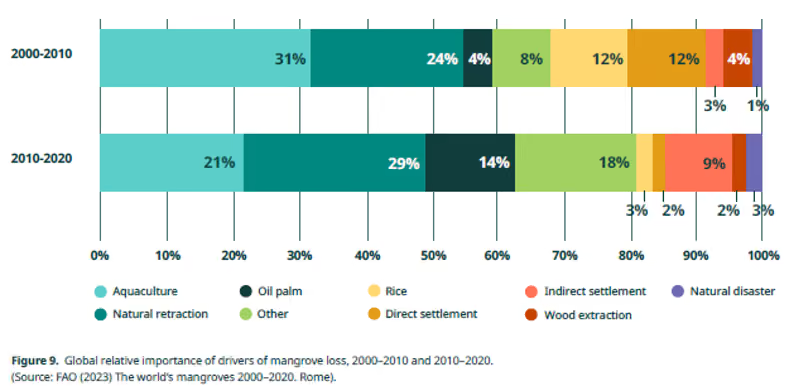
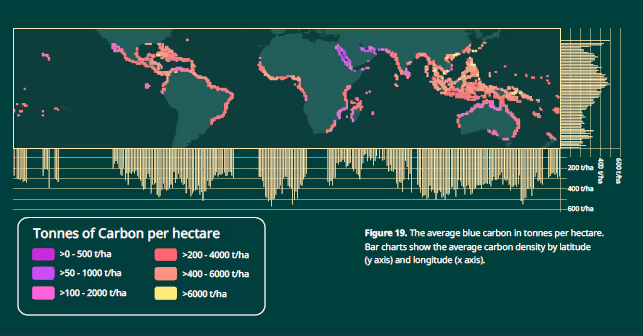
As some technologies are still in the early stages of deployment (TRL 3-6+) , such as Direct Air Carbon Capture and Sequestration (DACCS), delays in project implementation may occur. The risk is also present for NBS projects whose development is directly affected by the effects of climate change. To mitigate the delivery risk, Removall relies on its quality procedures to select its suppliers and invest in its own projects. The work carried out by Removall’s teams includes reputational analyses of partner developers, risk analyses for projects, financing feasibility studies for projects in which it invests, and the use of insurance to cover the risk of delivery to the customer.

Key lessons

The VCM has reinforced its shift towards integrity with initiatives such as the ICVCM and CORSIA CCPs leading the way.

Projects under development/coming to market are demonstrating increasing integrity, which is reflected in higher MSCI ratings.

The growing integrity of the carbon market represents an opportunity for companies that, by mastering market best practices, can now build credible carbon contributions with greater peace of mind.

Integrity is driving market changes that are encouraging companies to position themselves now to secure their supply of high-quality credits at competitive prices.

Removall, as an integrated company that is both an investor, developer, certifier, and intermediary, is in an excellent position to assist and draw conclusions from developments in the VCM. It is committed to putting its ICROA-recognized expertise at the service of those who wish to engage in a serious carbon contribution approach.

Source : https://www.msci.com/research-and-insights/paper/2025-state-of-integrity-in-the-global-carbon-credit-market

Sources

(1) 2025 State of Integrity in the Global Carbon Credit Market MSCI Carbon Markets, MSCI

(2) More information on MSCI rating methodology in appendix.

(3) fNRB refers to the fraction of non-renewable biomass used in the project. For cookstove projects, it is linked to the wood used as fuel to operate clean cooking stoves. fNRB is a key parameter for quantifying the number of carbon credits allowed by the project: the higher it is, the more emissions reductions the project generates.

(4) The vintage of a carbon credit corresponds to the year in which the emissions gains were achieved. Example: A credit with a vintage of 2021 means that the emissions reduction/sequestration occurred in 2021.

(5) The Technology Readiness Levels (TRL) framework, developed by NASA in the late 1970s, assesses technological maturity. TRL levels 3 to 6 correspond to an early stage, ranging from proof of concept to initial demonstrations in a relevant environment. It is now used as a standard reference by several institutions, including the EU.

‍

00
min