

SBTi Corporate Net-Zero Standard Version 2.0
The Science Based Targets initiative has released its Corporate Net-Zero Standard Version 2.0, marking a clear evolution in how corporate climate action is structured and assessed.
While the foundation remains unchanged, deep emissions reductions across Scopes 1, 2 and 3 remain the priority, the new standard introduces important refinements in how companies are expected to implement, report and take responsibility for their emissions.
More importantly, it provides a clearer signal on the future role of carbon credits and removals in corporate net-zero strategies.
A shift from ambition-setting to implementation accountability
One of the most significant changes is the increased focus on implementation.
Companies are now expected to explicitly connect their science-based targets to real operational decisions, including transition planning, procurement strategies and investment cycles.
The standard introduces a “best-efforts” principle, requiring companies to use all reasonable levers within their control, disclose constraints and dependencies, and explain how barriers are being addressed.
Clearer structure across Scopes 1, 2 and 3
The updated framework requires a more structured approach:
- Scope 1 and Scope 2 must now be addressed separately, with full coverage required
- Scope 1 reductions may follow multiple pathways (absolute, intensity-based or transition-based)
- Scope 2 requirements are strengthened, particularly around low-carbon electricity sourcing
Scope 3 is maintained as the most flexible but critical component, with companies required to prioritise material emissions sources and integrate them into targets or transition plans.
Carbon credits remain excluded from target achievement
Carbon credits cannot be used to:
- reduce reported emissions
- demonstrate progress toward targets
- substitute operational decarbonisation
Even where companies miss targets, SBTi only recommends voluntary purchase of removals as an additional action, without allowing them to count toward target achievement.
Ongoing Emissions Responsibility (OER)
The new OER framework introduces voluntary recognition for companies contributing to climate action beyond their own value chain emissions.
Three levels exist:
- Engaged (≥1%)
- Advanced (≥10% incl. Scope 1 & 2)
- Leadership (full Scope 1–3 coverage with financial contribution requirement)
Companies may use either verified mitigation outcomes or a financial contribution mechanism.
Post-2035 removal trajectory
From 2035 onwards, companies are expected to support removals equal to:
- at least 1% of ongoing emissions
- increasing linearly to 100% by net zero (2050 latest)
A key distinction is introduced:
- long-lived greenhouse gases → long-lived removals
- other emissions → short- or long-lived removals
This creates a structural shift toward durability-based carbon accounting
10% long-lived removals requirement
From 2035, at least 10% of covered emissions linked to long-lived greenhouse gases must be addressed with long-lived removals.
This share increases progressively to 100% by the net-zero year.
This reinforces a clear market signal toward durable carbon storage solutions.
No reliance on a single credit quality standard
The framework does not anchor eligibility to specific labels such as CCP.
Instead, it relies on principle-based integrity criteria:
additionality, permanence, leakage control, MRV robustness, and safeguards.
Corresponding adjustments and Article 6
SBTi recommends that companies prioritise credits not simultaneously claimed under national NDCs.
Where possible, companies are encouraged to use credits backed by corresponding adjustments under Article 6, improving the integrity of net-zero claims and reducing double counting risk.
What this means for corporate carbon strategies
Three structural shifts stand out:
- From target-setting to implementation accountability
- From offsetting logic to strict separation of roles
- From generic credits to durability-based carbon removal strategies
Conclusion
SBTi V2.0 does not fundamentally change the direction of corporate climate ambition. It clarifies how it must be implemented.
Net zero is no longer only a target framework. It is becoming an operational responsibility framework, combining emissions reduction with structured climate contribution.
Sources
- Science Based Targets initiative (2026), Corporate Net-Zero Standard Version 2.0
- Science Based Targets initiative (2026), Introducing the SBTi Corporate Net-Zero Standard Version 2.0
- Science Based Targets initiative (2026), SBTi Corporate Net-Zero Standard V2.0 – Guidance and supporting documents
- Science Based Targets initiative (2026), Net-Zero Standard implementation materials and FAQs
- United Nations Framework Convention on Climate Change (UNFCCC), Article 6 of the Paris Agreement – Corresponding Adjustments Guidance

To all the sustainability leaders in logistics
As a key player in the logistics sector, your company is undoubtedly aware of the growing emphasis on sustainability and the critical role that carbon offsetting plays in meeting environmental targets. Carbon offsetting is particularly important for companies within the logistics industry. Let’s go deep into some fundamental insights:
Addressing High Carbon Footprints in a Carbon-Intensive Sector
The logistics sector, encompassing road, maritime, and air transport, is a significant contributor to global greenhouse gas (GHG) emissions, accounting for approximately 23% of global CO₂ emissions from energy use. With increasing demand for freight and passenger transport, the sector faces mounting pressure to reduce its carbon footprint. While the priority in a robust climate strategy is always the reductions of your own GHG emissions, carbon offsetting provides an additional practical approach for mitigating the impact of your unavoidable emissions, by supporting or investing in projects that either remove carbon from the atmosphere or prevent equivalent emissions elsewhere. This includes reforestation, renewable energy projects, and other initiatives that align with the goals of reducing net emissions.
Aligning with Regulatory Requirements and Sustainability Goals
As regulatory frameworks around carbon emissions tighten globally, particularly in regions like the EU with its Emissions Trading System (ETS), logistics companies must adopt robust strategies to manage their emissions. In addition to ambitious emissions reduction action plans, carbon offsetting offers a flexible and cost-effective way to meet compliance requirements and support broader sustainability goals, such as those outlined in the UN Sustainable Development Goals (SDGs). Offsetting complements other decarbonization efforts, such as enhancing operational efficiency and transitioning to low-emission technologies.
Meeting Stakeholders’ Expectations and Enhancing Corporate Reputation
With rising expectations from consumers and investors, companies are under pressure to show tangible environmental commitments. For logistics companies, often seen as major emitters, carbon offsetting demonstrates accountability and helps foster trust. Beyond compliance, it allows companies to show leadership by aligning with sustainable business practices that resonate with customers and stakeholders.
Mitigating Risks and Preparing for a Low-Carbon Future
Offsetting emissions helps logistics companies navigate the evolving regulatory landscape and avoid potential financial penalties associated with carbon pricing mechanisms. It also allows businesses to take proactive steps toward future compliance with stricter regulations, positioning them as leaders in sustainability within their industry. This forward-thinking approach helps companies not only manage current risks but also capitalize on emerging opportunities in a low-carbon economy.
Why is Removall the right partner for you?
Removall stands out as a comprehensive solution provider in the carbon offsetting space, specifically tailored to meet the unique needs of logistics companies. As a project developer with hands-on experience, we bring deep, on-the-ground knowledge to every project, ensuring that our verified offset offerings—ranging from nature-based solutions to advanced carbon capture technologies—not only compensate emissions but also contribute to broader environmental and social goals.
Our rigorous project selection is supported by market-leading due diligence processes, guaranteeing high standards and long-term impact. As a mission-driven company, we view carbon offsetting as a tool for impact investing. Beyond carbon reduction, our projects provide tangible social and environmental co-benefits, measured and monitored over time. These outcomes are documented in our impact report, reflecting our commitment to transparent, lasting contributions aligned with the SDGs.
Partnering with Removall means integrating offsetting seamlessly into broader sustainability strategies, aligning with regulatory requirements and positioning for future carbon regulations. With strong sectoral expertise, particularly in transport and logistics, we support our clients with both short-term contracts and long-term partnerships, securing high-quality project supply and price stability. Together, we go beyond meeting current obligations, empowering companies to lead in sustainability, enhance their reputation, and achieve a competitive edge in a rapidly evolving market. We are eager to explore how our tailored solutions can help your company not only offset its emissions but also contribute positively to communities and the environment, paving the way for a sustainable future.

CORSIA: Navigating the Future of Aviation Emissions
CORSIA, the Carbon Offsetting and Reduction Scheme for International Aviation, is an ambitious market-based initiative spearheaded by the International Civil Aviation Organization (ICAO) to address the environmental impact of aviation.
Established in 2016, CORSIA aims for carbon-neutral growth in international aviation from 2020 onward by driving airlines emissions reduction through operational efficiencies and adoption sustainable aviation fuels (SAF). Carbon offsetting will play a crucial role as airlines residual emissions above the baseline will need to be addressed through the purchase of eligible carbon credits.
Phases of Implementation
CORSIA is being implemented in three phases:
Pilot Phase (2021-2023)
- Participation is voluntary.
- Airlines report emissions but are not required to offset them during this period.
- Carbon standards like GS, VCS, and ACR are conditionally approved, but actual usage depends on compliance with specific criteria.
First Phase (2024-2026)
- Also voluntary, but airlines operating flights between ICAO Participating States must offset emissions that exceed 85% of their 2019 levels by purchasing carbon credits.
- Approved standards include ART and ACR, while others like GS and VCS are conditionally approved pending further adjustments.
- Airlines must source credits with « Corresponding Adjustments » (CA) ensuring that the emissions reductions are not double-counted by the host country of the offset project and the purchasing airline.
Second Phase (2027-2035)
- Participation becomes mandatory for most ICAO member states.
- The requirements for emission offsets are expected to be more stringent, reflecting the global push towards more aggressive climate action.
Compliance and Reporting
Airlines are required to monitor, report, and verify (MRV) their emissions annually. However, airlines have until January 0228 to purchase the necessary carbon credits to meet their requirements. This delay allows airlines to accumulate the necessary offsets without immediate financial pressure. The final deadline for offsetting 2024-2026 emissions is January 2028.
Market Dynamics and Challenges
The market for CORSIA-eligible offsets is still developing. Currently, only a limited number of projects, like the one managed by the government of Guyana under the ART Trees standard, are issuing eligible credits for Phase 1 (7.1MtCO2e, but not solely intended to be used under CORSIA). This has led to uncertainty regarding the true market value of these offsets due to the limited supply. By 2025, other standards like GS and VCS are expected to be fully compliant and approved, potentially increasing the available supply of offsets significantly.
Future Projections
The demand for carbon credits is projected to increase substantially during the mandatory phase from 2027 to 2035. Estimates from AlliedOffsets and IETA report, suggest that the demand could range between 50 to 230 million credits for 2024-2026 Phase 1, with an expected undersupply of 34 million credits. This undersupply is contingent on the fact that there are no changes in ICAO approvals and new Letter of Approvals given by countries allowing credits to be Correspondingly Adjusted.
Conclusion
CORSIA is expected to drive a significant increase in demand for carbon credits, providing a robust incentive for further development and verification of high-quality carbon offset projects. This program represents a critical step towards achieving a more sustainable aviation industry. While the initial phases allow for a gradual build-up of compliance mechanisms and market responses, the mandatory phase from 2027 will mark a significant shift towards rigorous climate action in aviation. The successful implementation of CORSIA will depend on the continued collaboration between airlines, carbon standards, and national governments to ensure the integrity and transparency of carbon offsets.

Integrating High-Quality Carbon Projects into CSR Strategies
In today’s evolving business landscape, sustainability is not just an option but a fundamental aspect of corporate strategy. For sustainability professionals, integrating high-quality carbon projects into Corporate Social Responsibility (CSR) strategies is crucial for aligning environmental goals with business objectives. This guide explores the significance of these projects, how they enhance overall corporate strategies, and the critical role of CSR in creating synergy across Environmental, Social, and Governance (ESG) pillars.
Linking SBTi Updates with CSR, ESG, and Net Zero
The Science Based Targets initiative (SBTi) provides a framework for companies to set science-based targets aimed at reducing greenhouse gas emissions and limiting global warming to well below 2°C. In July 2024, the SBTi updated its guidelines to reflect the growing role of carbon credits in corporate climate strategies. While direct emission reductions remain the primary focus, the updated guidelines emphasize the strategic use of carbon credits to address residual emissions. While we are waiting for the SBTi confirmation that carbon credits could be used to reach part of companies’ scope 3 emission reduction objectives, this approach acknowledges that achieving Net Zero often requires additional measures, such as investing in high-quality carbon projects to offset emissions that are challenging to eliminate entirely (Science Based Targets initiative [SBTi], 2024a).
Beyond compliance with SBTi and Net Zero objectives, carbon credits offer significant strategic value. They not only enable companies to meet their climate commitments but also provide a mechanism to enhance corporate reputation, drive innovation in sustainability practices, and foster stronger relationships with stakeholders. The strategic integration of carbon credits into a company’s sustainability framework can differentiate the organization in the market, positioning it as a leader in environmental stewardship (World Economic Forum, 2021).
Understanding CSR, ESG, and Net Zero Interconnections
To fully realize the strategic value of carbon credits, it’s essential to understand the interconnections between Corporate Social Responsibility (CSR), Environmental, Social and Governance Reporting (ESG), and Net Zero objectives:
CSR reflects a company’s broader commitment to societal and environmental impact beyond financial metrics, encompassing activities such as philanthropy, community engagement, and ethical business practices (Brundtland Commission, 1987). However, CSR also acts as an entry point to create a synergy between the different ESG pillars of the company—Environmental, Social, and Governance.
Environmental: Focuses on an organization’s environmental impact and risk management practices, including direct and indirect greenhouse gas emissions, stewardship over natural resources, and resilience to physical climate risks such as climate change, flooding, and fires (International Emissions Trading Association [IETA], 2023).
Social: Involves the organization’s relationships with stakeholders, encompassing human capital management (e.g., fair wages, employee engagement) and the impact on communities. Social responsibility extends to supply chain partners, particularly in developing economies, where environmental and labour standards may be less robust (Net Positive, 2023).
Governance: Refers to how the organization is led and managed, including leadership’s alignment with stakeholder expectations, shareholder rights, and internal controls that promote transparency and accountability (McKinsey & Nielsen IQ, 2023).
Achieving Net Zero involves reaching a balance between the greenhouse gases emitted and those removed from the atmosphere. To achieve this, companies must accurately measure their greenhouse gas (GHG) emissions, significantly reduce them, and offset any remaining emissions through certified carbon projects (World Economic Forum, 2021). The interconnections between CSR, ESG, and Net Zero are crucial because CSR serves as the operational framework that integrates the environmental, social, and governance dimensions of a company’s sustainability strategy. Together, these elements create a comprehensive approach to sustainability that supports achieving Net Zero goals by aligning corporate actions with broader environmental and social objectives.
The Strategic Value of High-Quality Carbon Projects
Incorporating high-quality carbon projects into CSR strategies offers significant strategic benefits that go beyond compliance with SBTi or Net Zero targets. These projects can serve as powerful tools for enhancing corporate purpose, driving employee and financial engagement, delivering tangible community impacts, and strengthening stakeholder relationships.
Strengthening Corporate Purpose: Aligning carbon projects with corporate goals deepens the company’s mission and values, fostering a stronger sense of purpose among employees. According to Deloitte’s 2023 report, 97% of executives anticipate significant climate impacts on their strategies, underscoring the importance of integrating sustainability into core business objectives (Deloitte, 2023). This alignment not only enhances corporate identity but also motivates employees to actively contribute to the company’s sustainability goals.
Enhancing Employee and Financial Engagement: High-quality carbon projects can improve job satisfaction, retention, and talent attraction by demonstrating the company’s commitment to sustainability. Reports indicate that a significant number of employees, sometimes called ‘climate quitters,’ are leaving roles that lack strong environmental policies or do not align with their personal values on climate action (Net Positive, 2023; BBC, 2023). This trend underscores the importance of integrating sustainability into corporate values to attract and retain talent.
Delivering Tangible Community Impact: Projects such as reforestation offer more than just environmental benefits; they also create jobs, restore ecosystems, and build community resilience. These initiatives align with ESG criteria by providing measurable local impacts that support broader sustainability goals, thereby enhancing the company’s reputation and social license to operate (MIT News).
Strengthening Stakeholder Relationships: Carbon credits can significantly enhance relationships with suppliers and clients by showcasing the company’s commitment to reducing environmental impact. This approach not only helps clients manage their Scope 3 emissions but also positions the company as a leader in sustainability, fostering long-term partnerships and collaborative opportunities throughout the value chain (International Emissions Trading Association [IETA], 2023).
Operationalizing Corporate Purpose through CSR
To fully realize the strategic value of high-quality carbon projects, sustainability professionals can operationalize their corporate purpose through CSR. CSR serves as the foundation that integrates the environmental, social, and governance pillars of a company’s operations, creating a synergy that drives comprehensive and impactful sustainability efforts.
Embedding Purpose into Daily Actions: For a corporate purpose to be truly effective, it must be woven into the fabric of daily operations. Successful CSR strategies create environments where employees can engage in purpose-driven projects, making sustainability an integral part of the company’s culture and daily decision-making processes.
Fostering Employee Engagement: Empowering employees to take ownership of CSR initiatives fosters a culture of meaningful change. This empowerment leads to higher engagement, skill development, and a stronger sense of pride in the organization, embedding sustainability deeply into the organizational culture (Net Positive, 2023).
Building Purpose-Driven Communities: Encouraging employees to participate in and co-create projects aligned with sustainability goals helps build purpose-driven communities within the organization. These communities not only drive the achievement of broader ESG objectives but also strengthen the overall corporate purpose by ensuring that sustainability efforts resonate throughout the company.
Ensuring Integrity and Trust in Carbon Projects
The foundation for achieving the strategic value of carbon credits lies in ensuring the integrity and trustworthiness of these projects. High-quality carbon projects are essential for delivering the environmental and social benefits that underpin a company’s sustainability strategy.
Selecting Reliable Partners: Collaborate with reputable organizations that provide transparency and proof of project efficacy. The quality of carbon offset partners is crucial in ensuring that projects deliver on their promises and contribute meaningfully to a company’s Net Zero and CSR goals (Cloverly, 2023).
Preventing Greenwashing: Companies must ensure that their carbon projects deliver genuine impact and avoid overstating their benefits. Transparency in reporting and accountability in project execution are key to maintaining credibility and stakeholder trust.
Mitigating Risks: Regularly reviewing project performance and addressing potential risks is essential for ensuring that carbon projects meet expectations. This diligence ensures that the investments made into carbon credits are not only compliant but also effective in achieving broader sustainability goals (Science Based Targets initiative [SBTi], 2023).
The Pivotal Role of Sustainability Leaders
Sustainability leaders are pivotal in unifying the goals of CSR, ESG, and Net Zero, driving the strategic integration of high-quality carbon projects into corporate strategies. They are responsible for ensuring that sustainability practices are embedded across the organization, aligning environmental initiatives with social and governance objectives.
Balancing Objectives: Sustainability leaders must balance immediate impacts with long-term goals, ensuring that carbon projects are integrated into the broader corporate strategy. This involves making strategic decisions that align with the company’s sustainability vision while maintaining operational effectiveness (McKinsey & Nielsen IQ, 2023).
Accurate Reporting and Transparency: Transparent reporting on carbon projects is essential for demonstrating their effectiveness and aligning with stakeholder expectations. Sustainability leaders must ensure that all sustainability initiatives, including carbon projects, are reported accurately and comprehensively, reinforcing the company’s commitment to transparency and accountability (Science Based Targets initiative [SBTi], 2024a).
Building Trustworthy Partnerships: Forming partnerships with credible organizations is crucial for maintaining the integrity of CSR initiatives. Sustainability leaders must identify and collaborate with partners that share the company’s commitment to high standards of environmental and social responsibility, ensuring that all projects deliver genuine impact (Cloverly, 2023).
Conclusion
Integrating high-quality carbon projects into CSR strategies is essential for companies aiming to address environmental challenges while achieving business success. These projects contribute not only to reducing greenhouse gas emissions but also to aligning with broader corporate goals. By combining direct emissions reductions with strategic investments in carbon credits, companies can make a significant environmental impact and build a foundation for long-term sustainability. The integrity of these projects, guided by trusted partnerships and transparent reporting, is key to maintaining stakeholder confidence. Ultimately, sustainability leaders play a crucial role in driving these efforts, ensuring that the company’s sustainability goals are met with purpose, effectiveness, and integrity.

Introduction to the Voluntary Carbon Market in Africa
As global awareness of climate change intensifies, the Voluntary Carbon Market has emerged as a vital tool for countries to mitigate greenhouse gas emissions. In Africa, where the effects of climate change are increasingly apparent, the VCM presents an opportunity to invest in projects that sequester carbon, enhance livelihoods, protect biodiversity, and foster resilience.
The Rising Influence of Africa in the Global Voluntary Carbon Market
While the VCM in Africa started relatively slowly — with the first credits issued on the continent dating back to 2003, compared to 1996 globally — Africa’s influence in the global carbon market has been steadily increasing. According to the Berkeley Carbon Trading Project’s Voluntary Registry Offsets Database (2024)*, the number of credits issued and retired in Africa has grown significantly between 2018 and 2024, respectively multiplying by 3 and 4 (graph below).

As a result, the share of African projects in the annual global credits issued has risen from 13.5% in 2018 to 25% in 2023. This represents a remarkable growth trajectory, as the continent increasingly attracts investment and interest from international companies seeking to offset their emissions.
* The database tracks carbon offset projects, credit issuances, and retirements across four major registries: American Carbon Registry (ACR), Climate Action Reserve (CAR), Gold Standard, and Verra (VCS).
Overview of the Voluntary Carbon Market in Africa
Today, the voluntary carbon market in Africa is thriving, with projects spanning across renewable energies (wind, solar, geothermal), energy efficiency, reforestation, sustainable agriculture and community-based projects (cookstoves, clean water). The 2024 Berkeley Database suggests that more than 2,000 African projects have issued credits since the market’s inception. These projects have collectively issued 300 million carbon credits (equivalent to around $2.2 Bn**), with 151 million retired to offset emissions ($1.2 Bn). The majority of these credits have been registered under two main standards: the Verified Carbon Standard (VCS) – 66.5%, and Gold Standard – 33.5%.
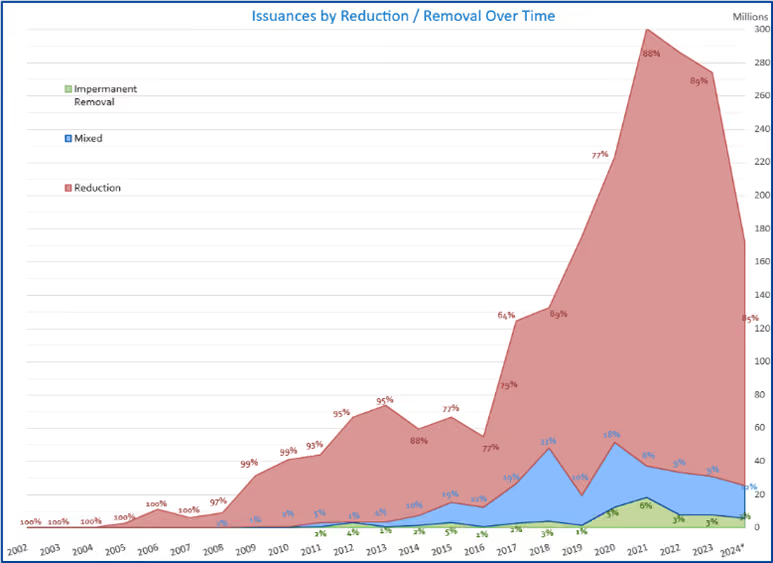
Similarly to the rest of the world, the bulk of carbon credits in Africa are derived from emission reductions or avoidance (85%), with only a small proportion of credits linked to mixed credits (12%) and even fewer to pure removals (3%). This makes removal projects and Nature-Based Solutions particularly rare and attractive to investors on the continent.
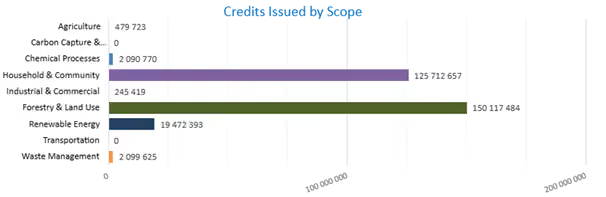
In terms of project typology, the forestry and land-use sector remains dominant in Africa, accounting for 50% of the credits issued. This is primarily driven by forest conservation projects (88%), with a lesser proportion attributed to reforestation or sustainable grassland management.
The second key sector in Africa is household and community-based projects, which represent 42% of total credits issued. These are mostly driven by clean cookstoves (78%), with other notable contributions from clean water initiatives (10%), energy efficiency programs (5.8%), and community boreholes (5.6%).
Renewable energy projects, though still limited, account for 6.5% of credits issued.
In terms of regions, East Africa leads the market, accounting for 44% of Africa’s projects, with Kenya alone representing 50% of that total. Southern Africa follows with 29%, Central Africa makes up 14%, and West Africa 12%, while North Africa contributes just 1%. Key countries with the highest number of carbon offset projects include Kenya (296 projects), Uganda (250), Rwanda (204), Malawi (131), and Madagascar (119).
**Pricing reference MSCI
Recent Regulatory Developments
The Africa Carbon Market Initiative (ACMI) is a pioneering initiative aimed at accelerating the development of carbon markets across Africa. Launched in 2023, it is part of the broader effort to support the continent’s contribution to global climate action. The primary goal of the ACMI is to create a robust and transparent carbon market infrastructure to enable African countries to tap into the growing global demand for carbon credits.
In line with this initiative, several African countries have made significant strides in establishing and refining their carbon regulatory frameworks in the past few years.
In East Africa, Kenya has introduced the Climate Change Act (2016) and completed it with the newly released Climate Change (Carbon Markets) Regulations (2024). Both documents create a legal framework for carbon trading and outlines procedures for the development of carbon offset projects. Rwanda also appears as a country favourable to carbon investors, with one of the first Corresponding Adjustments approval released globally on a carbon project.
In Southern Africa, South Africa has made notable progress with its carbon tax policy, which includes provisions for companies to offset a portion of their tax liabilities through investments in certified carbon projects (Department of Environmental Affairs, South Africa, 2019). Mozambique has also established a clear and favourable legal framework to implement carbon projects with the Decree No. 23/2018.
In West Africa, Ghana has implemented the Ghana Forest Investment Programme (GFIP), which focuses on enhancing forest management and conservation (Ghana Forestry Commission, 2019). This program supports the development of carbon credits from reforestation and afforestation projects.
The evolution of these carbon regulations is significantly impacting the landscape for carbon offset projects in Africa, encouraging other countries to also work a clearer legal frameworks and supportive policies.
Challenges and Opportunities
Despite the positive developments, several challenges persist in the regulatory landscape. Unclear or complex regulatory requirements or heavy compliance costs are prohibitive for both project developers and investors. Small and local entities lack the expertise needed to navigate complex regulatory requirements (Huang et al., 2020).
However, these challenges also present opportunities for growth. Looking ahead, the future of the voluntary carbon market in Africa appears promising. As regulatory frameworks continue to evolve, they will likely encourage increased investment in carbon projects, enhance project credibility, and align national efforts with global climate goals.
Current Status of African Carbon Projects and Future Prospects
Despite their importance and potential, there are still relatively few removal carbon projects in Africa that generate carbon credits.
Removall, committed to advancing the African carbon initiative, has been developing and investing in African carbon projects for over three years. Nearly 40% of the projects in the portfolio are based in Africa. Some of these projects have already been certified and generated their first carbon credits in 2024, including credits with corresponding adjustments. Significant investments have been made in projects in Mozambique and Rwanda, while additional opportunities are currently being developed in Tanzania, Uganda, Rwanda, Kenya, Ghana, Madagascar, and other countries.
In line with our commitment to the continent, Removall recently opened an office in Nairobi to strengthen operations, better identify new project opportunities, and improve the management of investments in the region. This strategic move will help scale up the impact and continue driving sustainable development across Africa.
Conclusion
It is crucial to remember that carbon offset projects in Africa are not just about environmental outcomes; they are deeply tied to development, the livelihoods of local communities and biodiversity. These projects often support the preservation of ecosystems, enhance agricultural productivity, provide clean energy, and improve health outcomes—directly impacting the lives of millions of people.
Unfortunately, at times, the ongoing debates and criticisms around carbon market integrity, and the complexities of environmental standards in developed countries can overshadow the urgent need for greater investment in Africa’s carbon projects. While these debates are important, they must not detract from the immediate need to channel more financing into projects that can deliver both environmental and social benefits. The reality on the ground is that for many African countries, the voluntary carbon market offers a rare opportunity to address both climate change and development challenges in tandem.
References
- Berkeley University, Voluntary Registry Offsets Database v2024-08-31. The database, developed by the Berkeley Carbon Trading Project, contains all carbon offset projects, credit issuances, and credit retirements listed globally by four major voluntary offset project registries—American Carbon Registry (ACR), Climate Action Reserve (CAR), Gold Standard, and Verra (VCS).
- Department of Environmental Affairs, South Africa. (2019). Carbon Tax Act.
- Ghana Forestry Commission. (2019). Ghana Forest Investment Programme (GFIP).
- Government of Kenya. (2016). Climate Change Act.
- Huang, J., et al. (2020). « Challenges in Carbon Market Development in Africa. » Environmental Science & Policy, 107, 89-95.
- MSCI pricing database.
Soil Organic Carbon, IALM practices and the Carbon Market
Soil in the Carbon Cycle
Soils play a critical role in the global carbon cycle, acting as the largest natural active carbon sink on continental surfaces [1], storing approximately 2,500 Gt of carbon. In comparison, the atmosphere holds about 760 Gt, while terrestrial vegetation (biotic carbon) stores around 560 Gt [2]. According to the Food and Agriculture Organization (FAO), soil is a « complex matrix of interacting components: mineral particles, air, water, organic matter, and living organisms. » Among these, Soil Organic Carbon (SOC) is a key component, referring only to the carbon component of organic compounds, which influences soil fertility and its ability to store carbon.
Agricultural lands, which cover 37% of the world’s land surface [3], have significant potential for carbon sequestration—estimated at 2 to 5 gigatons of CO2 per year [4]. However, soil degradation is a growing concern, with 20% to 40% of land globally considered degraded as of 2022 [5]. This degradation undermines the land’s capacity to sustain life, crops, and ecosystems, largely due to intensive agricultural practices that have depleted organic matter over the past 50 years.
The good news is that soil degradation is reversible. Through improved land management, we can restore soil health, increase SOC levels, and transform agriculture into a powerful tool for combating climate change.
IALM Practices: A Nature-Based Solution
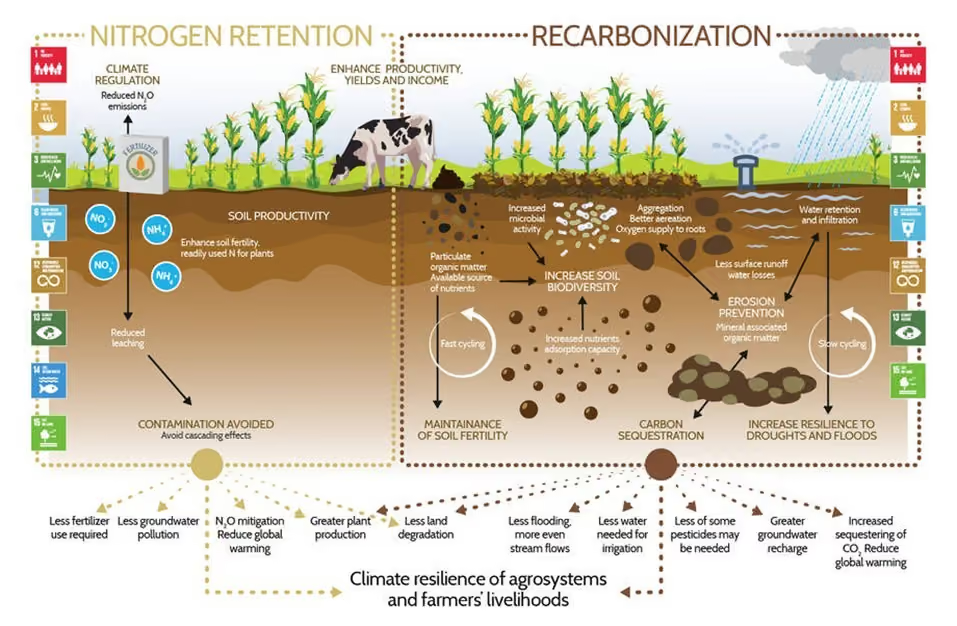
Integrated Agricultural and Land Management (IALM) practices are a cornerstone of sustainable agriculture. These practices aim to optimize yields while preserving biodiversity and increasing carbon sequestration in soils.
Key IALM practices include:
- Reduced Tillage: Minimizing soil disturbance to maintain its structure and protect carbon stored in deeper layers.
- Crop Rotation: Alternating crops to prevent nutrient depletion and control pests.
- Cover Cropping: Growing temporary crops to reduce erosion, improve soil structure, and add organic matter.
- Composting and Organic Additions: Enriching soils with organic material to enhance fertility and moisture retention.
- Grazing Management: Regulating grazing intensity to promote soil regeneration and prevent overgrazing.
These practices not only enhance yield productivity, permanency and soil resilience against climate change but also reduce greenhouse gas emissions, contributing significantly to climate mitigation efforts.
The role of carbon finance
To unlock the full potential of SOC and IALM practices, carbon finance must play a central role. By assigning monetary value to carbon sequestration, carbon markets incentivize sustainable soil management and improve livelihoods of the farmers in all countries. McKinsey’s studies emphasize that adopting regenerative agriculture practices on U.S. corn and soy farms—some of the largest crops in the country—could not only reduce the environmental impact of the industry but also offer promising financial returns for most farmers nationwide, generating an average of $20 to $60 per acre annually over the first ten years. [6]
Several established standards, such as VCS and Gold Standard, offer methodologies tailored to soil carbon projects. These frameworks enable landowners and farmers to quantify and monetize their efforts in restoring degraded lands, creating tradable carbon credits. However, challenges remain, including the need for robust remote monitoring systems, the high cost of soil analysis at date, and ensuring equitable access for small-scale farmers.
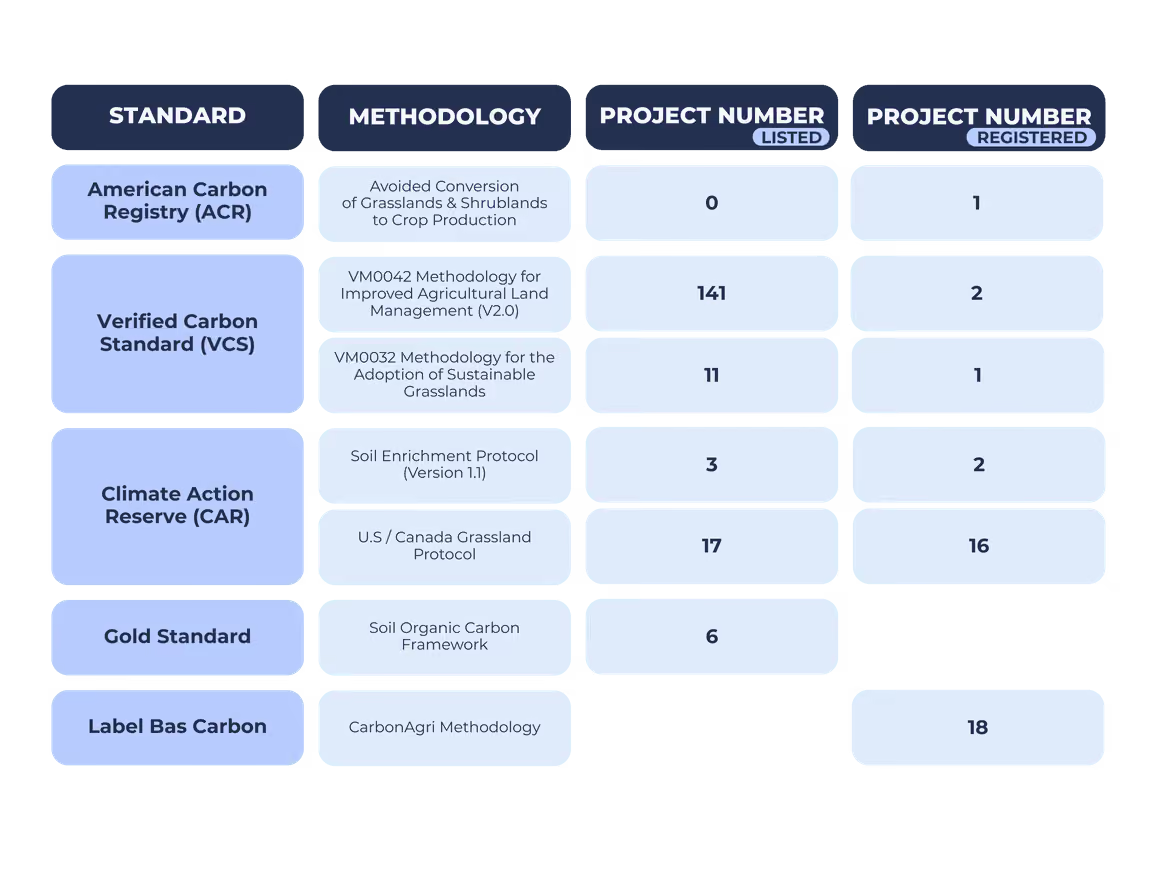
Compared to other Nature-Based Solutions methodologies, such as Afforestation, Reforestation, and Revegetation (ARR), IALM methodologies still have a relatively recent track record. In fact, the VCS – the leading standard for AFOLU projects – currently lists only two regenerative agriculture projects with emitted carbon credits. However, the first verification of VM0042 for the Involtor project in Romania serves as a significant indicator that a new trend is emerging.
To conclude
Soil restoration is an environmental imperative, which must be supported by carbon finance. Healthy soils foster sustainable livelihoods by improving food and water security, increasing incomes, and building resilience to climate change.
Sources
[1] Dignac, M.-F., Derrien, D., Barré, P., Barot, S., Cécillon, L., Chenu, C., Chevallier, T., Freschet, G., Garnier, P., Guenet, B., Hedde, M., Klumpp, K., Lashermes, G., Maron, P.-A., Nunan, N., Roumet, C., & Basile-Doelsch, I. « Increasing Soil Carbon Storage: Mechanisms, Effects of Agricultural Practices, and Proxies. A Review. » Agronomy for Sustainable Development, vol. 37, 2017. DOI : 10.1007/s13593-017-0421-2.
[2] Ciro Gardi, Stefano Brenna, Silvia Solaro, Mauro Piazzi, Fabio Petrella, “The Carbon Sequestration Potential of Soils: Some Data from Northern Italian Regions”, Italian Journal of Agronomy, 2006. https://doi.org/10.4081/ija.2007.135
[3] FAOSTAT. Analytical Brief 71: Land Statistics and Indicators 2000–2021. 2023. Disponible sur : https://openknowledge.fao.org/server/api/core/bitstreams/5c8b2707-1bcf-4c29-90e2-3487e583f71e/content#:~:text=Within%20agricultural%20land%2C%20cropland%20occupied,area)%20(Figure%201)%20(Figure%201)).
[4] Paustian, K., Larson, E., Kent, J., Marx, E., & Swan, A. « Soil C Sequestration as a Biological Negative Emission Strategy. » Frontiers in Climate. Vol. 1, Article 8, 2019. DOI : 10.3389/fclim.2019.00008.
[5] UNCCD. Global Land Outlook: Second Edition, Summary for Decision Makers. 2022, p. 6.
[6] Owen Stockdale, Pradeep Prabhala, Tom Brennan, Rui Chen, “Revitalizing fields and balance sheets through regenerative farming”, McKinsey & Company, 2024. https://www.mckinsey.com.br/industries/agriculture/our-insights/revitalizing-fields-and-balance-sheets-through-regenerative-farming.